
























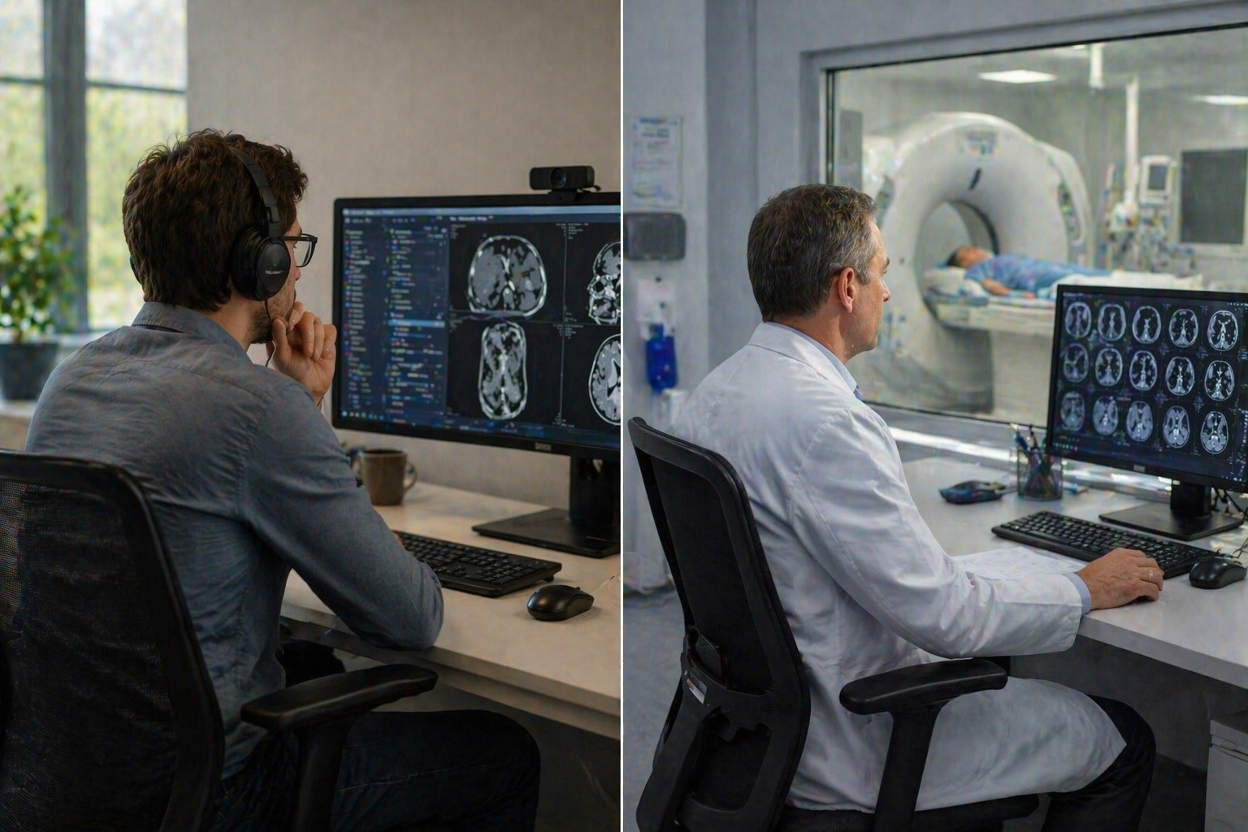





ACR Gadolinium Contrast Guidelines: 2026 Safety Protocol Explained

Learn how gadolinium-based contrast agents improve MRI imaging, the risks of NSF, current ACR guidance, and best practices for safe contrast administration.
By ContrastConnect

Contrast-Enhanced Mammography BI-RADS 2025: Updates & Reporting Standards Explained

Learn how BI-RADS 2025 makes contrast-enhanced mammography a core ACR manual section with revised lexicon terms, conspicuity grading, and assessments.
By ContrastConnect

AI in Contrast-Enhanced Mammography: Detection, Workflow & 2026 Clinical Use Cases

Understand how AI improves lesion detection and streamlines workflows in contrast-enhanced mammography, plus 2026 clinical use cases for breast imaging centers.
By ContrastConnect

ACR Contrast Media Renal Function Guidelines: Risk Factors & Premedication Protocols

A guide to ACR contrast protocols covering eGFR thresholds, high-risk patients, hydration, and premedication to ensure safe, compliant imaging practice.
By ContrastConnect

Teleradiology Jobs in 2026: What the Field Looks Like and Why Supervision Roles Are Growing

The teleradiology market is projected to exceed $60 billion by 2030, and 1 in 4 US radiology jobs is now remote-capable. Here is what teleradiology jobs look like in 2026 and why virtual supervision roles are growing.
By

What Is Virtual Contrast Supervision? A Plain-Language Guide

Virtual contrast supervision allows a physician to fulfill CMS direct supervision requirements for contrast-enhanced CT and MRI via a live audio-visual connection. Here is how it works and who needs it.
By ContrastConnect

Who Can Supervise Contrast Administration? CMS Requirements Explained

CMS authorizes physicians and certain non-physician practitioners to supervise Level 2 contrast studies. Here is who qualifies, what conditions apply, and how supervision must be provided under the 2026 permanent rule.
By

Teleradiology vs. Virtual Contrast Supervision: Two Different Problems, Two Different Solutions

Teleradiology handles image reading after the scan. Virtual contrast supervision handles physician presence during contrast administration. Here is why your teleradiology contract does not cover the supervision requirement.
By ContrastConnect

Can a Nurse Practitioner or PA Supervise Contrast Administration? What CMS Says

CMS authorizes NPs, PAs, and other non-physician practitioners to supervise Level 2 contrast studies, but only within state-authorized scope of practice. Here is what that means for your facility.
By ContrastConnect

ACR Iodinated Contrast Guidelines: 2026 Protocol Explained

Learn the 2026 ACR iodinated contrast protocol covering patient screening, eGFR thresholds, premedication, reaction management, CMS virtual supervision rules.
By ContrastConnect

ACR Metformin Contrast Guidelines: 2026 Protocol Explained

See the updated ACR metformin contrast guidelines with the 2026 protocol explained. Learn safe practices, key updates, and recommendations for patient care.
By ContrastConnect

Contrast Media Screening Questionnaire: Risk Factors, Templates & Requirements

Learn the contrast media screening questionnaire with risk factors, ready-to-use templates, and requirements to ensure safer imaging and patient care.
By ContrastConnect

Contrast Reaction Kit Requirements: Medications, Supplies & Emergency Readiness

Learn what medications, supplies, and emergency protocols a contrast reaction kit requires to meet ACR standards and maintain patient safety at your facility.
By ContrastConnect

ACR Contrast Allergy Premedication Protocol: 2026 Guidelines Explained

Understand the ACR contrast allergy premedication protocol with 2026 guidelines explained.
By ContrastConnect

ACR Contrast Media Pregnancy Guidelines: 2026 Protocols

Learn the ACR contrast media pregnancy guidelines with 2026 protocols to ensure safe imaging practices for expecting patients.
By ContrastConnect

Informed Consent for Contrast Media: Requirements, Documentation & Best Practices

Discover informed consent requirements for contrast media, including documentation standards and best practices to support safer, compliant imaging operations.
By ContrastConnect

ACR Contrast Media Extravasation Guidelines: Guidelines & Protocol

Explore ACR contrast media extravasation guidelines, covering incidence rates, risk factors, prevention steps, treatment protocols, and surgical escalation criteria.
By ContrastConnect

New X-Ray Contrast Agent Improves Soft Tissue Imaging with Lower Dose

Learn how a new positively charged X-ray contrast agent enables clearer cartilage imaging with 40x less dose, improving safety profiles for kidney patients.
By ContrastConnect

ACR Guidelines for MRI Contrast Use: Safety, Screening & Protocols

See how the 2025 ACR guidelines reshape MRI contrast use: covering GBCA classifications, patient screening protocols, and safety standards for imaging centers.
By ContrastConnect

ACR Guidelines for CT Contrast: Dosage, Safety & Protocols Explained

ACR guidelines for CT contrast cover weight-based dosage, patient screening, reaction management, and supervision protocols essential for safe imaging practice.
By ContrastConnect

Virtual Contrast Supervision Exit Planning: Data, Coverage and Continuity Considerations

Learn how to manage virtual contrast supervision exit planning smoothly, with strategies for data transfer, coverage continuity, and CMS-compliant transitions.
By ContrastConnect

Remote Contrast Coverage vs Locum Radiologist Coverage: Cost Variability & Compliance Requirements

Compare remote contrast coverage and locum radiologist coverage. Learn the cost differences, compliance requirements, and which model best fits your facility.
By ContrastConnect

Virtual Contrast Supervision ROI: Financial & Accessibility Considerations

Virtual contrast supervision delivers ROI through reduced staffing costs, fewer canceled scans, and broader patient access across multi-site imaging networks.
By ContrastConnect

Virtual Contrast Supervision Capacity Planning: Coverage & Scan Volume

Plan virtual contrast supervision capacity by mapping scan volume, peak demand, and coverage hours to CMS-compliant radiologist availability.
By ContrastConnect

How Remote Supervision Makes Multi-Site Imaging Manageable

Learn how remote contrast supervision helps multi-site imaging networks scale efficiently by standardizing physician coverage, reducing operational complexity, and ensuring consistent, CMS-compliant oversight across every location.
By ContrastConnect

Teleradiology and Health Equity: Closing the Imaging Gap in Underserved ZIP Codes

Learn how ZIP code, income, and race impact access to diagnostic imaging—and how virtual contrast supervision is helping expand equitable, CMS-compliant care in underserved communities by enabling real-time physician oversight without on-site staffing.
By ContrastConnect

Why Rural Patients Wait Longer for Contrast Imaging (And How Virtual Supervision Changes That)

Learn why rural patients face longer wait times for contrast imaging and how radiologist shortages impact access to care. Discover how virtual contrast supervision helps reduce delays, expand local imaging capacity, and ensure timely, CMS-compliant patient care.
By ContrastConnect

Which States Have Enacted Virtual Contrast Supervision Laws? A Running Tracker

Learn which states have enacted virtual contrast supervision laws and how federal and state regulations impact your imaging center. This breaks down legislation, regulatory actions, and pending bills—so you can stay compliant and make informed operational decisions.
By ContrastConnect

How Virtual Contrast Supervision Fills Physician Coverage Gaps Without a Full-Time Hire

Learn how virtual contrast supervision helps imaging centers overcome radiologist shortages, reduce costly coverage gaps, and maintain CMS-compliant care—without the need for full-time hires or unreliable locum coverage.
By ContrastConnect

What Happens When a Rural Imaging Center Can’t Staff a Radiologist?

Radiologist shortages are causing cancelled scans, delayed care, and lost revenue for imaging centers. Virtual contrast supervision provides real-time, CMS-compliant physician oversight without requiring on-site staff—helping facilities maintain operations, improve patient access, and reduce scheduling disruptions.
By ContrastConnect

The Radiologist Shortage Is Getting Worse. Here’s How Imaging Centers Are Adapting

Radiologist shortages are no longer temporary—they’re a long-term structural challenge driven by rising imaging demand. As facilities adapt through teleradiology and workflow redesign, virtual contrast supervision has emerged as a critical solution, enabling real-time physician oversight without requiring on-site presence and helping imaging centers maintain access, efficiency, and continuity of care.
By ContrastConnect

Remote Contrast Coverage Spend by Modality: CT vs MRI Cost Differences

Find out how CT and MRI contrast supervision costs differ, and learn how virtual supervision can significantly reduce per-exam costs across both modalities.
By ContrastConnect

Remote Contrast Supervision & Radiology Shortages: 2026 Industry Impact

Discover how permanent CMS virtual contrast supervision rules and radiologist shortages are reshaping the 2026 imaging industry and how ContrastConnect helps.
By ContrastConnect

How Virtual Contrast Supervision Enables Imaging in Rural Critical Access Hospitals

Learn how critical access hospitals can use virtual contrast supervision to maintain imaging services, reduce reliance on traveling radiologists, and keep revenue within the community—while ensuring CMS-compliant, real-time physician oversight.
By ContrastConnect

Remote Contrast Coverage vs. Virtual Contrast Supervision: Is There a Difference?

If you have spent time researching physician oversight for contrast-enhanced imaging, you have probably encountered at least four different versions of the same idea: remote contrast coverage, remote contrast supervision, virtual contrast coverage, and virtual contrast supervision. Depending on the source, these terms appear to be used interchangeably — and mostly, they are.The short answer is that all four terms describe the same regulatory and clinical function: a qualified physician providing real-time oversight of contrast administration from a location outside the imaging facility, using live audio-visual technology. The differences between the terms are terminological, not substantive. But understanding why the variations exist — and what each term emphasizes — is useful for anyone evaluating options, communicating with vendors, or writing policy documents for their facility. This article settles the terminology question and explains what actually matters when you are setting up or evaluating a contrast oversight program.
By

How Imaging Centers Stay Compliant Without On-Call Radiologists

Understanding why the traditional on-call model fails for after-hours contrast coverage makes clear why virtual supervision is a structural solution rather than just a workaround.
By ContrastConnect

Virtual Contrast Supervision Reporting: Executive vs Clinical Dashboards

Learn how executive and clinical contrast supervision dashboards differ in function, data scope, and decision support, and how ContrastConnect unifies both.
By ContrastConnect

Remote Contrast Coverage Vendor Switching: Transition Risks & Best Practices

Learn the biggest risks of switching remote contrast vendors. Find the best practices to implement, including parallel coverage and staged EMR access.
By ContrastConnect

Washington HB 2113 for Virtual Contrast Supervision: 2026 Requirements & Changes Explained

Learn how Washington HB 2113 legalizes virtual contrast supervision in 2026, what technology qualifies, and how imaging centers can meet the new requirements.
By ContrastConnect

Ohio HB 479 and Virtual Contrast Supervision: 2026 Requirements & Updates Explained

Learn how Ohio HB 479 proposes to align state contrast supervision law with CMS's permanent virtual direct supervision rule and what it means for facilities.
By ContrastConnect

Remote Contrast Coverage Decision Authority: Escalation Paths and Approval Structure

Learn about the three-tier escalation structure for remote contrast supervision, including decision authority, timelines, and CMS documentation requirements.
By ContrastConnect

Virtual Contrast Supervision Response Time: Reaction Management & Metrics Explained

Learn the five KPIs that define virtual contrast supervision performance, including key response time benchmarks, CMS compliance rates, and coverage metrics.
By ContrastConnect

Virtual Contrast Supervision Audit Documentation: 2026 CMS Review & Requirements Explained

Learn CMS 2026 virtual contrast supervision audit requirements, including documentation standards, key technology rules, and physician availability records.
By ContrastConnect

Contrast Reaction Liability Exposure: Supervision Model Risk & Documentation Practices

Learn how contrast reaction liability exposure is shaped by supervision model gaps and documentation failures, and find out how ContrastConnect can help.
By ContrastConnect

Virtual Contrast Supervision State Legislation: 2026 Updates & Practice Impact

Learn how 2026 federal and state legislation permanently changed virtual contrast supervision rules and what your imaging facility must do to stay compliant.
By ContrastConnect

CMS Contrast Supervision 2026: Virtual Direct Supervision Authorized as Permanent

Master CMS direct supervision requirements, 2026 virtual supervision rules, documentation standards, and compliant coverage with ContrastConnect.
By ContrastConnect

Washington HB 2113 Expands Virtual Supervision for Contrast Administration

New Washington legislation modernizes supervision requirements for contrast administration and recognizes real-time virtual physician supervision.
By ContrastConnect

Tele Contrast Supervision Redundancy Standards: Backup Coverage and Failure Containment

Review the redundancy standards, backup systems, and failure containment protocols that keep virtual contrast supervision CMS-compliant and uninterrupted.
By ContrastConnect

Remote Contrast Coverage Workflow Integration: Scheduling & EMR Best Practices

Discover best practices for integrating remote contrast coverage into EMR workflows, from scheduling and compliance to real-time radiologist supervision.
By ContrastConnect

Virtual Contrast Supervision IT Security: HIPAA, HITECH and Vendor Essentials

Learn the HIPAA and HITECH security requirements for virtual contrast supervision platforms, including encryption, audit logs, and vendor vetting essentials.
By ContrastConnect

Remote Contrast Coverage Contract Lengths: Annual vs Multi-Year Pros & Cons

Choosing between annual and multi-year remote contrast coverage contracts? Compare costs, flexibility, and risks to find the right fit for your imaging center.
By ContrastConnect

Virtual Contrast Coverage Contract Structure: SLAs, Coverage Hours and Terms

Learn how to structure virtual contrast coverage contracts with the right SLAs, coverage hours, and terms to protect your imaging facility and ensure compliance.
By ContrastConnect

Virtual Contrast Supervision Budget Forecasting for Multi-Site Networks

Discover how to build a multi-site virtual contrast supervision budget forecast that tracks costs, aligns with CMS rules, and scales across your network.
By ContrastConnect

Remote Contrast Coverage Staffing Plan: Daytime, After-Hours and Holiday Coverage Models

Discover remote contrast coverage staffing models for daytime, after-hours, and holidays that cut costs and extend imaging hours without on-site radiologists.
By ContrastConnect

Virtual Contrast Supervision Cost per Site: Pricing Models and Budget Planning

Explore virtual contrast supervision cost per site, compare pricing models, and discover budgeting strategies to cut expenses while staying fully CMS-compliant.
By ContrastConnect

Remote Contrast Coverage Incident Escalation: Roles, Responsibilities and Timelines

Learn how remote contrast incident escalation works, including tiered roles, timelines, and CMS-compliant protocols to keep your facility safe and operational.
By ContrastConnect

Remote Contrast Coverage Performance Benchmarks for Imaging Networks

Learn the key performance benchmarks for remote contrast coverage, including response time and scan cancellation rates, and how to meet CMS compliance.
By ContrastConnect

Virtual Contrast Supervision KPIs: Coverage Performance Metrics & Reporting Standards

Learn key KPIs for virtual contrast supervision, including coverage, response times, safety outcomes, and audit-ready reporting to meet CMS standards.
By ContrastConnect

Beyond ROI: Building Sustainable Virtual Supervision

As imaging centers and hospitals continue to adopt virtual contrast supervision, many are discovering that financial return is only part of the story. True ROI isn’t just about reduced cancellations or added scan volume—it’s also about the human factors that make those improvements sustainable: empathy, training, and trust.
By

How Teleradiology Expands Access to Imaging in Underserved Communities

Access to diagnostic imaging is a cornerstone of modern healthcare — yet for many rural and underserved areas, the reality is limited access, long patient travel times, and delayed diagnoses. As the demand for imaging grows, a shortage of on-site radiologists has made it increasingly difficult for smaller hospitals and clinics to keep pace. That’s where teleradiology and virtual contrast supervision are changing the landscape.
By

CT Contrast Injection Flow Rate: Per Weight Calculator & Protocol Explained

Learn CT contrast injection flow rate protocols by weight and exam type, plus how ContrastConnect provides virtual supervision for compliant contrast imaging support.
By ContrastConnect

MRI Contrast Reaction Management: Documentation & Protocol Explained

Learn essential MRI contrast reaction protocols and documentation requirements. Discover emergency response steps to ensure patient safety and compliance.
By ContrastConnect

CT Contrast Reaction Management: Documentation & Best Practices

Learn CT contrast reaction management and documentation best practices to monitor reactions, respond effectively, and ensure patient safety and compliance.
By ContrastConnect

CMS “Immediate Availability” Definition Explained: Meaning, Distance & Coverage Requirements (2026 Update)

CMS immediate availability explained, including distance, coverage requirements, and how ContrastConnect supports compliant supervision.
By ContrastConnect

Who Can Interpret X-Rays? Radiology Guidelines

Learn who can interpret X-rays, including radiologists, physicians, and qualified providers, plus how ContrastConnect supports virtual contrast supervision.
By ContrastConnect

Labs Needed for CT with Contrast: Requirements Explained

Learn the labs needed for CT with contrast, including eGFR thresholds, timing requirements, and preparation tips, and how ContrastConnect virtual supervision helps.
By ContrastConnect

Pediatric CT IV Contrast Guidelines: Dosage & Protocols

Learn pediatric CT contrast protocols, including weight-based dosing, safety considerations, and workflow tips, plus ContrastConnect’s virtual supervision capabilities.
By ContrastConnect

CEUS Reaction Rate: Frequency & Management Explained

Learn about CEUS safety, common reactions, and best practices for monitoring high-risk patients, with expert virtual supervision for reliable imaging.
By ContrastConnect

MRI Contrast Reaction Rate: Frequency, Severity & Supervision

Discover MRI contrast reaction rates from mild to severe, with risk factors and symptoms, and how ContrastConnect provides expert virtual contrast supervision.
By ContrastConnect

CT Contrast Reaction Rate: Frequency, Management & Supervision Explained

Discover CT contrast reaction rates, symptoms to watch for, and how proper supervision protocols keep patients safe during imaging.
By ContrastConnect

Radiology Report Findings vs Impression: What's the Difference?

Learn the differences between radiology report Findings and Impression sections, plus how ContrastConnect helps with virtual contrast supervision and expert oversight.
By ContrastConnect

Plain vs Contrast X-Ray: Differences & Use Cases

Learn the differences between plain and contrast X-rays, their use cases, and which gives the best results, plus how ContrastConnect provides safe supervision.
By ContrastConnect

Contrast Media Interactions with Other Drugs: Contraindications Explained

Learn which drugs interact with contrast media, when extra precautions are needed, and how ContrastConnect helps ensure safe, compliant contrast administration.
By ContrastConnect

How is Contrast Administered for a CT Scan: Methods Explained

Discover how contrast is administered for CT scans via IV, oral, and rectal methods, plus how ContrastConnect’s virtual supervision helps with safe administration.
By ContrastConnect

Direct Supervision for Contrast Studies in 2025- Requirements, Compliance & Methods

Learn direct supervision for contrast studies requirements in 2025, including CMS virtual supervision rules, compliance methods, and ACR standards.
By ContrastConnect

Virtual Contrast Supervision: Meaning, Requirements & Guidelines

Discover what virtual contrast supervision means, CMS 2026 requirements, ACR guidelines, and how ContrastConnect offers safe, compliant imaging coverage.
By ContrastConnect

New 2025 Canadian Guidelines Advise Against Steroid Premedication for Prior Contrast Allergy

Learn what the updated national recommendations mean for patients with a history of contrast reactions and how practices may shift in the future.
By

ACR Manual on Contrast Media 2025: Guidelines Explained

Learn the 2025 ACR Manual on Contrast Media updates on GBCA classifications and CA-AKI protocols, plus ContrastConnect’s role in virtual contrast supervision.
By ContrastConnect

Direct vs General Supervision: Differences & Examples

See how direct vs general supervision differ in medical imaging and how ContrastConnect helps facilities meet CMS virtual contrast supervision requirements.
By ContrastConnect

CMS Direct Supervision: Definition & Requirements

See what CMS direct supervision requires, when virtual supervision is allowed, and how ContrastConnect helps reduce canceled contrast exams.
By ContrastConnect

Who Should Not Have MRI with Contrast? Contraindications Explained

Learn who should not have MRI with contrast due to kidney disease, allergies, or pregnancy, and how ContrastConnect offers safe virtual contrast supervision.
By ContrastConnect

How to Open an Imaging Center: Requirements & Costs

Planning to open an imaging center? Learn startup costs, licensing, equipment requirements, and how ContrastConnect supports compliant contrast imaging.
By ContrastConnect

Maximizing ROI: How Virtual Supervision Drives Revenue in Imaging Operations

In today’s imaging environment, every dollar counts. Between staffing pressures, compliance demands, and workflow inefficiencies, many imaging operations struggle to maintain profitability. Virtual contrast supervision—when implemented thoughtfully—offers a compelling path to cut costs, unlock new revenue streams, and improve overall financial performance.
By

AB 460 California Bill Explained: What Does It Mean for the Future of Imaging?

Understand AB 460 California's new virtual supervision rules for contrast administration and how they transform imaging access statewide.
By ContrastConnect

Why AB 460 Marks Progress for the Future of Imaging in California

At its core, AB 460 clarifies that virtual supervision of radiologic technologists is permissible in California. This is a positive and long-awaited acknowledgment, and proves that virtual care models have a legitimate role to play in medical imaging.
By

How Long Do Side Effects of Iodine Contrast Last? Reactions Explained

Discover how long iodine contrast side effects last, from immediate reactions to delayed symptoms, plus how ContrastConnect supports virtual contrast supervision.
By ContrastConnect

How Long Do Side Effects of MRI Contrast Last? Symptoms Explained

Learn how long MRI contrast side effects last, from mild symptoms in hours to rare reactions, plus how ContrastConnect can help with virtual contrast supervision.
By ContrastConnect

4 Types of Contrast Media in Radiology: Examples & Use Cases

Learn about the 4 types of contrast media in radiology, including iodinated, gadolinium, barium, and microbubble agents, and how ContrastConnect helps ensure safe contrast exams.
By ContrastConnect

Who Can Administer Contrast Media? Radiology Guidelines Explained

Learn who can administer contrast media, including radiologists, nurses, and radiologic technologists, and how ContrastConnect supports virtual contrast supervision.
By ContrastConnect

Remote Contrast Coverage: Benefits & How It Works

Learn about remote contrast coverage benefits and how it works. Discover how virtual supervision improves patient safety and efficiency today.
By ContrastConnect

2026: The Year of Virtual Supervision

CMS Makes Virtual Direct Supervision Permanent.
By ContrastConnect

Why Technologist Training Is the Cornerstone of Virtual Contrast Supervision

In the rapidly evolving field of virtual contrast supervision, cutting-edge technology and advanced telehealth capabilities often take center stage. However, the unsung hero in this process is the radiologic technologist. Without a well-trained and confident radiologic technologist on the front line, even the best virtual supervision systems cannot deliver their full potential.
By ContrastConnect

How to Best Implement Virtual Contrast Supervision

As of 2026, new updates from both the American College of Radiology (ACR) and Centers for Medicare & Medicaid Services (CMS) have solidified the role of virtual contrast supervision across a wide range of imaging settings. With these changes, more imaging centers and hospitals are actively evaluating how to implement virtual supervision in a way that meets compliance standards, protects patient safety, and maintains operational efficiency.
By ContrastConnect

CMS Proposes New 2026 Updates for Remote Contrast

As the Centers for Medicare & Medicaid Services (CMS) continues to evolve policies supporting virtual care, the newly proposed CY 2026 Medicare Physician Fee Schedule introduces several key updates that could significantly impact how imaging centers and hospitals deliver contrast supervision. At ContrastConnect, we view these proposals as a positive step toward cementing remote supervision as a safe, compliant, and scalable standard of care.
By ContrastConnect

CMS Moves to Make Virtual Contrast Supervision Permanent in 2026

The advanced copy of the CY 2026 Medicare Physician Fee Schedule proposes making Virtual Supervision Permanent
By ContrastConnect

How Hospitals Can Use Remote Contrast Supervision

As healthcare delivery models evolve, many hospitals are turning to remote solutions to improve efficiency, reduce staffing bottlenecks, and maintain high standards of patient care. One area seeing rapid transformation is contrast supervision in imaging departments, where the shift to virtual support has become a practical, safe, and compliant alternative to traditional in-person models.
By ContrastConnect

AB460 Heads to California Senate Health Committee Today

Modern imaging deserves modern policy. AB460 is a step in the right direction.
By ContrastConnect

Why Virtual Contrast Supervision Is on the Rise

Virtual contrast supervision has rapidly transitioned from a temporary solution for imaging centers to a transformative standard in diagnostic imaging that is revolutionizing workflows. Initially adopted during the COVID-19 pandemic on a temporary basis, its widespread success has led to near-unanimous industry support to make it permanent.
By ContrastConnect

How to Choose a Virtual Contrast Supervision Provider

Administering contrast media is a sensitive and highly regulated process that has historically demanded the oversight of a qualified medical professional on-site. However, with the rise of virtual contrast monitoring solutions, imaging centers now have the opportunity to streamline operations, cut costs, and expand their hours of operation through the use of this powerful technology.
By ContrastConnect

The ACR Guidelines on Contrast Supervision for 2025

In November 2024, the Centers for Medicaid and Medicare Services extended the use of remote contrast supervision and telecommunications through 2025, with the extension slated to expire December 31, 2025.
By ContrastConnect

Trusted Nationwide

From small to large, independent to enterprise, we partner and scale with imaging facilities of every kind.

RadNet
Rayus Radiology
Banner Health
Advent Health
Baptist Health
Desert Imaging
RadNet
Rayus Radiology
Banner Health
Advent Health
Baptist Health
Desert Imaging
RadNet
Rayus Radiology
Banner Health
Advent Health
Baptist Health
Desert Imaging
MedQuest Imaging logo

1,000,000

Contrast exams supervised annually

75,000+

Hours of supervision monthly

3,900+

Technologists certified

100s

Of imaging partners nationwide

130+

Contrast reactions treated monthly

100%

Requested hours covered

Connect with us.

Have questions regarding contrast supervision? Our team is here to help. Reach out to us anytime for more information about our services.
info@contrast-connect.com
Join us on LinkedIn to learn how we’re shaping the future of contrast supervision.
Give us a call
Thank you! Your submission has been received!
Oops! Something went wrong while submitting the form.