Virtual Contrast Supervision KPIs: Coverage Performance Metrics & Reporting Standards


Key Takeaways
- Response time is the single most critical KPI in virtual contrast supervision and is measured in seconds, not minutes, because contrast reactions can escalate within 60 to 120 seconds.
- CMS rules effective 2026 require direct supervision for contrast administration in hospital outpatient departments, making compliance rate a non-negotiable metric to track.
- Coverage rate, cancellation rate, and uptime percentage work together as a performance trio, and missing any one of them leaves dangerous blind spots in your reporting.
- Virtual contrast supervision allows facilities to maintain CMS compliance and extend hours without the high costs of onsite staffing
- At ContrastConnect, we provide CMS-compliant virtual supervision supported by qualified radiologists and an audit-ready documentation infrastructure. With 130+ contrast reactions treated monthly with 3,700+ technologists certified, we bring unmatched experience to remote contrast supervision.
Virtual Contrast Supervision KPIs: An Overview
Running a virtual contrast supervision program without defined KPIs is like flying blind; you won't know there's a problem until a CMS audit or an adverse event forces the issue. Performance metrics are the operational backbone that keeps patients safe, facilities compliant, and imaging workflows running without costly disruptions.
The metrics that matter most fall into five core categories: response time, coverage rate, incident documentation, CMS compliance tracking, and technology uptime. Each one answers a specific operational question, and together they give imaging directors a complete picture of program health.
This article breaks each one down with the specific benchmarks and formulas you need to start measuring today.
ContrastConnect: Virtual Contrast Supervision That Never Misses
Built by Radiologists | 75,000+ Monthly Contrast Exams | Trusted Nationwide

Built for Imaging Networks:
- Virtual Contrast Supervision: Radiologists provide immediate CMS-compliant supervision through a secure, HIPAA-compliant platform for outpatient facilities and hospital networks.
- Unmatched Experience: 130+ contrast reactions treated monthly with 3,700+ technologists certified.
The ContrastConnect Difference:
- ✓ Radiologist-owned with superior clinical expertise
- ✓ Always-on platform with guaranteed compliance
- ✓ Audit-ready documentation for CMS reviews
- ✓ Cost-efficient alternative to onsite staffing
Safety & Compliance You Trust:
Helping imaging centers reduce cancellations, extend hours, and scale operations without adding on-site radiologists. Response times measured in seconds.
Why Are Response Time Metrics the Most Critical KPI in Contrast Supervision?
Contrast reactions can escalate rapidly, and the supervising radiologist's ability to respond in real time is the entire clinical justification for the virtual model. As such, a program that can't demonstrate fast, consistent response can end up being a liability.
What Counts as an Acceptable Response Time
Response time in virtual contrast supervision is measured from the moment a technologist initiates contact with the supervising radiologist until the moment the physician becomes actively engaged in the supervision session.
In practical operational terms, leading programs target response times measured in seconds, not minutes. At ContrastConnect, we benchmark response times in the seconds range, which reflects what a genuinely safe virtual program should deliver.
How to Measure Response Time Accurately
Accurate response time measurement requires timestamped logging at multiple points in the supervision workflow. Your system should capture the exact time the technologist initiates the supervision request; the time the supervising radiologist joins the virtual session; the time contrast administration begins; and the time the session is formally closed or handed off.
Which Coverage Rate KPIs Should Every Imaging Center Track?

Response time tells you how fast your program reacts. The coverage rate tells you whether your program was even available to respond in the first place. These are two different problems, and facilities that obsess over response time while ignoring coverage gaps are leaving significant operational risk on the table.
How to Calculate Coverage Rate
Coverage rate is the percentage of scheduled contrast procedures that were completed with compliant virtual supervision in place. The formula is straightforward:
Coverage Rate (%) = (Supervised Contrast Procedures Completed ÷ Total Scheduled Contrast Procedures) × 100
A facility scheduling 200 contrast procedures per month but completing only 178 with supervision in place has an 89% coverage rate; the 11% gap represents both patient safety exposure and potential compliance failures. Best-in-class programs should target coverage rates of 98% or higher, with documented explanations for any exceptions.
Scheduled vs. Actual Coverage Hours
Tracking scheduled versus actual coverage hours provides imaging directors with a granular view of where supervision gaps occur throughout the day. A facility that contracts for 8 a.m. to 6 p.m. virtual supervision coverage but regularly experiences unstaffed windows between noon and 2 p.m. has a structural problem that an overall coverage rate number won't reveal on its own.
Log actual radiologist availability in 30-minute blocks against your scheduled contrast procedure times. When you overlay this against your procedure schedule, patterns emerge quickly, and those patterns are exactly what a CMS auditor or accreditation reviewer will look for when evaluating whether your facility meets direct supervision standards.
Cancellation Rate as a Coverage Performance Indicator
The formula for calculating cancellation rate is simple: divide the number of contrast procedures cancelled due to supervision unavailability by total scheduled contrast procedures, then multiply by 100. The target benchmark here is as close to 0% as operationally achievable.
At ContrastConnect, our program is specifically designed to reduce supervision-related cancellations by extending coverage hours and maintaining radiologist availability across time zones.
Reaction Monitoring & Incident Documentation Standards
What a Compliant Contrast Reaction Log Must Include
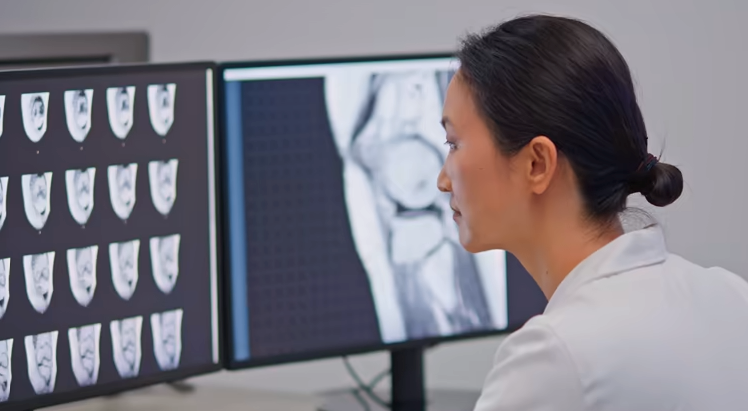
A compliant contrast reaction log must capture specific data points for every incident, regardless of severity.
At minimum, each entry should include the patient identifier, procedure date and time, contrast agent name and dose administered, reaction onset time, reaction classification, intervention taken, supervising radiologist name/credentials, and outcome.
Documentation must also be completed in real time or immediately following the event, not reconstructed hours later. Virtual supervision service providers like ContrastConnect automatically generate a structured incident report with locked timestamps to avoid compliance gaps.
How Incident Frequency Rates Benchmark Supervision Quality
Incident frequency rate measures how often contrast reactions occur per 1,000 procedures supervised. This KPI serves two purposes: it helps facilities determine whether their patient screening protocols identify high-risk patients before contrast administration, and it provides a benchmark for comparing your program's clinical performance with published reaction rate data.
A significantly elevated incident rate at your facility is a red flag that warrants a review of pre-screening workflows, contrast agent selection, and technologist training rather than just supervision protocols. Conversely, a zero-incident rate over a statistically significant volume of procedures is a positive program quality indicator worth documenting explicitly in your quality assurance reporting.
What Are the Core CMS Compliance Metrics for Virtual Supervision Programs?
CMS compliance is not a background consideration in virtual contrast supervision; it is the regulatory foundation on which the entire model rests. As of the rules taking effect in 2026, outpatient diagnostic imaging facilities must meet direct supervision requirements for contrast administration, meaning the supervising physician must be immediately available via real-time audio/video and capable of intervening instantly.
Direct Supervision Requirements Under CMS Rules
Under CMS direct supervision, the supervising physician must be present in the same building or immediately available via interactive telecommunications technology for the entire duration of the contrast administration procedure. The physician must also be qualified to perform the service and capable of stepping in immediately if needed.
How to Track Compliance Rate as a Standalone KPI
Compliance rate as a standalone KPI is calculated by dividing the number of contrast procedures with fully documented, CMS-compliant supervision by total contrast procedures performed, expressed as a percentage.
This metric should be reviewed at least monthly, and any result below 100% should trigger a root cause review. A single non-compliant procedure is one too many, and a pattern of non-compliance is a reimbursement and accreditation threat that compounds quickly.
Audit-Ready Documentation: What CMS Reviewers Actually Look For
When CMS reviewers assess a virtual contrast supervision program, they look for evidence that the direct supervision requirements were met for each procedure. They look out for:
- Procedure-level records showing the supervising physician's name and credentials.
- The timestamp of their session initiation.
- Confirmation of real-time audio/video connectivity.
- Documentation that they remained available throughout contrast administration.
Reviewers also look for consistency between your written supervision policies and your actual operational records. If your policy states the supervising radiologist must be connected before contrast injection begins, but your timestamp logs show a pattern of connections occurring 45 seconds after injection start, that inconsistency is a compliance finding.
Technology Uptime & Connection Quality as Performance Metrics
The two technology KPIs that matter most are uptime percentage and connection latency. Uptime measures the percentage of scheduled supervision hours during which the platform was fully operational. Latency measures the delay between the imaging suite's audio/video feed and what the supervising radiologist sees and hears.
Minimum Uptime Percentage for Compliant Virtual Supervision
A virtual contrast supervision platform must maintain a minimum uptime of 99.5% across all scheduled supervision hours to be considered operationally reliable. Anything below that threshold means your facility is statistically likely to experience platform unavailability during active contrast procedures.
Latency & Bandwidth Thresholds That Affect KPI Scores
Latency above 150 milliseconds creates a perceptible delay between what's happening in the imaging suite and what the supervising radiologist sees on screen, which is clinically unacceptable when a contrast reaction is developing in real time.
Best-in-class virtual supervision systems target latency below 50ms, which requires both a high-performance platform and a minimum bandwidth of at least 10 Mbps upload/download at the imaging facility.
Get Safe Remote Contrast Supervision with ContrastConnect

At ContrastConnect, we provide immediate, CMS-compliant access to qualified radiologists for outpatient imaging centers and hospital networks. Coverage is delivered through a secure, HIPAA & HITECH-compliant platform, ensuring consistent supervision across single sites or multi-site networks.
Compliance is built into everything we do. We support facilities in navigating CMS and ACR requirements, including audit-ready documentation such as supervision logs, discharge summaries, incident reports, and state-specific guidance. Our approach standardizes oversight and reporting, reducing variability and risk while giving leadership clear KPIs for coverage performance and regulatory readiness.
Plus, patient safety remains our strongest differentiator. Our radiologists supervise 55,000+ contrast exams each month and manage 130+ monthly with zero missed responses. If your organization is preparing for compliance reviews or seeking to reduce delays without compromising safety, ContrastConnect delivers reliable, expert remote supervision you can trust. Ready to secure your compliance and improve coverage?
Start your coverage assessment today.
Frequently Asked Questions (FAQs)
What Is the Most Important KPI for Virtual Contrast Supervision?
Response time is the most important KPI in virtual contrast supervision. It measures how quickly the supervising radiologist is actively engaged from the moment a technologist initiates contact, and because severe contrast reactions can escalate within 60 to 120 seconds, a response time measured in seconds is the difference between effective supervision and a patient safety failure.
How Often Should Virtual Contrast Supervision KPIs Be Reviewed?
Core KPIs, including response time, coverage rate, cancellation rate, and technology uptime, should be reviewed monthly at a minimum. CMS compliance rate should be reviewed monthly as well, with any result below 100% triggering an immediate root cause analysis rather than waiting for the next scheduled review cycle.
What Safeguards and Redundancies Prevent Missed Reactions During Remote Contrast Supervision?
A properly structured virtual contrast supervision program uses layered redundancies to ensure no reaction goes undetected. These include redundant internet connections at the imaging site, automatic failover to backup telecommunications pathways if the primary connection drops, and real-time alert systems that notify the supervising radiologist of any session interruption within seconds.
Why Should We Choose ContrastConnect Over Other Remote Supervision Providers?
At ContrastConnect, we supervise up to 55,000+ contrast exams each month and manage 130+ contrast reactions. Every interaction is fully documented and audit-ready to support CMS and state compliance reviews. Plus, our always-on, HIPAA- and HITECH-compliant platform scales across your network at a significantly lower cost than on-site staffing.
*Note: Information provided is for general guidance only and does not constitute medical, legal, or financial advice. Pricing estimates and regulatory requirements are current at the time of writing and subject to change. For personalized consultation on imaging center operations and virtual contrast supervision, contact ContrastConnect.
Trusted Nationwide


















.avif)




1,000,000
Contrast exams supervised annually
75,000+
Hours of supervision monthly
3,900+
Technologists certified
100s
Of imaging partners nationwide
130+
Contrast reactions treated monthly
100%
Requested hours covered
Connect with us.

