CT Contrast Injection Flow Rate: Per Weight Calculator & Protocol Explained


Key Takeaways
- CT contrast injection flow rates should be persoanlized to patient weight, exam type, and clinical indication to support diagnostic image quality and patient safety across imaging studies.
- For standard adult patients, CT contrast injection flow rates range from 2.0 to 3.0 mL/s for routine studies to 4.0 to 6.0 mL/s for vascular and cardiac studies, with higher rates requiring larger gauge IV catheters (typically 18 to 20 gauge in the antecubital fossa).
- The basic weight-based formula of 1 to 2 mL/kg helps determine appropriate contrast volume, but must be adjusted for iodine concentration (300 to 400 mg I/mL) and patient renal function, with most protocols capping at 150 mL total volume.
- Improper flow rates can lead to serious complications including contrast extravasation, suboptimal image quality, and increased risk of contrast-induced nephropathy in vulnerable patients.
- ContrastConnect provides expert virtual supervision with qualified radiologists supervising 75,000+ contrast exam hours monthly and treating 130+ reactions monthly, supporting CMS-compliant coverage across outpatient imaging facilities and hospital networks.
CT Contrast Injection Flow Rate: An Overview
CT contrast injection flow rate is calculated using a combination of patient weight and exam type, with the foundational formula starting at 1 to 2 mL of contrast per kilogram of body weight. Flow rates then vary by exam: 2.0 mL/s for brain CT with 100 to 125 mL total volume, 2.0 to 3.0 mL/s for routine chest and abdomen studies with 80 to 150 mL volume, and 4.0 to 6.0 mL/s for cardiac and CTA studies with 60 to 80 mL volume to achieve the 250 to 300 HU enhancement needed for coronary artery evaluation.
The volume, flow rate, and injection duration are linked by a simple equation: Volume (mL) = Flow Rate (mL/s) × Duration (s), so a protocol requiring 100 mL at 4 mL/s lasts 25 seconds. Iodine concentration also affects calculations, with higher concentration formulations (370 to 400 mg I/mL) allowing reduced volumes while maintaining the same total iodine dose, calculated by the IDR formula.
Applying these calculations consistently across different CT protocols requires reliable clinical oversight, particularly for imaging networks managing high contrast volumes. ContrastConnect provides virtual contrast supervision by qualified radiologists with experience across 75,000+ monthly contrast exam hours and 130+ reactions treated monthly.
ContrastConnect: Virtual Contrast Supervision That Never Misses
Built by Radiologists | 75,000+ Hours Monthly Contrast Exams | Trusted Nationwide

Built for Imaging Networks:
- Virtual Contrast Supervision: Radiologists provide immediate CMS-compliant supervision through a secure, HIPAA-compliant platform for outpatient facilities and hospital networks.
- Unmatched Experience: 130+ contrast reactions treated monthly with 3,900+ technologists certified.
The ContrastConnect Difference:
- ✓ Radiologist-owned with superior clinical expertise
- ✓ Always-on platform with guaranteed compliance
- ✓ Audit-ready documentation for CMS reviews
- ✓ Cost-efficient alternative to onsite staffing
Safety & Compliance You Trust:
Helping imaging centers reduce cancellations, extend hours, and scale operations without adding on-site radiologists. Response times measured in seconds.
How Is Weight-Based CT Contrast Flow Rate Calculated?
Unlike fixed protocols, weight-adjusted calculations account for variations in blood volume, which significantly affect contrast distribution and organ enhancement. This approach maintains consistent enhancement patterns regardless of patient size.
The transition from fixed dosing to weight-based protocols typically reduces overall contrast use while improving diagnostic confidence, particularly in outlier patients (very small or very large individuals). Standardizing enhancement patterns improves radiologists' image interpretation reliability.
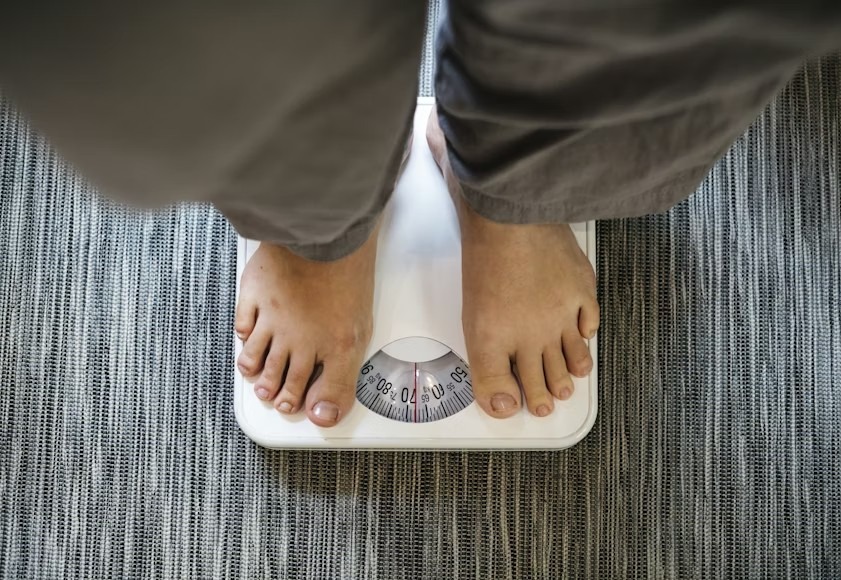
Basic Volume Calculation: 1–2 mL/kg Body Weight
The foundational formula for contrast volume calculation begins with 1–2 mL of contrast per kilogram of body weight. For routine body imaging, a target of 1.5 mL/kg provides a balanced starting point that can be further refined based on specific clinical indications.
This approach ensures that smaller patients aren't overdosed while larger patients receive adequate contrast for diagnostic studies.
The formula adapts further based on study type: vascular studies typically use the higher end of the range (2 mL/kg) to achieve dense arterial opacification, while routine non-vascular studies may use the lower end (1 mL/kg) to reduce overall iodine load. Upper limits still apply, with most protocols capping at 150 mL total volume regardless of patient weight.
Iodine Concentration Adjustments (300–400 mg I/mL)
The iodine concentration of your contrast media, measured in milligrams of iodine per milliliter (mg I/mL), directly influences flow rate requirements. Higher concentration formulations (370–400 mg I/mL) deliver more iodine per milliliter, allowing for reduced volumes while achieving equivalent enhancement.
This becomes particularly valuable for patients with renal insufficiency or when rapid injection is challenging due to limited venous access.
When adjusting protocols between different concentration products, maintaining the total iodine delivery rate (IDR) ensures consistent enhancement. The formula (Concentration × Flow Rate = IDR) helps translate between different contrast media.
For example, a protocol using 300 mg I/mL at 4 mL/s delivers 1200 mg I/s; this is equivalent to 350 mg I/mL at 3.4 mL/s.
How CT Contrast Formula Is Calculated
The foundation starts with weight-based dosing at 1–2 mL/kg body weight. A 70 kg patient typically receives 105 mL using the standard 1.5 mL/kg calculation for routine studies. However, this assumes a contrast concentration of 300 mg I/mL.
When using higher contrast concentrations (350–400 mg I/mL), volumes can be reduced proportionally while maintaining the same total iodine dose. The target iodine load of approximately 450 mg I/kg remains constant; only the volume changes. For 400 mg I/mL contrast, the formula adjusts to roughly 1.125 mL/kg.
Once volume is determined, flow rate and injection duration are linked by a simple equation:
- Volume (mL) = Flow Rate (mL/s) × Duration (s).
If your protocol requires 100 mL at 4 mL/s, the injection lasts 25 seconds. For cardiac studies needing rapid 12-second injections with 60 mL volume, the flow rate must reach 5 mL/s. This relationship ensures proper timing between contrast delivery and peak organ enhancement during image acquisition.
CT Contrast Flow Rate Protocol by Exam Type
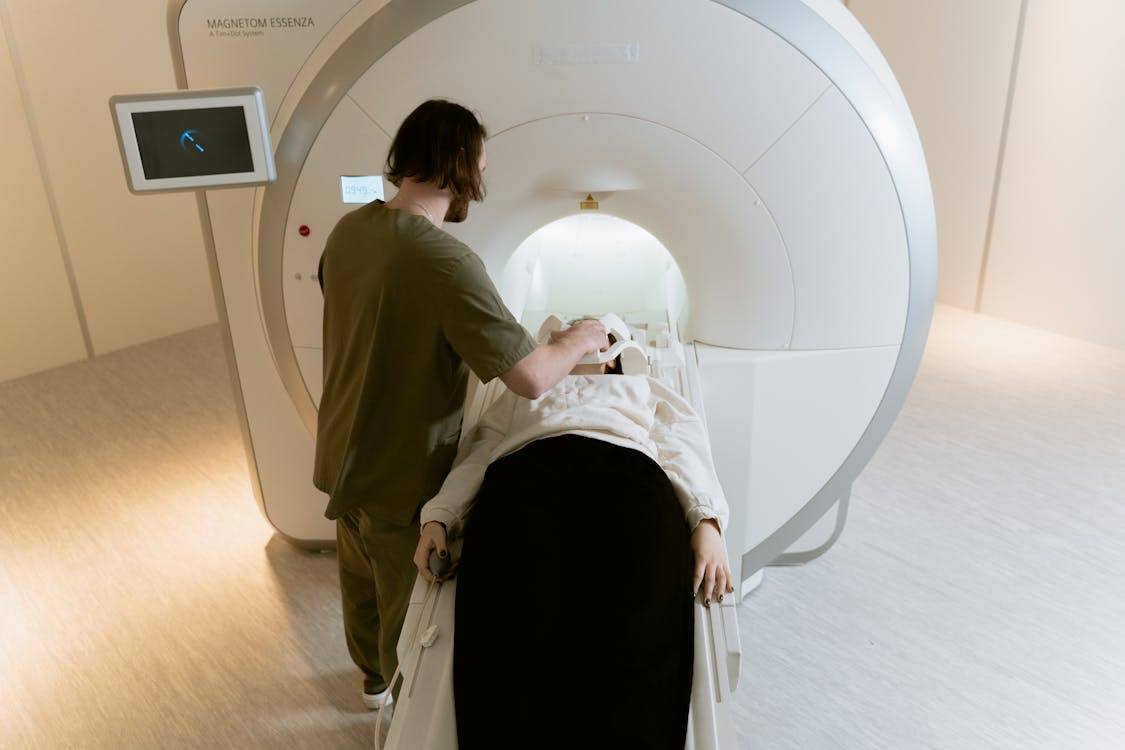
Brain CT: 2.0 mL/s for 100–125 mL Total
Brain CT studies utilize relatively conservative flow rates of approximately 2.0 mL/s to optimize enhancement of cerebral vasculature and parenchyma.
This moderate rate allows contrast to circulate through the cerebrovascular system while minimizing beam-hardening artifacts that can obscure subtle pathologies at the skull base. Total volumes typically range from 100–125 mL for adult patients, with the actual amount adjusted for patient weight and imaging purposes.
Enhancement targets for brain CT are more modest than those for angiographic studies, with parenchymal enhancement goals of 50–70 HU (Hounsfield Unit) being sufficient for lesion detection and characterization.
This moderate enhancement requirement allows for safer, more conservative protocols that reduce overall iodine load while maintaining diagnostic accuracy. For suspected stroke patients, flow rates may be increased slightly to improve visualization of vascular occlusions.
Chest/Abdomen CT: 2.0–3.0 mL/s for 80–150 mL
Routine chest and abdomen/pelvis studies benefit from intermediate flow rates of 2.0–3.0 mL/s, which provide optimal enhancement of solid organs while minimizing artifacts.
These protocols balance the need for adequate vascular opacification (particularly important for detecting pulmonary emboli or characterizing hepatic lesions) against the risk of extravasation with higher flow rates.
Volume requirements vary by region, with chest studies typically using 80–100 mL and abdomen/pelvis examinations requiring 125–150 mL. Multiphase abdominal studies may employ different rates for each acquisition phase.
Arterial phase imaging benefits from higher rates (3.0 mL/s) to maximize contrast between hypervascular lesions and background parenchyma, while portal venous phase imaging can utilize more moderate rates (2.0-2.5 mL/s) while still achieving the target 50+ HU enhancement of the liver.
Split-bolus techniques can further optimize contrast utilization by dividing the total volume between phases.
Cardiac CT: 4.0–6.0 mL/s for 60–80 mL
Cardiac CT protocols represent the high end of the flow rate spectrum, requiring 4.0–6.0 mL/s to achieve the dense opacification necessary for coronary artery evaluation. These protocols aim to enhance at least 250–300 HU within the coronary arteries to overcome cardiac motion and the small caliber of these vessels.
Despite the higher rates, total volumes are relatively modest (60–80 mL) due to the focused field of view and rapid acquisition times of modern scanners. These high-flow protocols demand optimal venous access, typically requiring 18–20 gauge catheters placed in the antecubital fossa.
Patient-specific factors, including cardiac output, significantly impact enhancement patterns, with modifications needed for heart failure patients (reduced flow rates, increased delays) versus athletic individuals (increased rates, shorter delays).
ECG-synchronized injection techniques can further optimize coronary opacification by timing contrast delivery to specific phases of the cardiac cycle.
CTA Protocol Adjustments for Vascular Enhancement
CT angiography protocols require significant modifications to standard flow parameters to achieve the dense vascular opacification necessary for detailed vascular mapping.
Flow rates of 4.0–5.0 mL/s represent the baseline for most CTA studies, with higher rates (5.0–6.0 mL/s) employed for cardiac and coronary applications. These protocols prioritize maximum arterial enhancement, usually targeting 300+ HU within the vessels of interest.
Bolus timing is particularly critical in CTA studies, with automated bolus-tracking techniques strongly preferred over fixed delays. Test bolus methods can further optimize acquisition timing by generating patient-specific time-enhancement curves that account for individual variations in cardiac output and circulation times.
For peripheral CTA studies covering extensive anatomy, table speed must be synchronized with contrast bolus progression to maintain consistent vascular enhancement throughout the acquisition.
CT Contrast Flow Rate by Exam Type Summary
Optimizing CT Contrast Flow with ContrastConnect
Getting CT contrast flow calculations right is critical for achieving consistent diagnostic image quality while minimizing the risk of inadequate enhancement, contrast extravasation, and unnecessary repeat scans. Because every protocol must account for patient weight, exam type, injection rate, and clinical factors such as renal function and venous access, consistent oversight is essential across all contrast-enhanced CT studies.
For imaging facilities managing multiple CT protocols, ContrastConnect provides virtual contrast supervision by qualified radiologists with experience across 75,000+ monthly contrast exam hours and 130+ reactions treated monthly. The HIPAA-compliant platform helps maintain safe, standardized contrast administration, supports CMS and ACR compliance, and reduces scan cancellations caused by supervision gaps. Contact us to build your customized coverage plan.
Frequently Asked Questions (FAQs)
What is the standard CT contrast flow rate for routine abdominal imaging?
For routine abdominal CT studies, flow rates of 2.0–3.0 mL/s are standard, with contrast volumes calculated at 1.5 mL/kg body weight (typically 125–150 mL for adult patients). Portal venous phase imaging achieves optimal liver enhancement of 50+ HU at these moderate rates.
Why is warming contrast media important for high-flow injections?
Warming contrast to body temperature (37°C) reduces viscosity by up to 50%, enabling smoother high-flow injections with lower pressure. This decreases the risk of extravasation, minimizes patient discomfort, and prevents power injector pressure limits from being triggered during rapid administration.
How should I adjust contrast protocols for patients with reduced kidney function?
For patients with eGFR below 45 mL/min/1.73 m², reduce the contrast volume by 25–50% while maintaining diagnostic flow rates. Consider a higher concentration contrast (370–400 mg I/mL) to compensate for volume reduction, and implement hydration protocols to minimize nephrotoxicity risk.
How does ContrastConnect support facilities performing contrast-enhanced CT studies?
ContrastConnect’s HIPAA-compliant virtual platform provides immediate access to qualified radiologists who supervise contrast administration in real time, ensuring CMS and ACR compliance.
With experience supervising 75,000+ contrast exam hours monthly and treating 130+ reactions monthly, our team of accredited radiologists deliver expert oversight that reduces cancellations, extends operating hours, and ensures audit-ready documentation for your facility.
*Note: Information provided is for general guidance only and does not constitute medical, legal, or financial advice. Pricing estimates and regulatory requirements are current at the time of writing and subject to change. For personalized consultation on imaging center operations and virtual contrast supervision, contact ContrastConnect.
Trusted Nationwide


















.avif)




1,000,000
Contrast exams supervised annually
75,000+
Hours of supervision monthly
3,900+
Technologists certified
100s
Of imaging partners nationwide
130+
Contrast reactions treated monthly
100%
Requested hours covered
Connect with us.

