Ohio HB 479 and Virtual Contrast Supervision: 2026 Requirements & Updates Explained


Key Takeaways
- CMS made virtual direct supervision a permanent policy on January 1, 2026, and Ohio's HB 479 is designed to align state law with this federal standard.
- Imaging facilities in Ohio cannot yet rely solely on virtual supervision under existing state law, as HB 479 is still moving through the legislative process.
- Even after HB 479 passes, on-site qualified personnel who can recognize and treat contrast reactions are still required.
- At ContrastConnect, we built our services around this emerging framework, offering facilities a structured, HIPAA-compliant pathway to virtual contrast supervision. With us, your team will get the coverage and compliance infrastructure to meet CMS requirements under both current and evolving federal oversight standards.
Ohio HB 479 Proposes to Change How Contrast Supervision Works
For years, Ohio's contrast supervision rules have lagged behind both federal policy and clinical reality. A qualified supervising physician physically present at the location was the standard expectation under the existing Ohio statute. However, this creates unnecessary bottlenecks for facilities trying to deliver timely, high-quality diagnostic imaging to patients across the state.
Ohio House Bill 479 directly addresses this issue. Championed through the Ohio House of Representatives, the bill proposes updating Ohio law to allow a physician to supervise contrast media administration remotely via real-time, two-way audiovisual communication, rather than requiring physical presence at the facility.
Until HB 479 passes and is signed into law, Ohio imaging facilities operating under state licensure must continue to follow existing Ohio supervision requirements, even if CMS policy would otherwise allow virtual oversight.
ContrastConnect: Virtual Contrast Supervision That Never Misses
Built by Radiologists | 75,000+ Monthly Contrast Exams | Trusted Nationwide

Built for Imaging Networks:
- Virtual Contrast Supervision: Radiologists provide immediate CMS-compliant supervision through a secure, HIPAA-compliant platform for outpatient facilities and hospital networks.
- Unmatched Experience: 130+ contrast reactions treated monthly with 3,700+ technologists certified.
The ContrastConnect Difference:
- ✓ Radiologist-owned with superior clinical expertise
- ✓ Always-on platform with guaranteed compliance
- ✓ Audit-ready documentation for CMS reviews
- ✓ Cost-efficient alternative to onsite staffing
Safety & Compliance You Trust:
Helping imaging centers reduce cancellations, extend hours, and scale operations without adding on-site radiologists. Response times measured in seconds.
What Virtual Direct Supervision Means Under HB 479
Under Ohio HB 479, the standard is more precise and more demanding than informal remote availability. Here are the requirements that must be met under HB 479:
Real-Time Audiovisual Requirement
HB 479 requires that the supervising physician be available through real-time, two-way audiovisual communication at the time contrast is administered. This means the connection must be live, bidirectional, and capable of supporting immediate clinical interaction, not a delayed message system, phone-only line, or a scheduled check-in. The radiologist must be reachable and virtually present when contrast is administered to the patient.
The audiovisual platform used must also meet HIPAA compliance requirements, meaning consumer-grade video tools like FaceTime or standard Zoom accounts do not qualify. Facilities need purpose-built, encrypted platforms designed specifically for clinical supervision workflows.
How "Immediate Availability" Is Redefined in the Bill
Under Ohio's existing statute, "immediate availability" has generally been interpreted to mean physical proximity. HB 479 reframes this concept by tying availability to communication capability rather than physical location.
A radiologist working from a remote reading room in Columbus can supervise a contrast injection at a facility in rural southeastern Ohio, provided the audiovisual connection is active and compliant.
What On-Site Personnel Must Still Be Present
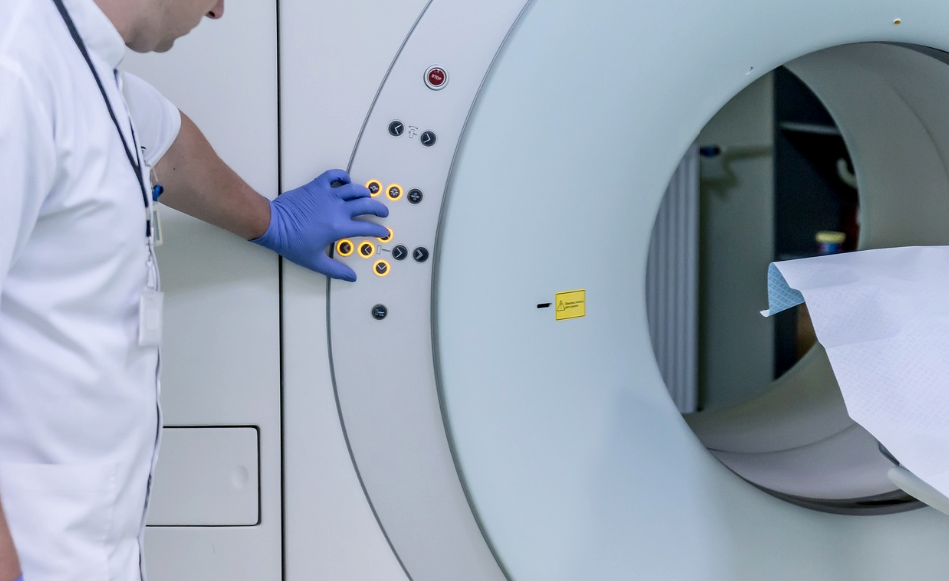
Virtual supervision under HB 479 does not mean the facility operates without qualified clinical staff on-site. The bill explicitly requires that a qualified on-site provider be present; this means someone trained to recognize contrast reactions and to initiate an emergency response if needed. The on-site provider is a separate, ground-level safety layer, not a stand-in for the supervising radiologist.
Patient Safety Requirements That HB 479 Keeps in Place
Physician Training & Qualification Standards
The supervising physician under HB 479 must be qualified to oversee contrast administration. The radiologist or supervising provider must have the clinical knowledge to guide an emergency response in real time if a contrast reaction occurs during the procedure. Virtual presence carries the same responsibility, as the physician must remain engaged and ready throughout the supervision window.
Facilities should ensure their supervising physicians are current on contrast reaction recognition and management protocols, including the American College of Radiology (ACR) guidelines on contrast media administration. This includes familiarity with premedication protocols for high-risk patients, recognition of breakthrough reactions, and the escalation pathway from on-site staff to supervising physician to emergency services when needed.
On-Site Emergency Response Obligations
HB 479 is explicit: even with a qualified radiologist supervising virtually, the imaging facility must maintain an on-site provider trained to respond to contrast reactions. This requirement reflects the clinical reality that a physician on a video screen cannot administer epinephrine. Someone physically present must be ready to act.
- Emergency contrast reaction kits must be stocked and accessible in the imaging suite.
- On-site staff must be trained in recognizing contrast reactions and in initial management protocols.
- Clear escalation procedures must be documented and rehearsed, including when to call 911.
- The supervising radiologist must be immediately reachable via the audiovisual platform to guide on-site response in real time.
What Ohio Imaging Facilities Should Do Right Now
HB 479 has not yet been signed into law, which means Ohio imaging facilities are operating in a transitional period that requires careful, deliberate compliance management.
Operating Legally Under Current Ohio Law Before HB 479 Passes
Until HB 479 is enacted, Ohio facilities must continue to operate under existing state supervision requirements. This means that facilities relying on virtual supervision arrangements should work closely with legal counsel to assess whether their current setup aligns with Ohio statutes and CMS policies.
Some facilities have chosen to maintain in-person supervising physician coverage for contrast cases while monitoring HB 479's progress and preparing their virtual supervision infrastructure in parallel. This approach is a pragmatic strategy for facilities that want operational continuity when the law changes.
Technology & HIPAA Compliance Checklist for Virtual Supervision
When HB 479 passes, facilities already equipped with the necessary technology will be able to activate virtual supervision programs immediately. The platform you use must support real-time, two-way audiovisual communication, be encrypted end-to-end, and operate under a Business Associate Agreement (BAA) that satisfies HIPAA requirements.
Your audiovisual system should also support session logging for documentation and audit purposes.
HB 479 Has Passed the Ohio House & Is Now in the Senate

As of 2026, HB 479 has passed the Ohio House of Representatives and continues to move through the legislative process. The bill's trajectory reflects growing legislative recognition that Ohio's existing contrast supervision statute needs to catch up with both federal policy and clinical practice.
Imaging facilities, radiology groups, and healthcare attorneys across the state are closely monitoring its progress because, once it is signed into law, the operational process for contrast supervision in Ohio will change permanently.
Facilities should not wait for final passage before beginning preparations. The bill's language is clear enough that compliance teams can now start building virtual supervision protocols, evaluating HIPAA-compliant audiovisual platforms, and training on-site staff. When HB 479 is enacted, the facilities that are already operationally ready will have a significant advantage over those scrambling to stand up new workflows after the fact.
Stay Ahead of Ohio HB 479 With ContrastConnect

Whether HB 479 has passed by the time you read this or is still working through the Ohio Senate, the underlying compliance challenge is the same. Your facility needs a supervision model that meets both state and federal standards, protects patients, and keeps your operations running without unnecessary bottlenecks. At ContrastConnect, we provide virtual contrast supervision services tailored to this regulatory environment.
Our platform is HIPAA-compliant, supports real-time two-way audiovisual communication, and is designed to meet the supervision framework codified in HB 479 and the CMS permanent rule that took effect January 1, 2026. With thousands of contrast reactions managed and a zero-missed-response record, we have built ContrastConnect specifically for the realities of high-volume radiology practice, where speed, reliability, and documentation accuracy are not negotiable.
Start your coverage assessment with ContrastConnect now
Frequently Asked Questions (FAQs)
Is virtual contrast supervision currently legal in Ohio before HB 479 passes?
Virtual contrast supervision is not yet explicitly authorized under Ohio state law. Existing Ohio statute implies that direct supervision requires physical presence or immediate in-person availability. Facilities relying on virtual supervision arrangements for state-licensed operations should have those arrangements reviewed by healthcare counsel familiar with Ohio licensure rules.
Does HB 479 change technologist training requirements for contrast administration?
HB 479 is focused specifically on the supervision standard for the administering physician or supervising radiologist. It does not restructure technologist training or certification requirements for contrast administration. Radiologic technologists working in Ohio imaging facilities should continue to follow existing ARRT certification standards, Ohio Department of Health guidance, and ACR contrast administration protocols.
What technology does a facility need to meet HB 479's audiovisual requirements?
HB 479 requires real-time, two-way audiovisual communication between the supervising radiologist and the imaging facility during contrast administration. This means the platform must support live video and audio simultaneously, in both directions, without meaningful delay. Consumer platforms like standard FaceTime or non-enterprise Zoom accounts do not meet HIPAA requirements and should not be used for clinical supervision workflows.
How does HB 479 affect independent imaging centers versus hospital-based facilities?
The impact of HB 479 will be felt most acutely by independent outpatient imaging centers, particularly those in rural or underserved areas where on-site radiologist coverage is expensive or logistically difficult to maintain. Hospital-based imaging departments typically have physicians on-site and may experience less immediate operational changes.
Can ContrastConnect provide evenings, weekends, and last-minute supervision?
Yes, at ContrastConnect, we designed our services around the operational realities of imaging facilities. Our model is designed to absorb unpredictable moments during contrast cases without leaving your facility uncovered or forcing you to cancel patient appointments. We connect dedicated supervising physicians to your facility via live audio and video within seconds, and provide audit-ready documentation for every session.
*Note: Information provided is for general guidance only and does not constitute medical, legal, or financial advice. Pricing estimates and regulatory requirements are current at the time of writing and subject to change. For personalized consultation on imaging center operations and virtual contrast supervision, contact ContrastConnect.
Trusted Nationwide


















.avif)




1,000,000
Contrast exams supervised annually
75,000+
Hours of supervision monthly
4,100+
Technologists certified
500+
Imaging partners nationwide
130+
Contrast reactions treated monthly
100%
Requested hours covered
Connect with us.

