CT Contrast Reaction Rate: Frequency, Management & Supervision Explained


Key Takeaways
- Overall acute CT contrast reactions occur in well under 1% of patients; most are mild, and severe reactions occur in about 0.01–0.04% of cases.
- Most life-threatening contrast reactions occur within the first 20 minutes after injection, making proper monitoring protocols essential.
- Patients with a history of previous contrast reactions have up to 35% risk of recurrence without premedication prophylaxis.
- Healthcare facilities must maintain specific emergency equipment and medication supplies to manage potential contrast reactions.
- With physicians supervising over 55,000 contrast exams monthly and managing 130+ contrast reactions, ContrastConnect offers clinical expertise that ensures patient safety and regulatory compliance.
How Common Are CT Contrast Reactions?
Moderate adverse reactions to intravenous iodinated contrast material occur in fewer than 1% of patients. This statistic often surprises patients who may have heard exaggerated accounts of the risks of contrast reactions.
The actual frequency varies based on the type of contrast agent used, with newer low-osmolality and iso-osmolality agents showing significantly improved safety profiles compared to older high-osmolality agents.
Understanding the likelihood of different reaction severities helps both patients and providers maintain an appropriate perspective.
Most Reactions Are Mild
Most acute contrast reactions are mild. Across modern low-osmolality iodinated agents, overall acute adverse reactions are typically well under 1%, and the majority of those events are mild. These reactions include sensations of warmth or flushing (which most patients experience and is considered normal), nausea or mild vomiting, mild itching, or limited skin rashes like hives.
These mild reactions are self-limited and usually require only observation, reassurance, and basic supportive measures. The symptoms typically subside within minutes without intervention. Patients with mild responses generally don't require premedication for future contrast studies unless they have experienced multiple mild reactions or have other risk factors.
Moderate Reaction Frequency
Moderate reactions are uncommon and represent a small subset of overall acute reactions. When they occur, they require prompt assessment and treatment but typically respond well to standard protocols. These include more pronounced symptoms such as widespread urticaria (hives), marked nausea and vomiting, facial swelling, mild bronchospasm (breathing difficulty), or moderate hypotension (low blood pressure).
Every radiology department maintains protocols and medications specifically designed to address these reactions quickly. The risk of a moderate reaction increases in patients with a history of prior contrast reactions, asthma, and multiple allergies.
Severe Reaction Statistics: 0.01–0.04%
Severe, potentially life-threatening reactions are rare, occurring in only about 1 in 2,500 to 1 in 10,000 patients. These include severe bronchospasm, laryngeal edema (throat swelling), seizures, clinically manifest arrhythmias, or profound hypotension.
Nearly all life-threatening reactions manifest within the first 20 minutes after contrast injection, which is why observation protocols are so important.
Fatal Reactions: Extremely Rare (1 in 170,000)
Fatal reactions to modern contrast agents are infrequent. A commonly cited conservative estimate is about 1 fatal reaction per 170,000 administrations, though true mortality incidence is difficult to measure and varies by dataset and era.
This represents a dramatic improvement from earlier contrast agents, which had significantly higher fatality rates. Most fatalities result from either anaphylactic reactions or cardiopulmonary arrest.
ContrastConnect: Virtual Contrast Supervision That Never Misses
Built by Radiologists | Trusted Nationwide | 55,000+ Monthly Contrast Exams

Built for Imaging Networks:
- Virtual Contrast Supervision: Radiologists provide immediate CMS-compliant supervision through a secure, HIPAA-compliant platform for outpatient facilities and hospital networks.
- Unmatched Experience: Averaging 5–10 contrast reactions daily with documented zero missed responses for 200+ imaging partners.
The ContrastConnect Difference:
- ✓ Radiologist-owned with superior clinical expertise
- ✓ Always-on platform with guaranteed compliance
- ✓ Audit-ready documentation for CMS reviews
- ✓ Cost-efficient alternative to onsite staffing
Safety & Compliance You Trust:
Helping imaging centers reduce cancellations, extend hours, and scale operations without adding on-site radiologists. Response times measured in seconds.
Recognizing Contrast Reaction Symptoms

Immediate Reactions (Within 60 Minutes)
Immediate reactions typically occur while the patient is still in the imaging department, enabling prompt medical intervention. These reactions are classified as "allergic-like" because they mimic allergic reactions, though the mechanism is often different.
Most immediate reactions manifest within the first 5–20 minutes after contrast injection, though vigilant monitoring typically continues for 30–60 minutes. Common immediate mild reaction symptoms include warmth, flushing, nausea, vomiting, mild urticaria (hives), headache, dizziness, anxiety, altered taste, itching, and mild rash.
Moderate reactions might present with more extensive hives, pronounced nausea and vomiting, facial swelling, wheezing, or mild drops in blood pressure. Severe immediate responses, the most dangerous, can include severe bronchospasm, laryngeal edema causing throat closure, convulsions, clinically significant cardiac arrhythmias, or severe hypotension leading to shock.
Delayed Reactions (Hours to a Week or More)
Delayed reactions may appear hours or even days after exposure. These reactions are often overlooked because patients have typically left the imaging facility by the time symptoms develop.
The most common delayed reaction is a skin rash, which can range from mild to severe and often presents as a morbilliform (measles-like) rash. Other delayed reactions can include persistent nausea, vomiting, headache, fever, and flu-like symptoms. Rarely, more serious delayed skin reactions can occur and require urgent medical evaluation.
When to Seek Emergency Help
Patients should seek immediate medical attention if they experience difficulty breathing, facial or throat swelling, rapid or irregular heartbeat, severe dizziness, or severe rash after receiving contrast media.
These symptoms could indicate a severe reaction requiring emergency intervention. Even if symptoms appear after leaving the imaging facility, they should be treated as potentially serious if they're severe or worsening.
Contact your healthcare provider promptly for less severe but persistent symptoms, such as mild rashes, itching, nausea, or headaches that don't resolve with over-the-counter treatments.
How Healthcare Teams Manage Contrast Reactions
1. Mild Reaction Management
Most mild reactions resolve spontaneously and require only observation and reassurance. The imaging team will typically monitor vital signs while providing comfort measures. Patients are monitored until symptoms are clearly improving and stable, following site protocol.
- For warmth/flushing: Reassurance and observation
- For nausea/vomiting: Antiemetic medications if needed
- For mild urticaria/itching: Antihistamines such as diphenhydramine
- For anxiety: Calm environment and clear communication
- For headache: Analgesics as appropriate
Documentation of even mild reactions is essential as it helps determine whether premedication might be beneficial for future contrast-enhanced studies. Patients with recurrent mild reactions may benefit from premedication protocols before subsequent contrast administration.
2. Moderate Reaction Protocols
Moderate reactions require active medical intervention with medications and closer monitoring. Treatments may include IV fluids, injectable antihistamines, corticosteroids, and possibly bronchodilators for respiratory symptoms.
Oxygen therapy is often provided, and vital signs are continuously monitored. Patients experiencing moderate reactions may require prolonged monitoring and escalation of care depending on symptom trajectory and response to treatment.
3. Severe Reaction Emergency Response
Severe reactions constitute medical emergencies requiring immediate activation of emergency response protocols. The imaging team will often call for additional assistance, including emergency medicine specialists or a rapid response team.
Treatment typically involves administering epinephrine as the first-line medication, along with aggressive airway management, IV fluid resuscitation, and additional medications as needed.
Advanced cardiac life support protocols may be initiated for cardiovascular complications. Patients with severe reactions require hospitalization for continued monitoring and management, often in an intensive care setting.
Proper Supervision Standards for Contrast Administration
Required Personnel Qualifications
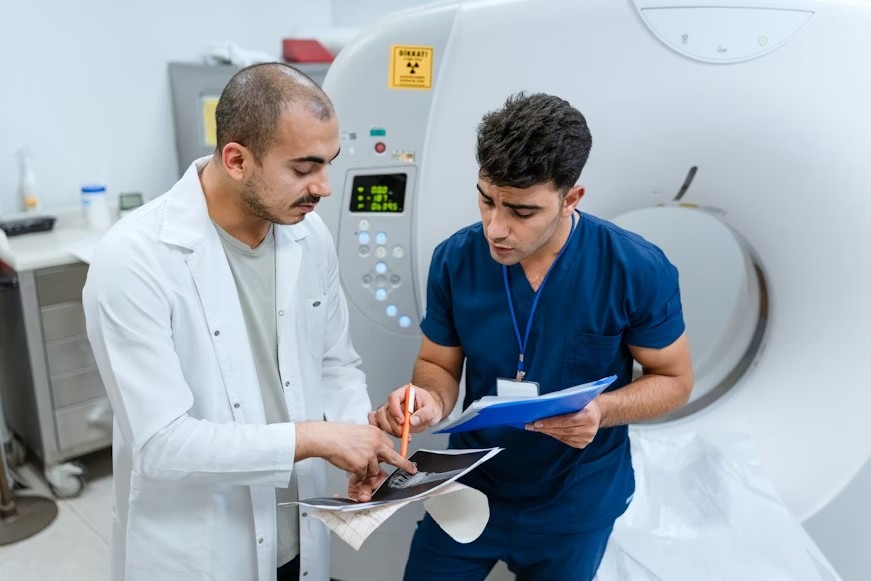
The administration of intravenous contrast media requires specific training and credentials. Typically, registered nurses, radiologic technologists with special certification, or other healthcare professionals with documented training in contrast administration and reaction management are authorized to perform these procedures.
All personnel involved must maintain current certification in basic life support (BLS), while at least one team member with advanced cardiac life support (ACLS) certification should be readily available during contrast administration.
On-Site Supervision vs. Virtual Supervision
Traditional on-site supervision requires a physician, typically a radiologist, to be physically present in the immediate vicinity during contrast administration. This model ensures the shortest possible response time in the event of an emergency.
Virtual supervision models, in which the supervising physician monitors procedures remotely via telehealth technology, must meet specific requirements to be considered compliant with safety standards. CMS policies allow “direct supervision” via real-time audio/video virtual presence in eligible settings; this has been finalized as a permanent option for certain services effective January 1, 2026.
These typically include real-time audiovisual communication capabilities, immediate availability of on-site personnel with appropriate training, and clear escalation protocols. Facilities must carefully evaluate their specific circumstances, patient populations, and available resources when determining the most appropriate supervision model.
Equipment and Medication Readiness
Every facility administering contrast media must maintain immediate access to emergency equipment and medications. Required items include oxygen delivery systems, suction equipment, airway management supplies (including endotracheal tubes), intravenous access supplies, and a fully stocked emergency cart (crash cart) with a defibrillator.
At minimum, sites should have immediate access to key medications for rapid reaction management, including intramuscular epinephrine, an inhaled short-acting beta-agonist (e.g., albuterol), and an antihistamine. Additional medications and equipment may be stocked based on site needs, emergency response availability, and patient population.
A periodic monitoring program to verify equipment function and medication shelf life is recommended, with documentation per site policy. Many facilities use standardized checklists to ensure no critical items are overlooked. Regular mock emergency drills help ensure all staff members know the location of emergency equipment and are familiar with its use.
Safe Contrast Administration with ContrastConnect
At ContrastConnect, we specialize in providing CMS-compliant virtual contrast supervision that ensures your facility is always prepared. Our specialized radiologists supervise more than 55,000 contrast exams monthly and manage over 130 contrast reactions each month—clinical experience that far surpasses what most onsite providers encounter in years.
For imaging facilities facing radiologist shortages, cancelled scans, or compliance concerns, ContrastConnect delivers consistent coverage through our secure, HIPAA-compliant platform. We provide comprehensive technologist training, including mock code drills, standardized medication protocols, and quarterly readiness assessments to keep your team prepared for any scenario.
Whether you need to extend hours, open new sites, or simply ensure audit-ready documentation, ContrastConnect offers scalable solutions built by radiologists who understand your challenges.
Contact us to build your customized coverage plan.
Frequently Asked Questions
How common are severe CT contrast reactions?
Severe, life-threatening reactions are rare, occurring in only about 0.01–0.04% of patients (roughly 1 in 2,500 – 1 in 10,000). Fatal reactions are infrequent, at approximately 1 in 170,000 administrations. Mild reactions, affecting less than 1% of patients, are the most common and typically resolve without treatment.
What are the warning signs of a contrast reaction?
Immediate symptoms include warmth, flushing, nausea, hives, itching, and headache for mild reactions. Moderate reactions may present with widespread hives, facial swelling, or wheezing. Severe reactions include difficulty breathing, throat swelling, seizures, or profound low blood pressure. Seek emergency help for breathing difficulty or throat swelling.
Can I receive contrast again if I've had a previous reaction?
Yes, in many cases. Prior mild-to-moderate reactions can often be managed with premedication protocols using antihistamines and corticosteroids. For severe reactions, alternatives may include different contrast agents, intensive premedication, or non-contrast imaging methods. Each case requires individualized risk-benefit analysis.
What supervision is required during contrast administration?
Proper supervision requires qualified personnel with documented contrast administration training, BLS certification, and immediate access to someone with ACLS certification. Facilities must maintain emergency equipment, including oxygen, airway management supplies, IV access, a crash cart with a defibrillator, and emergency medications like epinephrine.
How does ContrastConnect ensure safe contrast supervision?
ContrastConnect provides immediate access to specialized radiologists through a secure, HIPAA-compliant virtual platform. Our physicians supervise over 55,000 contrast exams monthly and manage 130+ reactions each month—experience that far exceeds typical onsite providers. We ensure CMS, ACR, and ASRT compliance with audit-ready documentation.
*Note: Information provided is for general guidance only and does not constitute medical, legal, or financial advice. Pricing estimates and regulatory requirements are current at the time of writing and subject to change. For personalized consultation on imaging center operations and virtual contrast supervision, contact ContrastConnect.
Trusted Nationwide


















.avif)




1,000,000
Contrast exams supervised annually
75,000+
Hours of supervision monthly
4,100+
Technologists certified
500+
Imaging partners nationwide
130+
Contrast reactions treated monthly
100%
Requested hours covered
Connect with us.

