Contrast Coverage Models: Remote, Locum, In-House, and Per-Diem

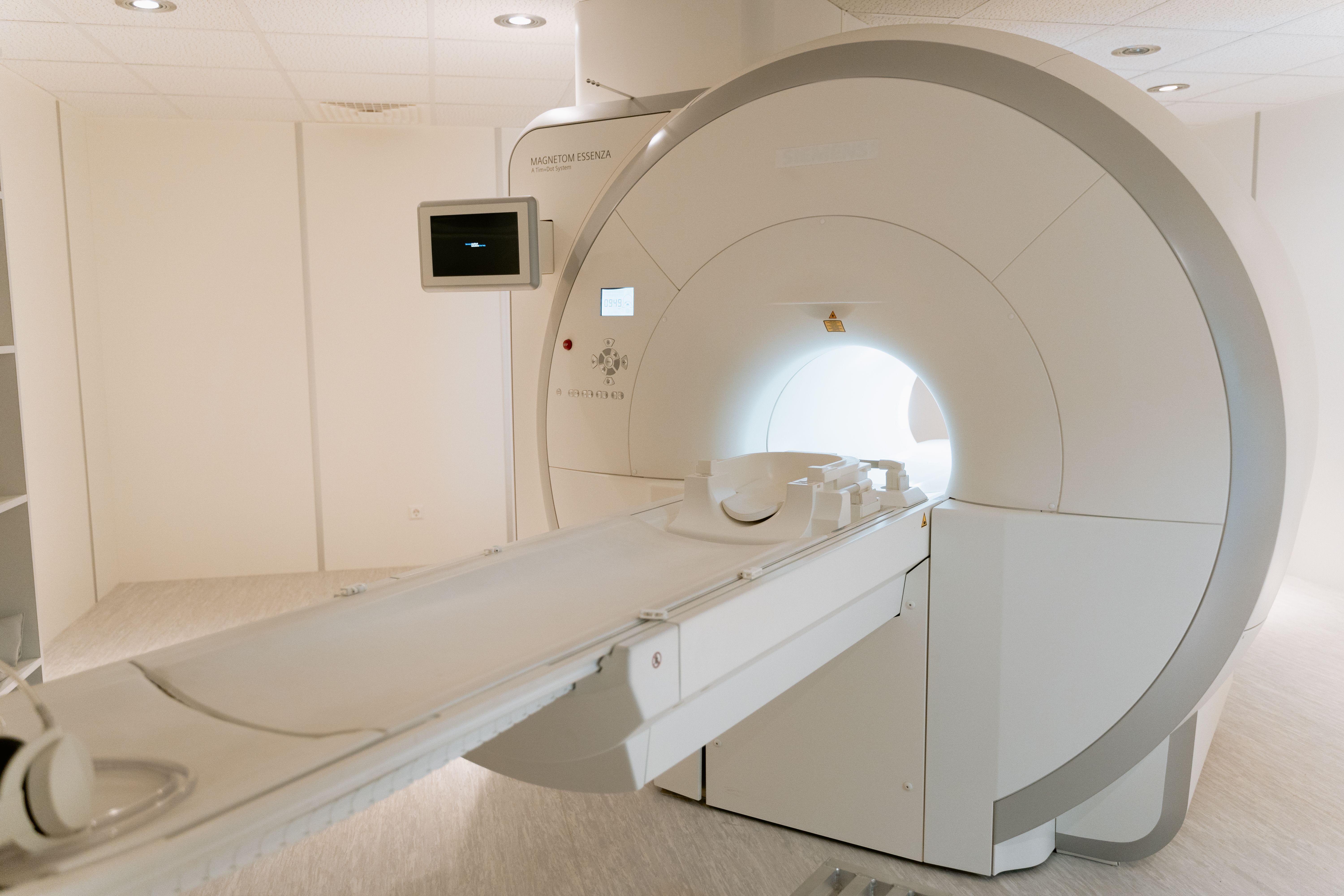
Contrast supervision is the requirement. Contrast coverage is how you staff it — which physicians are available, at which sites, during which hours. The requirement is fixed; the coverage model is a choice, and facilities have four broad options plus combinations of them.
This guide compares the models, looks at how each performs across different coverage windows, and outlines how to work out which fits your situation.
This article is general operational information and contains no pricing figures. It is not legal, compliance, or financial advice. Supervision requirements apply regardless of coverage model — confirm what applies to your facility with your own compliance and legal professionals.
The Four Models
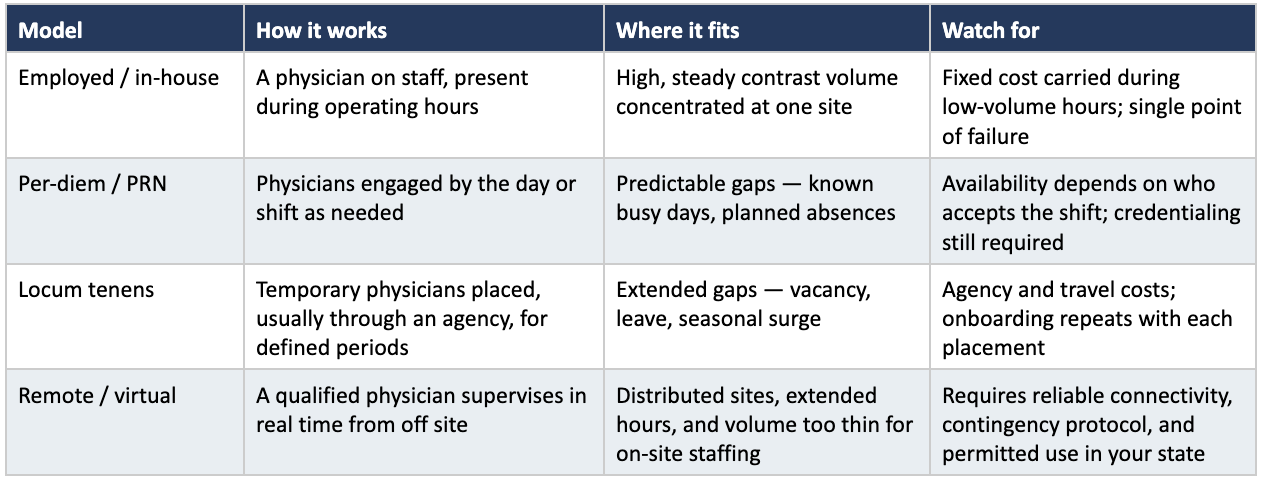
The models are not mutually exclusive, and most organizations above a certain size end up combining them — typically an on-site physician anchoring core hours at the main site, with another model extending coverage into the hours and locations that cannot support one.
How the Cost Structures Behave
Rather than comparing headline rates, it helps to understand how each model responds to changes in volume and hours. Employed coverage is largely a fixed cost: efficient at high, steady utilization and expensive when contrast volume is thin or concentrated in short windows. Per-diem and locum are variable but chunky — you buy a shift or a placement, not the hours you need. Remote coverage typically scales more closely with the coverage window itself.
Which is cheapest depends entirely on your own volume shape. A model that looks expensive at one utilization level can be the economical one at another, so model each structure against your actual pattern of contrast studies rather than comparing rates in the abstract.
Covering Different Windows
Most facilities do not need one coverage model — they need a plan that handles several distinct windows, each with a different economics.
Daytime, core hours
The easiest window to cover and the one where volume most often justifies an on-site presence. At a main site with strong contrast volume, employed coverage frequently makes sense here. At smaller sites, even core hours may not support it.
Evenings and extended hours
Volume typically thins while the supervision requirement does not. This is where fixed on-site coverage is least efficient, and where remote coverage or per-diem arrangements usually fit better — or where facilities simply stop offering contrast, which is the expensive option nobody accounts for.
Weekends
Often significant contrast volume with the least appetite for on-site staffing. Weekend coverage is a common first use case for remote models because the gap is well defined and the cost comparison is stark.
Holidays and planned absences
Predictable but awkward. Locum placements suit extended absences; per-diem and remote coverage suit shorter, known gaps. The failure mode here is treating each occurrence as a one-off scramble rather than a recurring, plannable pattern — holidays arrive on schedule every year.
Unplanned gaps
Illness, resignation, or a physician unexpectedly unavailable mid-day. This is where coverage models are actually tested. Worth asking of any arrangement: what happens when the person who was supposed to be available is not?
What Doesn’t Change Between Models
Whichever model you use, the same obligations attach:
- The supervision standard is identical. No model relaxes what is required — they differ only in how availability is supplied.
- Licensure and credentialing still apply. Every supervising physician needs appropriate licensure for the patient’s state and privileges at the facility, regardless of employment arrangement.
- Documentation is required either way. The record must identify who supervised and evidence their availability.
- On-site readiness remains necessary. Reaction kit, trained staff, and escalation path are facility responsibilities under every model.
Working Out What Fits
- When do contrast studies actually occur, by site, day, and hour?
- Which of those windows currently have reliable coverage, and which do not?
- How much contrast volume are you declining, deferring, or redirecting for coverage reasons?
- What are you currently spending on coverage, and how much of it falls in hours with little contrast volume?
- What happens operationally when your current arrangement fails unexpectedly?
The last question tends to be the most revealing, because it separates a coverage model that works on a normal day from one that holds up on a bad one.
How ContrastConnect Fits
ContrastConnect provides remote physician supervision of contrast administration — the fourth model above. It is not a replacement for every arrangement, and facilities with dense contrast volume at a single site may be well served by on-site coverage during core hours. Where it fits best is the windows the other models cover poorly: extended hours, weekends, satellite and lower-volume sites, and the recurring gaps that would otherwise be handled as a scramble or not handled at all.
Trusted Nationwide


















.avif)




1,000,000
Contrast exams supervised annually
75,000+
Hours of supervision monthly
3,900+
Technologists certified
100s
Of imaging partners nationwide
130+
Contrast reactions treated monthly
100%
Requested hours covered
Connect with us.

