Virtual Contrast Supervision ROI: Financial & Accessibility Considerations


Key Takeaways
- Virtual contrast supervision became permanent under the 2026 CMS Physician Fee Schedule, allowing remote radiologists to meet direct supervision requirements via real-time audiovisual technology, with audio-only links and consumer video apps explicitly excluded.
- Replacing dedicated on-site coverage with virtual supervision can offset the cost of a single radiologist's fully loaded salary of roughly $450,000 to $700,000+ annually, a number pushed higher by a chronic shortage of around 13 radiologists per 100,000 people and a 130-day average time-to-fill.
- Continuous virtual coverage recovers revenue that would otherwise leak out as canceled or downgraded contrast exams when on-site supervision lapses, and across a multi-site network, that recovered revenue often funds the entire virtual supervision contract.
- The financial case only holds if the supervision model survives a CMS audit, which requires documented physician identity, continuous availability, the technology platform used, and on-site personnel involved, with records retained for six years for Medicare Fee-for-Service and ten years for Medicare Advantage.
- ContrastConnect provides radiologist-built virtual contrast supervision featuring audit-ready documentation, response times measured in seconds, and round-the-clock coverage trusted by imaging networks nationwide.
How Virtual Supervision Reshapes Imaging Center Economics
Virtual contrast supervision changes the economics of imaging centers by allowing one remote radiologist to cover multiple sites simultaneously. Instead of paying a full salary to keep a physician physically present at every facility, networks can now share supervisory capacity across locations and pay for it based on actual exam volume. CMS made this model permanent on January 1, 2026, giving multi-site operators a compliant alternative to the old "physically present" rule.
The savings show up in three places. Networks cut the high cost of dedicated on-site staffing, recover revenue from contrast scans that would otherwise be canceled when coverage lapses, and unlock viable supervision for rural sites that previously could not justify a full-time physician. Compliance discipline ties the model together, since CMS only recognizes virtual supervision when sessions run on real-time audiovisual platforms with proper documentation.
We'll break down each driver below, compare virtual against on-site staffing costs, and walk through what audit-ready supervision looks like in practice.
ContrastConnect: Virtual Contrast Supervision That Never Misses
Built by Radiologists | 75,000+ Monthly Contrast Exams | Trusted Nationwide

Built for Imaging Networks:
- Virtual Contrast Supervision: Radiologists provide immediate CMS-compliant supervision through a secure, HIPAA-compliant platform for outpatient facilities and hospital networks.
- Unmatched Experience: 130+ contrast reactions treated monthly with 3,700+ technologists certified.
The ContrastConnect Difference:
- ✓ Radiologist-owned with superior clinical expertise
- ✓ Always-on platform with guaranteed compliance
- ✓ Audit-ready documentation for CMS reviews
- ✓ Cost-efficient alternative to onsite staffing
Safety & Compliance You Trust:
Helping imaging centers reduce cancellations, extend hours, and scale operations without adding on-site radiologists. Response times measured in seconds.
The Financial Pressure of On-Site Contrast Supervision
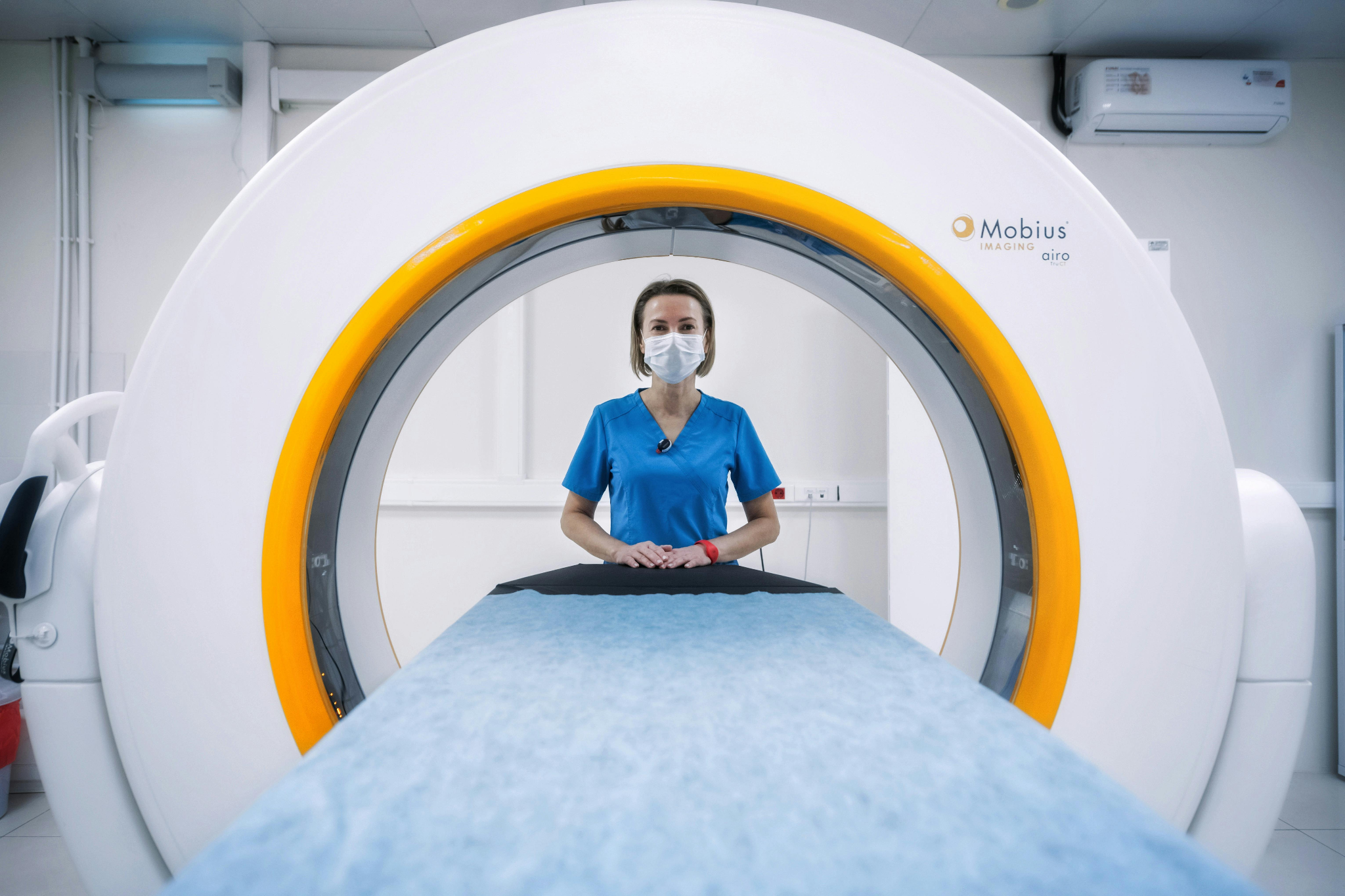
Outpatient imaging centers operating contrast scanners under the old "physically present" rule had to keep a supervising physician inside the office suite for every contrast-enhanced exam. That presence is expensive.
According to verified physician compensation data, the median radiologist salary in 2026 sits at roughly $585,000, with most reporting between $520,000 and $620,000. Layer in malpractice coverage, benefits, signing bonuses, and productivity incentives, and a single fully loaded full-time hire can run well above $700,000.
The shortage compounds the cost. There are roughly 13 radiologists per 100,000 people nationwide, and states like Oklahoma, Mississippi, Nevada, and Wyoming are closer to 9, with an average time-to-fill of around 130 days for a full-time radiology position. For networks with 20 to 200+ sites, replicating that hire location by location is rarely financially viable, and recruitment delays often leave contrast scanners idle while patients are sent elsewhere.
How Virtual Contrast Supervision Drives ROI
Virtual supervision changes the math by allowing one qualified radiologist to cover multiple sites simultaneously via a HIPAA-compliant audiovisual platform. The ROI shows up in three places: direct staffing savings, recovered exam revenue, and operational headroom to expand without proportional headcount.
Lower Staffing Costs Across Multi-Site Networks
Instead of paying for full-day coverage at every facility, much of which sits idle between contrast injections, networks pay for centralized supervisory capacity priced against actual exam volume. A 30-site network that previously needed dedicated or rotating physicians at multiple locations can consolidate that coverage onto a remote team.
The gap between locum tenens day rates, permanent salaries, and a virtual contract is typically large enough to fund several other operational priorities once consolidated, including technologist training and equipment refresh cycles.
Revenue Recovery From Reduced Cancellations
When a supervising physician calls out, contrast-enhanced exams that day get canceled or downgraded to non-contrast studies that may not answer the clinical question. A typical outpatient contrast CT runs in the hundreds to low thousands of dollars, so losing even a handful of slots a week becomes meaningful at the facility level.
Continuous virtual coverage holds the schedule together, recovering revenue that would otherwise leak out as rebooked or referred-out studies. Across a multi-site network, recovered revenue often funds the entire virtual supervision contract.
Scaling Coverage Without Adding Headcount
Networks pursuing growth, including extended evening and weekend hours, new rural locations, or higher-volume protocols, historically had to recruit ahead of demand. Virtual supervision flips that order: capacity is added through the platform rather than the labor market, so a new site can come online without a 130-day physician hiring cycle. That removes one of the longest lead-time variables in imaging center expansion and lets operators time openings to referral demand rather than recruiter availability.
Accessibility Gains for Rural & Underserved Networks
Accessibility is where the financial case and patient impact line up. Rural communities feel the radiologist shortage most acutely, and freestanding centers in those markets have historically capped contrast hours or sent patients to distant hospitals because hiring a dedicated supervising physician was never financially viable.
The permanent CMS rule removes that bottleneck. A single supervising radiologist can now cover contrast workflows across multiple sites in real time from one workstation, which lets rural centers offer contrast-enhanced studies during hours that were previously off the table. For operators, that means higher utilization of expensive scanners and shorter wait lists. For patients, it often means the difference between a same-week scan close to home and a multi-week wait at a hospital hours away.
Compliance & Audit-Readiness as Hidden ROI Drivers
The financial benefits only hold if the supervision model survives a CMS review. Under the 2026 PFS final rule, direct supervision can be satisfied virtually, but only with real-time, two-way audio-visual communication; audio-only does not qualify. CMS expects documentation showing the supervising physician's identity, continuous availability, the technology platform used, and on-site personnel involved.
Records must be retained for at least six years for Medicare Fee-for-Service and ten years for Medicare Advantage. Networks that adopt virtual supervision without rigorous documentation expose themselves to recoupments that erase years of cost savings, so verifying that a vendor delivers structured, audit-ready logs for every supervised exam is part of the ROI calculation.
On-Site vs Virtual Contrast Supervision: Cost & Access Comparison
The table below summarizes the operational and financial tradeoffs across the two supervision models for a typical multi-site outpatient imaging network.
Why Imaging Networks Choose ContrastConnect for Virtual Supervision

Virtual contrast supervision pays off when lower staffing costs, fewer canceled scans, and broader patient access all hold up under audit. ContrastConnect was built by radiologists to deliver on all four at once, with a secure, HIPAA-compliant platform that gives outpatient facilities and hospital networks immediate CMS-compliant supervision. We supervise 75,000+ hours of contrast exams monthly, treat 130+ contrast reactions, and have trained 3,900+ technologists, with response times measured in seconds and a documented track record of zero missed reactions.
What sets us apart is the combination of radiologist ownership, always-on coverage with guaranteed compliance, audit-ready logs generated for every supervised exam, and pricing that works as a genuine alternative to on-site staffing. We help imaging networks reduce cancellations, extend evening and weekend hours, and scale into new sites without waiting on a 130-day physician hiring cycle. If you're weighing the financial and accessibility case for your network, we'll show you the numbers.
Start Your Coverage Assessment →
Frequently Asked Questions (FAQs)
Is virtual contrast supervision permitted in every U.S. state?
Federal CMS rules permit virtual direct supervision starting January 1, 2026, but state laws govern how technologists, nurses, and physicians operate locally. Some states explicitly authorize remote supervision, others remain ambiguous, and a few require on-site presence. Imaging networks should verify state board guidance and medical practice acts before going live.
What technology must an imaging center have in place for virtual supervision?
A real-time, two-way audiovisual connection over a HIPAA-compliant platform is the minimum standard. Audio-only links and consumer video apps do not satisfy CMS rules. Most networks also need encrypted session logging, redundant internet connectivity, on-site emergency equipment, and trained technologists capable of starting reaction management while the remote physician engages.
How quickly must a remote supervising physician respond during a contrast reaction?
CMS requires immediate availability throughout the exam. In practice, that means an active audiovisual session with a physician ready to interrupt other activity and direct treatment within seconds. High-performing virtual platforms publish response-time averages and maintain redundant on-call coverage, so no exam runs without a supervisor reachable in real time.
Does virtual supervision change reimbursement for contrast-enhanced exams?
No. CMS treats documented virtual direct supervision correctly as equivalent to on-site supervision for billing purposes, and reimbursement rates are not reduced because the physician is remote. The risk to revenue lies in documentation gaps; missing records of who supervised, how, and when can expose an imaging center to denials or recoupments during an audit.
What makes ContrastConnect different from other virtual supervision providers?
ContrastConnect is radiologist-owned, purpose-built for contrast workflows, and structured around audit-ready compliance. We supervise more than 75,000 hours of contrast exams monthly, have trained 3,900+ technologists, and respond to reactions in seconds, keeping multi-site imaging networks compliant, scalable, and operationally efficient.
*Note: Information provided is for general guidance only and does not constitute medical, legal, or financial advice. Pricing estimates and regulatory requirements are current at the time of writing and subject to change. For personalized consultation on imaging center operations and virtual contrast supervision, contact ContrastConnect.
Trusted Nationwide


















.avif)




1,000,000
Contrast exams supervised annually
75,000+
Hours of supervision monthly
3,900+
Technologists certified
100s
Of imaging partners nationwide
130+
Contrast reactions treated monthly
100%
Requested hours covered
Connect with us.

