Virtual Contrast Supervision Budget Forecasting for Multi-Site Networks


Key Takeaways
- Multi-site imaging networks face unique budget forecasting challenges when planning the adoption of virtual contrast supervision.
- To create a solid budget forecasting framework, map each site's contrast volume, staffing gaps, and supervision costs individually before building a network-wide forecast.
- Use a structured forecasting framework to compare each site's contrast supervision costs against its historical baseline and projected demand.
- At ContrastConnect, our scalable virtual supervision platform helps multi-site networks build CMS-compliant contrast coverage budgets while supervising more than 75,000 contrast exams each month.
Virtual Contrast Supervision Budget Forecasting for Multi-Site Networks: An Overview
Imaging networks operating across multiple outpatient locations face a common budget forecasting challenge: accurately projecting contrast supervision costs when each site has different patient volumes, staffing, and operating hours.
Virtual contrast supervision has become the operational model that solves the staffing side of this equation. However, adopting virtual supervision across a multi-site network introduces its own budget forecasting complexity.
Below, you’ll learn about a step-by-step framework for building a contrast supervision budget forecast that works across an entire imaging network—one that catches cost variances early and aligns coverage spending with actual patient demand.
This framework also gives finance teams the visibility they need to plan confidently as virtual supervision becomes a permanent fixture of the imaging workflows.
ContrastConnect: Virtual Contrast Supervision That Never Misses
Built by Radiologists | 75,000+ Monthly Contrast Exams | Trusted Nationwide

Built for Imaging Networks:
- Virtual Contrast Supervision: Radiologists provide immediate CMS-compliant supervision through a secure, HIPAA-compliant platform for outpatient facilities and hospital networks.
- Unmatched Experience: 130+ contrast reactions treated monthly with 3,700+ technologists certified.
The ContrastConnect Difference:
- ✓ Radiologist-owned with superior clinical expertise
- ✓ Always-on platform with guaranteed compliance
- ✓ Audit-ready documentation for CMS reviews
- ✓ Cost-efficient alternative to onsite staffing
Safety & Compliance You Trust:
Helping imaging centers reduce cancellations, extend hours, and scale operations without adding on-site radiologists. Response times measured in seconds.
How to Build a Multi-Site Contrast Supervision Budget Framework
An effective contrast supervision budget treats each facility as both an individual cost center and a node within a larger system.
- Map Your Contrast Supervision Cost Centers: Define and track every cost component separately per site; virtual supervision service fees, technologist training and certification costs, technology infrastructure, compliance and documentation overhead, and any residual onsite radiologist costs for hybrid coverage models.
- Establish Per-Site Baselines: Build a 12-to-24-month historical baseline for each site, capturing monthly contrast exam volume by modality (CT vs. MRI) and time of day, monthly supervision costs, coverage hours utilized versus hours available, and cancellation rates attributable to supervision gaps.
- Apply Contrast Supervision Comparison Layers: Instead of reviewing each site's projected costs in isolation, apply three comparison layers simultaneously: site vs. its own historical baseline, site vs. its approved budget, and site vs. the network-wide average cost-per-exam and cost-per-coverage-hour.
- Set Tolerance Bands and Alerts: Define threshold ranges for each comparison layer that trigger action. Adjust these bands based on maturity; first-year networks should use looser bands as sites ramp up, while mature networks with two or more years of data can tighten them as cost patterns become more predictable.
- Build Forward Projections: Model three scenarios for each site: a baseline scenario assuming current trends continue, a growth scenario accounting for planned volume increases, and a contraction scenario modeling the impact of volume declines or site closures (risk management).
At the network level, aggregate these into a consolidated forecast showing total supervision spend under each scenario, the distribution of costs across sites to identify concentration risk, and the marginal cost of adding new sites to the virtual supervision model.
The Role of Regulatory Certainty in Long-Term Budget Forecasting
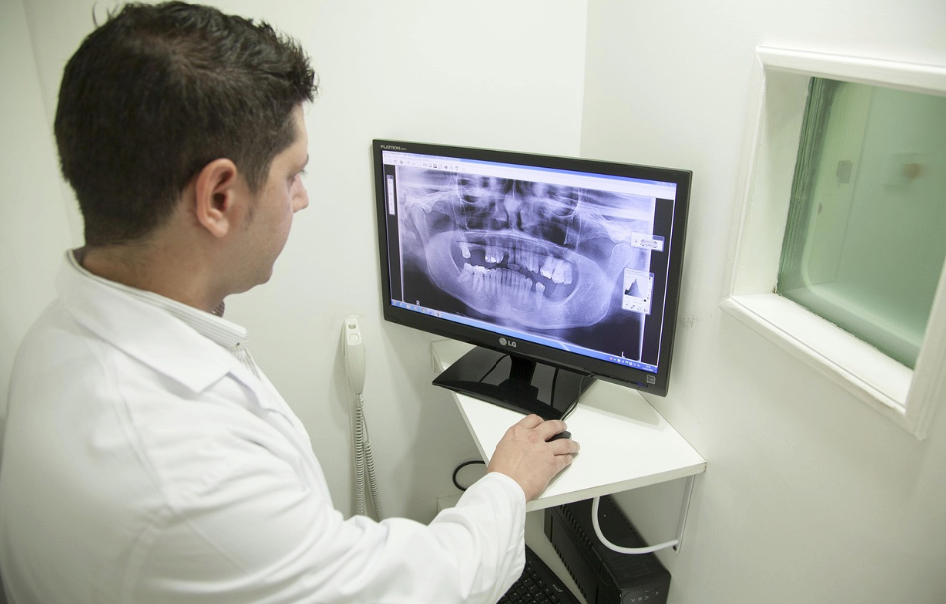
One of the most significant challenges multi-site imaging centers have faced in budgeting for virtual contrast supervision has been regulatory uncertainty.
From 2020 through 2025, CMS extended virtual supervision allowances year by year, making it difficult for networks to commit to long-term investments in virtual supervision infrastructure, given that the underlying regulatory authority could theoretically expire at year's end.
That uncertainty ended with the CMS 2026 Final Rule, which permanently authorizes virtual direct supervision for level 2 diagnostic tests, including contrast-enhanced CT and MRI procedures.
The rule requires supervising physicians to remain immediately available via real-time two-way audio and video technology. It also mandates that licensed onsite personnel remain available to respond to the supervising physician's direction in the event of a medical emergency.
For budget forecasting purposes, this regulatory permanence changes many things. Networks can now build three-year and five-year supervision cost models with confidence that the virtual supervision model will remain compliant. Plus, the risk premium that many networks built into their virtual supervision budgets can be eliminated.
Forecasting the Cost-Efficiency Gains of Virtual Supervision

When building a multi-site budget forecast, it's critical to quantify both what virtual contrast supervision costs and what it saves relative to the alternative of onsite radiologist coverage. These savings manifest across several categories that should be explicitly tracked in the forecast model.
Eliminated Onsite Staffing Costs
For a multi-site network that would otherwise require a supervising radiologist to be physically present at each location during all contrast operating hours, the aggregate staffing cost can be enormous.
Virtual supervision allows a single radiologist team to provide coverage across multiple facilities simultaneously, distributing that cost across the network rather than duplicating it at each site.
Recovered Revenue from Reduced Cancellations
Every contrast exam canceled due to a supervision gap represents lost revenue. For networks that track cancellation rates before and after virtual supervision adoption, the recovered revenue figure belongs in the forecast as a direct offset to supervision costs.
Networks typically find that virtual supervision's continuous availability captures patient volume that would otherwise be turned away or rescheduled.
Extended Operating Hours Without Proportional Cost Increases
Adding evening or weekend contrast exam slots under an onsite staffing model requires paying overtime, shift differentials, or dedicated after-hours radiologist coverage.
Virtual supervision enables extended hours at a fraction of the cost, making the unit economics of off-peak contrast exams viable for the first time at many sites.
Reduced Administrative Overhead
Credentialing, scheduling, and managing onsite radiologist coverage across multiple sites generates a significant administrative burden.
Networks that consolidate contrast supervision through a single virtual provider can reduce the HR, credentialing, and scheduling overhead associated with maintaining separate onsite coverage arrangements at each facility.
Scale Your Virtual Contrast Supervision Budget with ContrastConnect

Building an accurate, multi-site contrast supervision budget forecast requires a virtual supervision partner whose operational model is designed from the ground up for multi-site scalability, cost predictability, and regulatory compliance.
ContrastConnect is a virtual contrast supervision platform purpose-built for imaging networks of every size, from independent outpatient centers to large multi-site enterprises. Our radiologist-led team provides CMS-compliant virtual supervision through a secure, HIPAA-compliant platform that delivers real-time two-way audio and video oversight for contrast-enhanced imaging procedures.
For multi-site networks focused on budget accuracy, our scalable coverage model enables you to build predictable, facility-specific cost projections without the volatility of overtime staffing or last-minute coverage scrambles. Plus, our white-glove implementation includes onsite technologist training and qualification support, and ongoing compliance support so your team stays audit-ready without adding administrative overhead to your budget.
Start your coverage assessment today.
Frequently Asked Questions (FAQs)
What is virtual contrast supervision budget forecasting for multi-site networks?
It is a structured financial planning methodology designed specifically for imaging organizations that operate multiple outpatient facilities and use virtual radiologist supervision for contrast-enhanced imaging procedures.
How does multi-site budget forecasting for virtual supervision differ from single-site forecasting?
Single-site forecasting treats supervision costs as a standalone expense that rises or falls based on that facility's contrast exam volume. On the other hand, multi-site forecasting adds a critical comparative dimension: it evaluates each site against its own history and against the performance of every other facility in the network.
How often should a multi-site network review its virtual contrast supervision budget?
Monthly reviews aligned with supervision billing cycles are the minimum recommended frequency. Contrast exam volumes fluctuate seasonally, shift with referral patterns, and respond to operational changes like extended hours or new modality additions.
Can the three-layer budget forecasting framework scale to any size imaging network?
Yes. The three-layer comparison model (baseline, budget, and network average) works for networks of any size, from three sites to thirty or more. Smaller networks benefit primarily from site-to-site comparative analysis, which quickly surfaces cost disparities. Larger networks also benefit from the ability to segment comparisons, enabling more nuanced benchmarking and targeted budget interventions.
How can ContrastConnect help my imaging network with virtual contrast supervision budget planning?
At ContrastConnect, we provide the operational foundation that enables accurate budget forecasting. Because our coverage model is structured, scalable, and built for multi-site deployment, imaging networks gain the cost predictability that traditional onsite staffing arrangements cannot offer.
With more than 75,000 contrast exams supervised monthly, 3,700+ trained technologists, and a platform that delivers guaranteed coverage including evenings, weekends, and holidays, ContrastConnect gives finance teams a stable, transparent cost input for their multi-site budget models.
*Note: Information provided is for general guidance only and does not constitute medical, legal, or financial advice. Pricing estimates and regulatory requirements are current at the time of writing and subject to change. For personalized consultation on imaging center operations and virtual contrast supervision, contact ContrastConnect.
Trusted Nationwide


















.avif)




1,000,000
Contrast exams supervised annually
75,000+
Hours of supervision monthly
3,900+
Technologists certified
100s
Of imaging partners nationwide
130+
Contrast reactions treated monthly
100%
Requested hours covered
Connect with us.

