Teleradiology: The Definitive Guide to How Remote Radiology Works


Teleradiology has become one of the most important developments in diagnostic imaging over the past two decades. What began as a way to cover overnight emergencies has grown into a foundational model that keeps imaging centers, hospitals, and outpatient facilities running around the clock. This guide explains what teleradiology is, how it works, the technology and regulation behind it, and how newer models—such as remote contrast supervision—are extending its reach even further.
What Is Teleradiology?
Teleradiology is the electronic transmission of radiologic images from the location where they are acquired to a location where a qualified physician can interpret or supervise them. In practice, this means a radiologist can review a CT, MRI, X-ray, or ultrasound study without being physically present at the facility where the patient was scanned.
The concept rests on a simple economic and clinical reality: imaging demand does not align neatly with radiologist availability. Scans are acquired at all hours and in all locations, but board-certified radiologists—especially subspecialists—are a finite and unevenly distributed resource. Teleradiology decouples where an image is captured from where it is read, so interpretive capacity can be matched to demand wherever it arises.
How Teleradiology Works
A teleradiology workflow generally moves through four stages:
- Acquisition. A technologist performs the imaging study on site using standard modality equipment (CT, MRI, X-ray, ultrasound, etc.).
- Transmission. Images are sent, in the DICOM standard, over a secure encrypted connection to a PACS (Picture Archiving and Communication System) accessible to the remote physician.
- Interpretation or supervision. The remote radiologist reviews the study on a diagnostic-grade workstation and either issues a report or—in supervision models—provides the required physician oversight for the procedure.
- Reporting and integration. The finished report flows back into the facility’s system (often via RIS/EMR integration) so the ordering clinician can act on it.
The entire cycle can happen in minutes for urgent studies. The reliability of each step—image quality, transmission security, workstation calibration, and system integration—determines whether a teleradiology arrangement meets the clinical and regulatory standard of on-site reading.
The Technology Behind Teleradiology
Several technical components make remote reading clinically valid rather than merely convenient:
- DICOM and PACS: The universal standards for storing and transmitting medical images, ensuring a study captured on one vendor’s equipment can be read on another’s workstation.
- Diagnostic-grade displays: Calibrated, high-resolution monitors that meet the standards required for primary interpretation—ordinary consumer screens are not sufficient.
- Secure connectivity: Encrypted VPN or equivalent connections that protect image data in transit and satisfy HIPAA requirements.
- Workflow and communication tools: Increasingly, real-time audio/video and integrated messaging that let a remote physician coordinate with on-site staff—essential for supervision models.
Regulation and Compliance
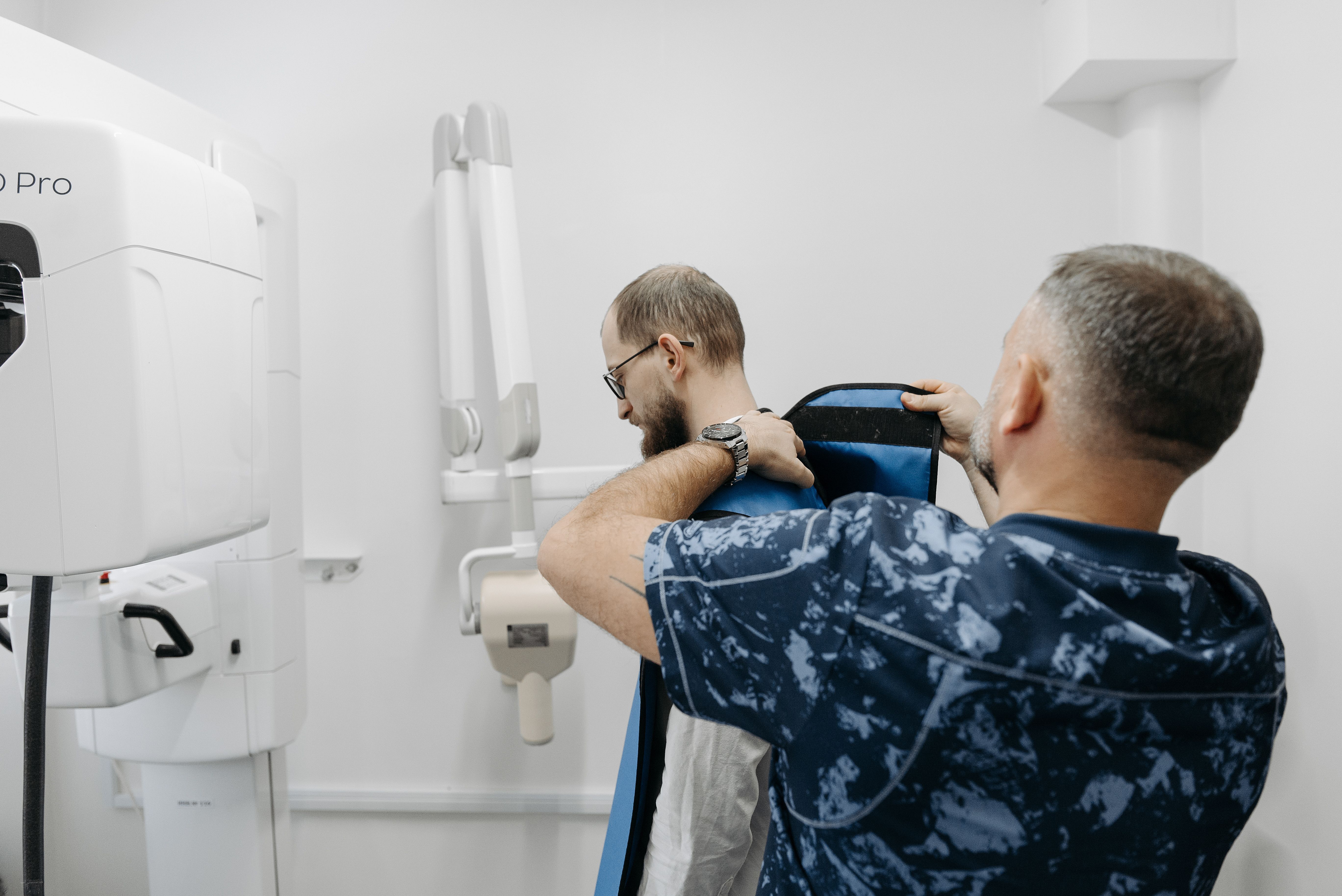
Because teleradiology crosses facilities and often state lines, it operates within a demanding regulatory framework. The key considerations include state medical licensure (a physician generally must be licensed where the patient is located), facility credentialing and privileging, HIPAA-compliant handling of protected health information, and—where contrast is involved—the supervision rules that govern who must oversee administration and whether that oversight can be provided remotely.
These rules are not uniform. Supervision requirements in particular vary meaningfully from state to state, and several states have recently updated their statutes to explicitly permit remote or virtual supervision of contrast administration. Because the details change and differ by jurisdiction, facilities should confirm current requirements for each state in which they operate rather than assume a single national standard.
Benefits of Teleradiology
- Expanded access: Rural and community facilities gain access to subspecialty expertise that would be impossible to staff on site.
- Around-the-clock coverage: Nights, weekends, and holidays can be covered without maintaining a full on-site roster at every location.
- Faster turnaround: Urgent studies can be routed to available physicians immediately, shortening the time to diagnosis.
- Operational efficiency: Facilities can keep imaging capacity open more hours and across more modalities without the fixed cost of on-site physician coverage for every one.
Common Use Cases
Teleradiology supports emergency and after-hours reads (historically “nighthawk” coverage), subspecialty interpretation, second opinions, coverage during staffing gaps, and—most relevant to outpatient imaging—remote supervision of procedures that require physician oversight. This last category is where teleradiology has expanded most recently, moving beyond interpretation into real-time physician supervision.
Teleradiology and Virtual Contrast Supervision
Traditional teleradiology answers the question of who reads the image. A growing challenge for outpatient imaging centers is a different one: who supervises contrast administration when a radiologist isn’t on site? Contrast-enhanced studies require physician oversight, and until recently that meant a physician physically present in the facility.
As regulations have evolved, virtual contrast supervision has emerged as a natural extension of the teleradiology model. It applies the same principles—secure connectivity, real-time coordination, and appropriately credentialed physicians—to the supervision of contrast administration rather than to image interpretation alone. This lets imaging centers offer contrast-enhanced studies on more days and across more locations without the cost and scheduling burden of on-site physician coverage.
ContrastConnect specializes in exactly this: compliant, remotely delivered physician supervision of contrast administration. For facilities already familiar with teleradiology, it is a logical next step—and for those new to remote coverage, it is often the point at which the operational and financial case becomes clearest.
Conclusion
Teleradiology has matured from an after-hours convenience into a core operating model for modern imaging. Understanding how it works—the workflow, the technology, and the regulatory framework—is the foundation for evaluating any remote coverage decision. And as the model extends into remote supervision, facilities that grasp these fundamentals are best positioned to expand access, improve efficiency, and stay compliant. If contrast supervision is your bottleneck, ContrastConnect can help you apply the teleradiology model where it matters most.
Trusted Nationwide























.avif)




1,000,000
Contrast exams supervised annually
75,000+
Hours of supervision monthly
4,100+
Technologists certified
500+
Imaging partners nationwide
130+
Contrast reactions treated monthly
100%
Requested hours covered
Connect with us.

