Virtual Contrast Supervision State Legislation: 2026 Updates & Practice Impact


Key Takeaways
- CMS made virtual direct supervision of diagnostic tests permanent effective January 1, 2026, requiring real-time two-way audiovisual communication that supports observation, interaction, and immediate intervention by the supervising physician.
- California AB 460 redefined "direct supervision" in the state's Radiologic Technology Act, explicitly allowing licensed physicians and surgeons to remotely oversee contrast administration via live audiovisual technology, effective January 1, 2026, aligning state law with the federal CMS standard.
- States like Ohio (HB 479), Alabama (formal ruling), and Tennessee (rule amendments) are each taking different legislative or administrative paths toward authorizing virtual supervision, with facilities required to comply with both federal CMS rules and applicable state frameworks simultaneously.
- Your facility's technology stack (real-time two-way audiovisual platform, HIPAA-compliant with a Business Associate Agreement, dedicated bandwidth, backup connectivity), staff training protocols, and documented compliance framework must all be updated before going live with virtual supervision.
- ContrastConnect provides CMS-compliant virtual contrast supervision already proven at scale, with qualified radiologists supervising 75,000+ contrast exam hours monthly and treating 130+ reactions monthly, supporting facilities as state legislation continues to evolve.
Here's What Changed in Virtual Contrast Supervision Laws in 2026
January 1, 2026, marked a hard pivot point when temporary pandemic-era flexibilities for diagnostic test supervision officially became permanent federal policy.
What makes 2026 particularly significant is the simultaneous convergence of federal and state action. CMS locked in its permanent rule just as California's AB 460 took effect, Ohio introduced HB 479, and other states like Alabama and Tennessee moved through their own rule amendments and waivers. The updated laws now require practices that adopt virtual contrast supervision to use real-time, two-way audiovisual communication while remaining HIPAA- and CMS-compliant.
Organizations operating across multiple locations must ensure every contrast-enhanced exam satisfies the applicable supervision standards to avoid compliance gaps, canceled scans, and operational disruptions.
At ContrastConnect, we help imaging networks meet these requirements through our HIPAA- and HITECH-compliant virtual contrast supervision platform, which connects facilities with qualified radiologists for immediate supervision during contrast-enhanced procedures.
ContrastConnect: Virtual Contrast Supervision That Never Misses
Built by Radiologists | 75,000+ Hours Monthly Contrast Exams | Trusted Nationwide

Built for Imaging Networks:
- Virtual Contrast Supervision: Radiologists provide immediate CMS-compliant supervision through a secure, HIPAA-compliant platform for outpatient facilities and hospital networks.
- Unmatched Experience: 130+ contrast reactions treated monthly with 3,900+ technologists certified.
The ContrastConnect Difference:
- ✓ Radiologist-owned with superior clinical expertise
- ✓ Always-on platform with guaranteed compliance
- ✓ Audit-ready documentation for CMS reviews
- ✓ Cost-efficient alternative to onsite staffing
Safety & Compliance You Trust:
Helping imaging centers reduce cancellations, extend hours, and scale operations without adding on-site radiologists. Response times measured in seconds.
CMS Made Virtual Direct Supervision Permanent in 2026
When CMS first updated its definition of direct supervision in 2020 to allow virtual presence through live audiovisual technology, it was framed as an emergency response to COVID-19. Over time, safety outcomes held, access improved, and facilities that adopted virtual supervision found it operationally viable.
CMS has extended the flexibility year after year, and the 2026 permanent rule is the formal acknowledgment that virtual direct supervision is a legitimate care-delivery model.
What "Direct Supervision" Now Legally Means Under Federal Policy
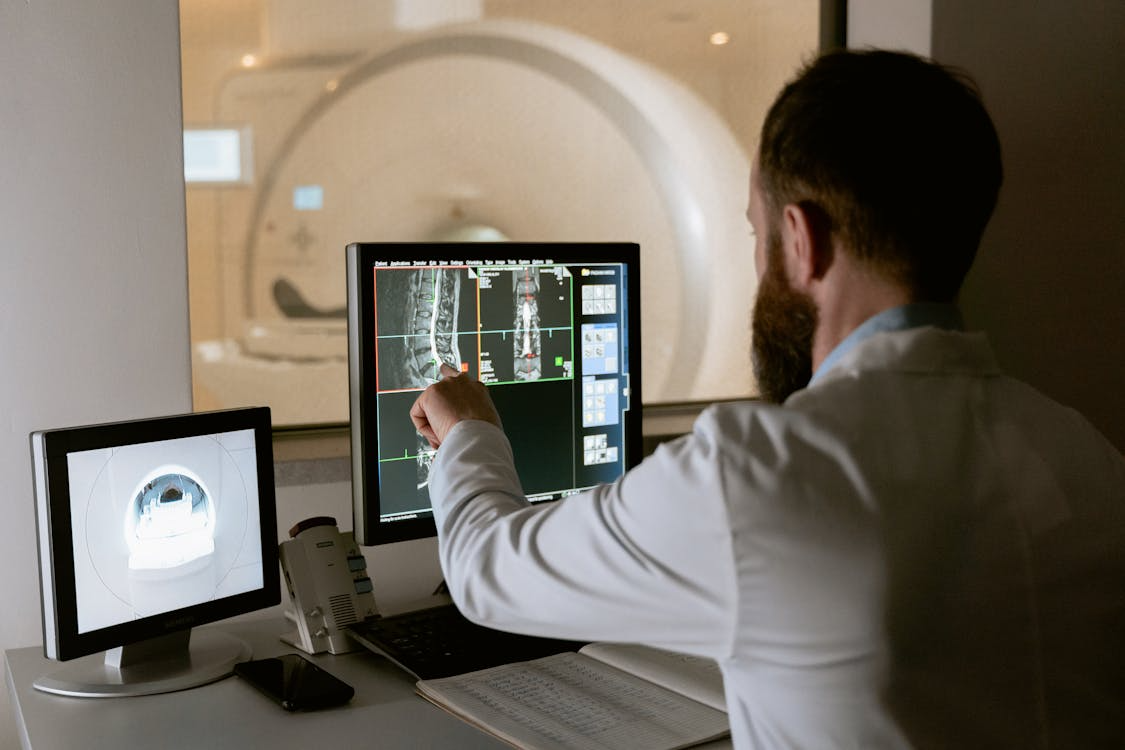
"Direct supervision" under the permanent CMS rule no longer requires a physician to be physically present in the room or even in the building. Under the 2026 definition, direct supervision means the supervising practitioner must be immediately available to furnish assistance and direction throughout the performance of the service.
That availability can now be fulfilled through real-time, interactive audiovisual communication technology. The physician must be trained in the procedure being supervised and ready to intervene without delay.
Real-Time Audio-Video Requirements Under the Permanent Rule
The technology requirements baked into CMS's permanent rule are specific. The supervision platform must support real-time, two-way audio and visual communication between the supervising physician and the personnel performing the service.
Asynchronous communication (recorded video, text messaging, or delayed check-ins) does not satisfy the requirement. The connection must remain live, interactive, and uninterrupted throughout the contrast administration procedure.
California AB 460: Virtual Contrast Supervision Is Now Law
California did not wait for federal pressure to move. AB 460 was a proactive legislative initiative to modernize the state's Radiologic Technology Act and align it with clinical reality.
AB 460 amended the California Radiologic Technology Act to formally recognize real-time audiovisual technology as a legally sufficient means of providing direct supervision during contrast media administration.
AB 460 took effect January 1, 2026, aligning its implementation with CMS's permanent diagnostic test supervision rule. California's requirements mirror the federal standard on technology: the audiovisual connection must be real-time, two-way, and interactive, and the supervising physician must be immediately available throughout the performance of the service.
Before the amendment, a California facility relying on CMS's temporary flexibility was technically operating in a gray zone under state law. AB 460 closes that gap, and California's definition of direct supervision now matches the federal standard.
Ohio HB 479: What the Proposed Bill Would Change
Ohio is moving to modernize its contrast supervision rules, but has not finalized the change. HB 479 aims to clarify current ambiguity by allowing radiologists to meet direct supervision requirements through real-time, two-way audiovisual communication.
One of the consistent concerns raised during HB 479's review process has been whether removing the physical presence requirement compromises patient safety during contrast administration. The bill's drafters addressed this directly, as the proposed language retains every substantive safety obligation that existed before.
The supervising physician must still be trained in the procedure, immediately available, and capable of providing hands-on assistance if required.
However, until HB 479 is enacted, Ohio facilities should operate carefully in accordance with current state statutes while consulting legal counsel on how CMS's flexibility intersects with Ohio's existing rules.
Alabama & Tennessee: How Waivers & Rule Amendments Are Advancing Virtual Supervision
Not every state is moving through its legislature to update contrast supervision rules. Alabama and Tennessee demonstrate that administrative rule amendments and formal waivers can accomplish the same outcome.
Alabama's formal ruling on remote contrast supervision gave in-state imaging facilities what they had been lacking: explicit state-level authorization that didn't require a radiologist's physical presence during contrast administration.
The ruling established conditions under which virtual supervision satisfies Alabama's oversight requirements. For Alabama facilities serving rural communities across the state's Black Belt region and other underserved areas, this ruling was operationally transformative.
On the other hand, Tennessee's proposed amendment to its X-ray supervision rules is still working through the regulatory process, but its direction is clear. The amendment targets outdated language in the state's imaging oversight rules.
The proposed changes would update Tennessee's definition of adequate supervision to include real-time virtual presence, aligning the state with CMS's 2026 permanent rule.
How Do These Laws Affect Your Imaging Facility?
If you're in California operating under AB 460, in Ohio waiting for HB 479, or in a state relying on federal CMS authority for virtual supervision, the operational requirements are substantively the same.
Your facility needs the right technology, updated protocols, trained staff, and a documented compliance framework before your first virtually supervised contrast procedure.

Technology Infrastructure Your Facility Needs to Comply
The non-negotiable technology requirement across all pieces of virtual contrast supervision legislation, federal and state, is real-time, two-way audiovisual communication. Your platform must support a live, stable, interactive connection between the supervising radiologist and the technologist performing the procedure.
This eliminates consumer-grade video tools like standard Zoom or FaceTime as compliant options, not because of the video quality, but because of the security, reliability, and HIPAA compliance requirements that clinical supervision demands.
Dedicated bandwidth, backup connectivity protocols, and real-time connection monitoring should all be part of your infrastructure plan before you go live with virtual supervision.
Beyond connectivity, your facility needs a platform that generates auditable records of each supervision session. Platforms like ContrastConnect, built specifically for virtual contrast supervision, include this documentation capability as a core feature rather than requiring facilities to build their own logging systems.
Protocol & Training Updates Required Before Going Live
Technology alone doesn't make your facility compliant; your internal protocols must meet the legal standard as well. Every virtual contrast supervision workflow requires a documented protocol that defines exactly how supervision is initiated, maintained, and terminated for each procedure.
That protocol needs to specify the supervising physician's responsibilities, the technologist's responsibilities, what constitutes an acceptable connection, and the steps to take if the connection fails mid-procedure.
Staff training is equally non-negotiable. Your radiologic technologists need to understand how to use the virtual supervision platform, why the supervision requirements exist, and what their specific obligations are during a virtually supervised contrast procedure.
HIPAA Compliance Considerations for Virtual Supervision Platforms
Every virtual supervision session involves protected health information. That means your supervision platform must operate under a Business Associate Agreement (BAA) and meet HIPAA's technical security requirements for transmission.
End-to-end encryption, access controls, and audit logging are baseline requirements for any platform used in clinical supervision. Facilities that choose platforms without these safeguards are creating HIPAA exposure on top of the supervision compliance risk.
Why ContrastConnect Excels At Providing CMS-Compliant Virtual Contrast Supervision

As state legislatures continue refining virtual contrast supervision requirements, facilities need a supervision partner built to adapt as those standards evolve. At ContrastConnect, we deliver expert virtual contrast supervision that complies with CMS’s definitions of adequate physician oversight for contrast-enhanced imaging exams.
Our remote supervision model has been pressure-tested at scale across real clinical environments where compliance failures carry serious consequences. Every reaction is met with a structured escalation protocol, ensuring zero missed responses and full alignment with CMS requirements for immediate physician availability during contrast administration. Contact us today to start your coverage assessment.
Frequently Asked Questions (FAQs)
Is virtual contrast supervision currently legal in all U.S. states?
No. Virtual contrast supervision is not universally authorized at the state level. California has done so through AB 460. Alabama has issued a formal ruling. Tennessee is in the process of amending its rules. Ohio is advancing HB 479. Other states vary in clarity or ambiguity.
Does the CMS 2026 permanent rule override state law on supervision?
No. Federal CMS rules and state supervision statutes operate in parallel, not in a hierarchy where one automatically overrides the other. A facility must satisfy both frameworks simultaneously.
What technology does a facility need to meet virtual direct supervision requirements?
At minimum, a compliant virtual supervision setup requires a real-time, two-way audiovisual platform that is HIPAA-compliant, operates under a Business Associate Agreement, and maintains a stable, encrypted connection throughout each contrast procedure.
Does virtual supervision apply to all contrast-enhanced imaging types?
CMS's permanent 2026 rule applies to diagnostic tests, which cover the vast majority of contrast-enhanced CT and MRI procedures performed in outpatient settings. However, the specific applicability can vary depending on the care setting, the payer, and the state.
Hospital outpatient departments, independent imaging centers, and office-based facilities may each have slightly different rule sets governing which services fall under the diagnostic test supervision framework.
How many locations can ContrastConnect supervise at once?
At ContrastConnect, our virtual supervision model is built to scale across multiple imaging locations simultaneously, with dedicated credentialed physicians available in real time to cover contrast-enhanced exams regardless of how many facilities are running concurrent studies.
With more than 75,000 hours of monthly exams already supported and a structured escalation protocol that maintains zero missed responses across its entire network, our infrastructure is designed to expand with your facility's needs rather than cap coverage at an arbitrary number of sites.
*Note: Information provided is for general guidance only and does not constitute medical, legal, or financial advice. Pricing estimates and regulatory requirements are current at the time of writing and subject to change. For personalized consultation on imaging center operations and virtual contrast supervision, contact ContrastConnect.
Trusted Nationwide

















.avif)




1,000,000
Contrast exams supervised annually
75,000+
Hours of supervision monthly
3,900+
Technologists certified
100s
Of imaging partners nationwide
130+
Contrast reactions treated monthly
100%
Requested hours covered
Connect with us.

