Remote Contrast Coverage Spend by Modality: CT vs MRI Cost Differences

Key Takeaways
- MRI contrast supervision consistently costs 2–3 times more than CT on a per-exam basis.
- Contrast agent costs alone create a meaningful baseline disadvantage for MRI-heavy schedules, with gadolinium-based agents costing more per dose compared to iodinated CT contrast agents.
- Off-peak scheduling is where on-site supervision costs become hardest to justify. MRI supervision costs run higher during low-volume windows, as fixed radiologist overhead spreads across as few as 8–12 studies in a full-coverage day, versus 25–40 for CT.
- Virtual supervision reduces costs across both modalities, with the greatest savings during off-peak MRI contrast hours.
- At ContrastConnect, we enable imaging facilities to apply virtual supervision across both CT and MRI contrast schedules. We provide immediate, CMS-compliant radiologist coverage via secure audio and video without the fixed overhead of onsite staffing, making our platform one of the most direct levers available for reducing per-exam supervision costs across both modalities.
What is the Difference Between CT and MRI Cost?
CT and MRI contrast supervision are not interchangeable cost lines, and treating them as one is where imaging budget forecasts go wrong. MRI contrast supervision costs more than CT, with on-site per-exam supervision expenses running 2–3 times higher depending on scheduling, volume, and coverage model.
Gadolinium-based MRI contrast agents are generally more expensive per dose than iodinated CT contrast agents, with costs varying by agent type, supplier contract, and purchase volume. A radiologist supervising CT can oversee 4–8 exams per hour; the same radiologist supervising MRI contrast can manage just 1–2.
Understanding where and why these costs diverge is the starting point for any meaningful spend reduction strategy.
ContrastConnect: Virtual Contrast Supervision That Never Misses
Built by Radiologists | 75,000+ Monthly Contrast Exams | Trusted Nationwide

Built for Imaging Networks:
- Virtual Contrast Supervision: Radiologists provide immediate CMS-compliant supervision through a secure, HIPAA-compliant platform for outpatient facilities and hospital networks.
- Unmatched Experience: 130+ contrast reactions treated monthly with 3,700+ technologists certified.
The ContrastConnect Difference:
- ✓ Radiologist-owned with superior clinical expertise
- ✓ Always-on platform with guaranteed compliance
- ✓ Audit-ready documentation for CMS reviews
- ✓ Cost-efficient alternative to onsite staffing
Safety & Compliance You Trust:
Helping imaging centers reduce cancellations, extend hours, and scale operations without adding on-site radiologists. Response times measured in seconds.
CT vs MRI: Cost Comparison by Modality
CT and MRI contrast supervision carry meaningfully different cost structures. The gap comes down to contrast agent pricing, exam duration, supervision throughput, and how fixed staffing costs are distributed across a schedule.
- Contrast agent cost: CT contrast agents (iodinated) are generally less expensive per dose than MRI gadolinium-based agents, a baseline cost disadvantage that compounds at high volumes. Actual acquisition costs vary by agent, contract, and purchase volume.
- Exam duration and supervision throughput: CT contrast studies average 15–30 minutes, allowing a radiologist to supervise 4–8 exams per hour. MRI studies run 45–90 minutes, reducing supervised throughput to just 1–2 exams per hour. Under an on-site model, the radiologist's time is billed at a fixed overhead, regardless of how many exams it covers, meaning MRI procedures absorb more cost per procedure by default.

How Scheduling & Coverage Hours Affect Cost
Fixed onsite staffing costs stay constant regardless of how many exams are completed in a day. For CT, that overhead might spread across 25–40 contrast exams. For MRI, the same coverage window typically yields only 8–12 studies, meaning each exam absorbs a proportionally larger share of supervision cost.
During peak hours and high-volume periods, onsite CT and MRI supervision cost less per exam than during off-peak hours, because the fixed coverage cost spreads across a larger number of procedures. However, virtual supervision contains this cost spike at both time windows.
How Cancellation Rates Drive Hidden Costs
Cancellations caused by supervision gaps are among the most financially damaging and overlooked cost variables in contrast program management. When a supervising radiologist calls out, arrives late, or is unavailable during a scheduled contrast window, the affected exams are canceled or rescheduled.
For CT, a 20-minute exam slot represents a relatively contained revenue loss. For MRI, a canceled contrast exam represents 45 to 90 minutes of lost scanner time, lost technical revenue, and a patient experience failure that can affect referral relationships.
Facilities using virtual supervision platforms report significant reductions in supervision-gap cancellations, primarily because platforms like ContrastConnect guarantee coverage, including evenings, weekends, and holidays.
Across 12 months, reducing MRI contrast cancellations by even 5 to 10 percent can represent tens of thousands of dollars in recovered revenue at a single site.
Administrative Overhead Differences Between Modalities
Different imaging modalities come with varying levels of administrative complexity that can impact workflow and costs.
Documentation Volume
MRI contrast exams may require more detailed pre-screening documentation for gadolinium agents.
While renal function screening was once standard for all patients, current ACR guidelines classify it as optional prior to administration of Group II gadolinium agents unless specific risk factors such as known kidney disease, diabetes managed with prescription medications, or a history of renal transplant are present.
This selective screening still adds per-exam administrative time that CT contrast protocols do not typically require.
Reaction Management Protocols
CT iodinated contrast carries a higher adverse reaction rate, requiring more robust emergency response documentation and staff readiness tracking. This cost falls on the facility regardless of the supervision model.
Scheduling Complexity
MRI contrast slots are harder to fill efficiently due to longer durations and patient preparation requirements, increasing scheduling staff time per booked exam relative to CT.
Credentialing & Compliance Tracking
Both modalities require supervising physician credentialing documentation, but multi-site networks covering both CT and MRI contrast must maintain separate protocol libraries and competency records for each modality.
Remote Supervision as a Cost Control Strategy
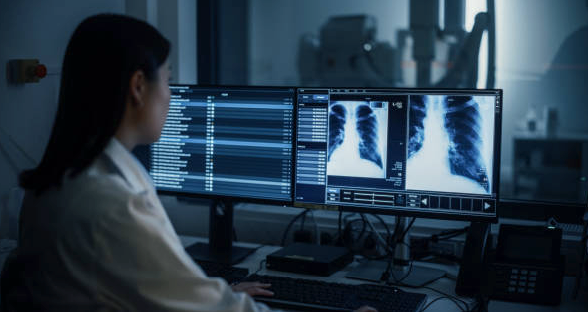
Virtual radiologist supervision has emerged as the most effective structural lever for reducing contrast coverage costs across both CT and MRI, particularly for multi-site outpatient networks where the fixed cost of onsite staffing is multiplied across every location.
The core economic logic of virtual supervision is straightforward: a single remote radiologist can simultaneously cover contrast exams at multiple sites using a secure, HIPAA-compliant platform, distributing the fixed supervision cost across a larger total exam volume.
This model is especially powerful for MRI contrast supervision, where per-exam supervision costs are already higher due to longer scan durations. Networks that have shifted from onsite to virtual supervision consistently report total supervision cost reductions, with MRI contrast programs showing the highest absolute dollar savings per exam.
CT vs MRI Contrast Supervision Costs: Comparison Table
Expand Your Workforce Without Increasing Overhead With ContrastConnect

CT and MRI contrast supervision carry different cost structures, with MRI running 2 to 3 times higher per exam due to pricier agents, longer durations, and lower throughput. Off-peak windows amplify the gap, making onsite staffing the costliest coverage model for both modalities.
At ContrastConnect, we help imaging networks close these gaps by supervising CT and MRI contrast exams through one CMS-compliant platform, with guaranteed coverage across evenings, weekends, and holidays. If you want to reduce your per-exam supervision costs, start your coverage assessment today.
Start your coverage assessment today →
Frequently Asked Questions (FAQs)
Why does MRI contrast supervision cost more than CT contrast supervision?
First, gadolinium-based contrast agents used in MRI are generally more expensive per dose than iodinated CT contrast agents, with costs varying by agent type, purchase volume, and supplier contract.
Second, MRI exams take two to four times longer per study, which means each supervised exam consumes more radiologist time and drives up the per-exam cost of any supervision model.
Third, the throughput difference between modalities means MRI contrast supervision overhead is spread across far fewer billable studies per coverage hour.
What are CMS compliance requirements for remote contrast supervision?
The CMS compliance requirements cover immediate availability, real-time audio and video, state licensure, HIPAA compliance, and documentation. The supervising physician must be immediately available to furnish assistance and direction throughout the contrast procedure.
The supervising radiologist must hold an active license in the state where the patient is physically located at the time of the exam, and the supervision platform must meet all applicable HIPAA security and privacy standards, including encrypted transmission and access controls.
How does scan volume affect contrast supervision costs per modality?
Volume is the primary determinant of per-exam supervision cost in any coverage model. Under an onsite staffing model, the fixed cost of maintaining a supervising radiologist at a facility is distributed across however many contrast exams are completed during that coverage window.
At low volumes of fewer than 100 exams per month, the per-exam cost can be extraordinarily high because a small number of studies absorb the fixed overhead. As volume increases, per-exam costs fall.
Can remote supervision cover both CT and MRI contrast exams at the same facility?
Yes, virtual supervision platforms are modality-agnostic. A remote supervising radiologist can simultaneously cover CT contrast exams, MRI contrast exams, and other contrast-enhanced studies at the same facility, provided the platform supports real-time monitoring and communication across both scanner environments.
What makes ContrastConnect different from hiring independent contractors?
Hiring independent contractors shifts a significant administrative burden onto your facility. However, at ContrastConnect, we eliminate that overhead. Rather than piecing together coverage through individual contractors, our platform provides a complete, all-in-one solution that handles every aspect of contrast supervision logistics.
This way, your team can stay focused on patient care and operational growth instead of back-office management.
*Note: Information provided is for general guidance only and does not constitute medical, legal, or financial advice. Pricing estimates and regulatory requirements are current at the time of writing and subject to change. For personalized consultation on imaging center operations and virtual contrast supervision, contact ContrastConnect.
Trusted Nationwide

















.avif)




1,000,000
Contrast exams supervised annually
75,000+
Hours of supervision monthly
3,900+
Technologists certified
100s
Of imaging partners nationwide
130+
Contrast reactions treated monthly
100%
Requested hours covered
Connect with us.

