Remote Contrast Coverage Decision Authority: Escalation Paths and Approval Structure

Key Takeaways
- Remote contrast coverage requires a clearly defined chain of authority; without it, response times slow, and patient safety is compromised.
- The Centers for Medicare & Medicaid Services (CMS) recognizes remote supervision as compliant with real-time audio and video connectivity. The American College of Radiology (ACR) recommends an on-site licensed practitioner trained in adverse reaction management with access to emergency equipment.
- Every remote contrast incident is governed by three escalation tiers: the on-site technologist, the remote supervising radiologist, and facility administration or emergency services.
- The first minutes of a contrast reaction are critical; what happens before the remote radiologist connects often determines the patient's outcome.
- ContrastConnect delivers CMS-compliant virtual contrast supervision with structured escalation protocols, backed by over 75,000 supervision hours and 130+ contrast reactions managed monthly.
Remote Contrast Coverage Decision Authority Explained
Decision authority in remote contrast supervision is a structured, pre-assigned chain of command that determines who acts, who directs, and who escalates at every stage of a contrast incident.
The three tiers or paths of escalation begin with the on-site technologist, then the remote supervising radiologist, and finally emergency services. Both the Centers for Medicare & Medicaid Services (CMS) and the American College of Radiology (ACR) have established the conditions under which remote contrast supervision is considered compliant.
When this structure is missing or ambiguous, the consequences are predictable: delayed responses, unclear accountability, and increased risk to the patient. Below, you’ll learn more about remote contrast coverage decision authority, including escalation paths, timelines, and approval structures in case of a contrast reaction.
ContrastConnect: Virtual Contrast Supervision That Never Misses
Built by Radiologists | 75,000+ Monthly Contrast Exams | Trusted Nationwide

Built for Imaging Networks:
- Virtual Contrast Supervision: Radiologists provide immediate CMS-compliant supervision through a secure, HIPAA-compliant platform for outpatient facilities and hospital networks.
- Unmatched Experience: 130+ contrast reactions treated monthly with 3,700+ technologists certified.
The ContrastConnect Difference:
- ✓ Radiologist-owned with superior clinical expertise
- ✓ Always-on platform with guaranteed compliance
- ✓ Audit-ready documentation for CMS reviews
- ✓ Cost-efficient alternative to onsite staffing
Safety & Compliance You Trust:
Helping imaging centers reduce cancellations, extend hours, and scale operations without adding on-site radiologists. Response times measured in seconds.
The Three Tiers of Escalation Authority
Remote contrast incident escalation is a sequenced, timed system with three distinct tiers. Each tier has defined participants, specific responsibilities, and hard timelines. When all three function correctly, a facility can manage even severe contrast reactions safely under remote supervision.
Tier 1: On-site Technologist as First Responder
The on-site technologist is the first line of response the moment a contrast reaction begins. Their responsibilities at this tier are immediate and non-clinical. They assess the patient visually, halt contrast administration, ensure the patient is stable in position, and initiate contact with the remote supervising radiologist without delay.
They should be BLS-certified, have emergency medications physically available in the room, and know the facility's escalation contact sequence before the procedure begins.
Tier 2: Remote Supervising Radiologist Takes Clinical Command
Once the remote radiologist is connected via audio-video, clinical commands are transferred immediately. The technologist shifts from first responder to executor, carrying out the radiologist's directives in real time.
The radiologist conducts a rapid structured assessment, gathering the time of reaction onset, the contrast agent and dose administered, the patient's current symptoms, and any medications already given. From this point, the radiologist is responsible for all clinical decisions: medication guidance, monitoring intervals, and determining whether Tier 3 escalation is necessary.
Tier 3: Emergency Services & Hospital Leadership Activation
Tier 3 activates when the patient is not responding to initial intervention or when the remote radiologist determines the situation exceeds what on-site staff can manage alone. At this point, the on-site technologist or charge nurse calls emergency services, the facility's emergency action plan activates, and hospital administration or the on-call medical director is notified.
The remote radiologist does not disconnect; they remain on the audio-video link, continuing to direct care and relay critical patient information to arriving emergency responders until the patient is formally handed off or stabilized.
Escalation Timelines Every Facility Must Follow
The First Two Minutes
The opening phase of a contrast reaction is the highest-stakes window in the entire escalation sequence. The on-site technologist must stop contrast administration, assess the patient's condition, and immediately contact the remote supervising radiologist. If the first contact attempt fails, the backup physician contact protocol must activate immediately, without waiting to retry the primary line.
Minutes Two Through Ten
Once the remote radiologist is connected, the two-to-ten-minute window is the clinical management phase. The radiologist conducts their rapid structured assessment, issues medication and monitoring directives, and continuously evaluates whether the patient's condition is improving, stable, or deteriorating.
The on-site technologist executes each directive and provides real-time updates on the patient's response. Clear improvement by the five-minute mark generally supports continued on-site management. The absence of improvement or deterioration triggers a Tier 3 evaluation.
When to Call Emergency Services
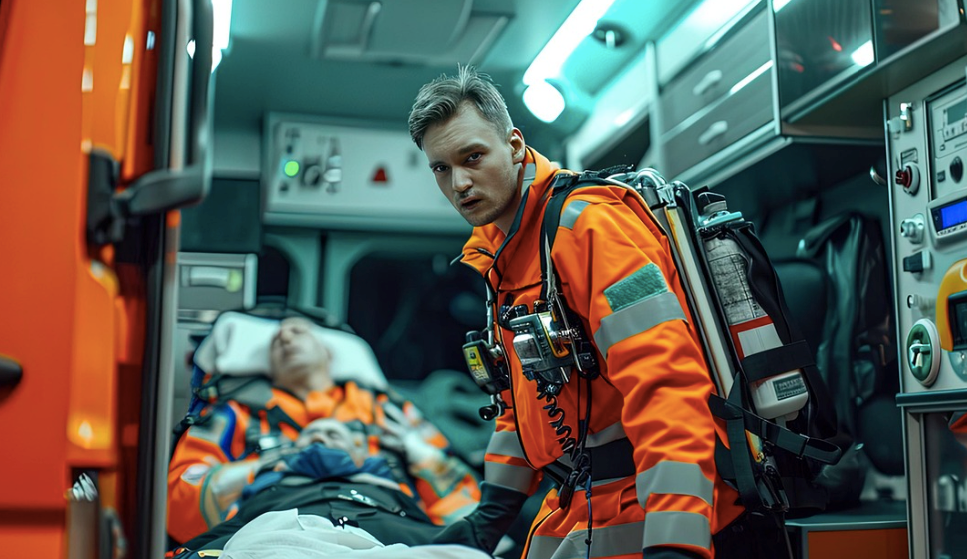
Emergency services must be called the moment the remote radiologist determines that on-site capacity has been exceeded. This is an explicit directive from the radiologist, executed immediately by on-site staff.
From the moment that directive is issued, there should be zero delay. Facilities should post the local emergency services number at every contact administration station, and technologists should practice this call as part of their annual escalation training to ensure stress does not slow the response.
Approval Structure for Remote Contrast Supervision Programs
Facilities must meet a specific set of structural, technological, and documentation requirements before remote supervision can be approved and considered CMS-compliant.
CMS Direct Supervision Requirements for Contrast Administration
Effective January 1, 2026, CMS permanently revised its definition of direct supervision to explicitly include virtual presence: a physician or other supervising practitioner may now satisfy the immediate-availability requirement through real-time, two-way audio-visual technology, without being physically present in the office suite. Audio-only communication does not qualify. In a remote model, this standard is met through a real-time audio-video connection that allows the supervising radiologist to see and hear what is happening in the procedure room and to intervene with directives without delay.
Facilities must also ensure that the on-site environment meets applicable requirements independently of the remote physician. This includes having trained, BLS-certified staff present during every contrast procedure and maintaining a stocked emergency medication kit accessible within the procedure room. It also involves operating in accordance with a documented emergency response protocol that has been reviewed and approved at the facility level.
How Audio-Video Connectivity Satisfies Immediate Availability Standards
A stable, real-time, two-way audio-video connection allows the remote radiologist to issue clinical directives with the same immediacy as an in-room physician, provided the connection is reliable, HIPAA-compliant, and uninterrupted throughout the procedure.
Facilities must use platforms that guarantee low-latency video, encrypted transmission, and redundant connection protocols in the event of a primary link failure. A dropped call during a contrast reaction is a potential CMS compliance violation and a direct threat to patient safety.
Platforms like ContrastConnect are built specifically to meet these standards, with connection reliability designed around the demands of clinical supervision rather than general telehealth use.
Documentation Requirements That Prove Compliance During a CMS Audit

When CMS audits a facility operating under remote contrast supervision, documentation is the only evidence that matters.
Every remotely supervised contrast procedure should generate a record that captures the following:
- Time of contrast administration initiation and the supervising radiologist's name.
- Confirmation that audio-video connectivity was established before the procedure began.
- Time of any adverse reaction onset and the technologist's immediate response actions.
- Each escalation step taken, with timestamps accurate to the minute.
- All medications administered during the incident, by whom, and under whose directive.
- The remote radiologist's documented directives and the technologist's responses.
- Time of emergency services activation, if applicable, and outcome notation.
This documentation should be completed during or immediately after every procedure, not reconstructed from memory hours later.
Facilities should build incident log templates into their standard contrast procedure workflow so that real-time documentation becomes a default behavior for on-site staff rather than an after-the-fact task.
Why You Should Choose ContrastConnect for Remote Contrast Supervision

Effective remote contrast supervision requires a purpose-built escalation structure, clear decision authority, and documentation that reflects real-time physician involvement from the moment contrast is administered. We designed ContrastConnect to meet these demands, with dedicated supervising radiologists assigned to each facility and additional radiologists on call to ensure that no escalation pathway ever reaches a dead end.
When a reaction occurs, we connect your team with a supervising physician via live audio and video within seconds, and this response standard is maintained across thousands of reactions without a single missed or delayed case. With this level of reliability and with documentation practices designed to meet ACR and CMS record-keeping requirements, producing complete, audit-ready records on every encounter, your facility is protected at both the clinical and legal levels.
Start your coverage assessment with ContrastConnect today→
Frequently Asked Questions (FAQs)
What is a remote contrast coverage decision authority?
Remote contrast coverage decision authority is the defined chain of command that governs who makes clinical and operational decisions during a contrast administration procedure when the supervising radiologist is not physically present. It assigns specific responsibilities to the on-site technologist and the remote radiologist, establishes the conditions under which each party acts, and creates a structured escalation pathway for adverse events.
Can a technologist make clinical decisions during a contrast reaction without the radiologist?
A technologist cannot make independent clinical decisions during a contrast reaction under a remote supervision model. Their role is to act as the first physical responder, stop contrast administration, assess the patient, and immediately initiate contact with the remote supervising radiologist.
How long does a remote supervising radiologist have to respond during a contrast incident?
The remote supervising radiologist must be actively connected via audio-video as quickly as possible following contrast reaction onset. If the primary contact attempt fails, the facility's backup physician contact protocol must be activated immediately.
What documentation is required during a remote contrast incident escalation?
During a remote contrast incident, documentation must be captured in real time or immediately following the event. The record must include the time of reaction onset, all escalation actions taken with accurate timestamps, every medication administered and the name of the person who administered it, all directives issued and the responses to those directives, and the final outcome.
How quickly do ContrastConnect radiologists respond during a reaction?
At ContrastConnect, when a contrast reaction occurs, we connect your team with a supervising physician via live audio and video within seconds, not minutes. Each facility is assigned a dedicated supervising physician, with additional physicians on call to provide immediate backup and ensure that no escalations go unanswered.
*Note: Information provided is for general guidance only and does not constitute medical, legal, or financial advice. Pricing estimates and regulatory requirements are current at the time of writing and subject to change. For personalized consultation on imaging center operations and virtual contrast supervision, contact ContrastConnect.
Trusted Nationwide


















.avif)




1,000,000
Contrast exams supervised annually
75,000+
Hours of supervision monthly
4,100+
Technologists certified
500+
Imaging partners nationwide
130+
Contrast reactions treated monthly
100%
Requested hours covered
Connect with us.

