Personal Supervision vs Direct Supervision: CMS Rules & Imaging Examples


Key Takeaways
- Personal supervision requires the physician physically in the exam room during the procedure, while direct supervision only requires immediate availability in the office suite or through a real-time audio-video connection.
- The Centers for Medicare & Medicaid Services (CMS) assigns supervision levels by individual CPT code, so two contrast-enhanced scans of different body parts can carry different requirements in the same visit.
- Starting January 1, 2026, CMS permanently allows direct supervision to be met through real-time two-way audio-video technology, but personal supervision still requires in-room presence.
- A radiologist who reads images after the exam or is available only by phone does not satisfy either direct or personal supervision under 42 CFR 410.32.
- ContrastConnect provides licensed radiologists who supervise IV contrast administration remotely in real time, keeping contrast-enhanced exams CMS-compliant without on-site staffing.
How Does the CMS Define Personal & Direct Supervision?
Personal supervision and direct supervision are two distinct CMS requirements that hinge on where the physician must be during a diagnostic imaging exam.
Personal supervision means the physician is in the exam room for the entire procedure, while direct supervision only requires immediate availability in the office suite or through a real-time audio-video connection. The distinction is tied to specific CPT codes under 42 CFR 410.32.
Confusing the two is a frequent source of compliance risk in outpatient imaging, and it rarely shows up as a single denied claim. Because CMS evaluates supervision at the code level, a center that doesn’t provide the supervision level assigned to a code exposes every exam billed under that code to audit risk, beyond the one that was flagged.
ContrastConnect was built around this distinction. Our licensed radiologists provide real-time virtual coverage for contrast-enhanced exams under direct supervision, giving imaging centers a CMS-compliant option without on-site staffing.
ContrastConnect: Virtual Contrast Supervision That Never Misses
Built by Radiologists | 75,000+ Hours Monthly Contrast Exams | Trusted Nationwide

Built for Imaging Centers:
- Virtual Contrast Supervision: Radiologists provide immediate CMS-compliant supervision through a secure, HIPAA-compliant platform for outpatient imaging facilities.
- Unmatched Experience: 130+ contrast reactions treated monthly with 3,900+ technologists certified.
The ContrastConnect Difference:
- ✓ Radiologist-owned with superior clinical expertise
- ✓ Always-on platform with guaranteed compliance
- ✓ Audit-ready documentation for CMS reviews
- ✓ Cost-efficient alternative to onsite staffing
Safety & Compliance You Trust:
Helping imaging centers reduce cancellations, extend hours, and scale operations without adding on-site radiologists. Response times measured in seconds.
What CMS Rules Say

The governing regulations for supervision levels are separate.
- 42 CFR 410.32 sets supervision requirements for diagnostic X-ray and other diagnostic tests billed under the Physician Fee Schedule
- 42 CFR 410.33 layers on additional requirements specific to Independent Diagnostic Testing Facilities (IDTFs)
- 42 CFR 410.28 covers diagnostic services furnished in hospital and critical access hospital outpatient departments.
Supervision obligations are determined by matching the exact code billed to its assigned indicator, the care setting, and any applicable exceptions.
Guidelines for Direct Supervision
Under 42 CFR 410.32(b)(3)(ii), direct supervision means the physician or an eligible supervising practitioner must be present in the office suite and immediately available to assist throughout the service. The supervisor does not have to stand in the exam room. A radiologist reading in a nearby reading room, available to step in without delay, satisfies the requirement.
Effective January 1, 2026, CMS permanently allows qualifying direct supervision to be satisfied through real-time, two-way audio-video technology. The connection must include live audio and video, so audio-only communication does not qualify. Services carrying global surgery indicators 010 or 090 are excluded from this virtual flexibility.
Reading images remotely after the fact is not the same as supervising the exam as it happens. The supervisor must be available throughout the procedure.
Guidelines for Personal Supervision
Under 42 CFR 410.32(b)(3)(iii), personal supervision requires a physician to be in attendance in the room during the performance of the procedure. This is the one supervision level that virtual technology does not touch. No combination of video, audio, or remote availability satisfies it.
The following situations do not count as personal supervision:
- A physician in a nearby reading room
- A physician elsewhere in the office suite
- A physician reachable only by telephone
- A physician connected by live video, even in real time
Personal supervision also should not be confused with personally performing the procedure. The physician has to be physically present in the room while someone else operates the equipment or administers contrast. A radiologist may supervise a technologist's work without doing the hands-on steps, as long as they stay in the room for the full exam.
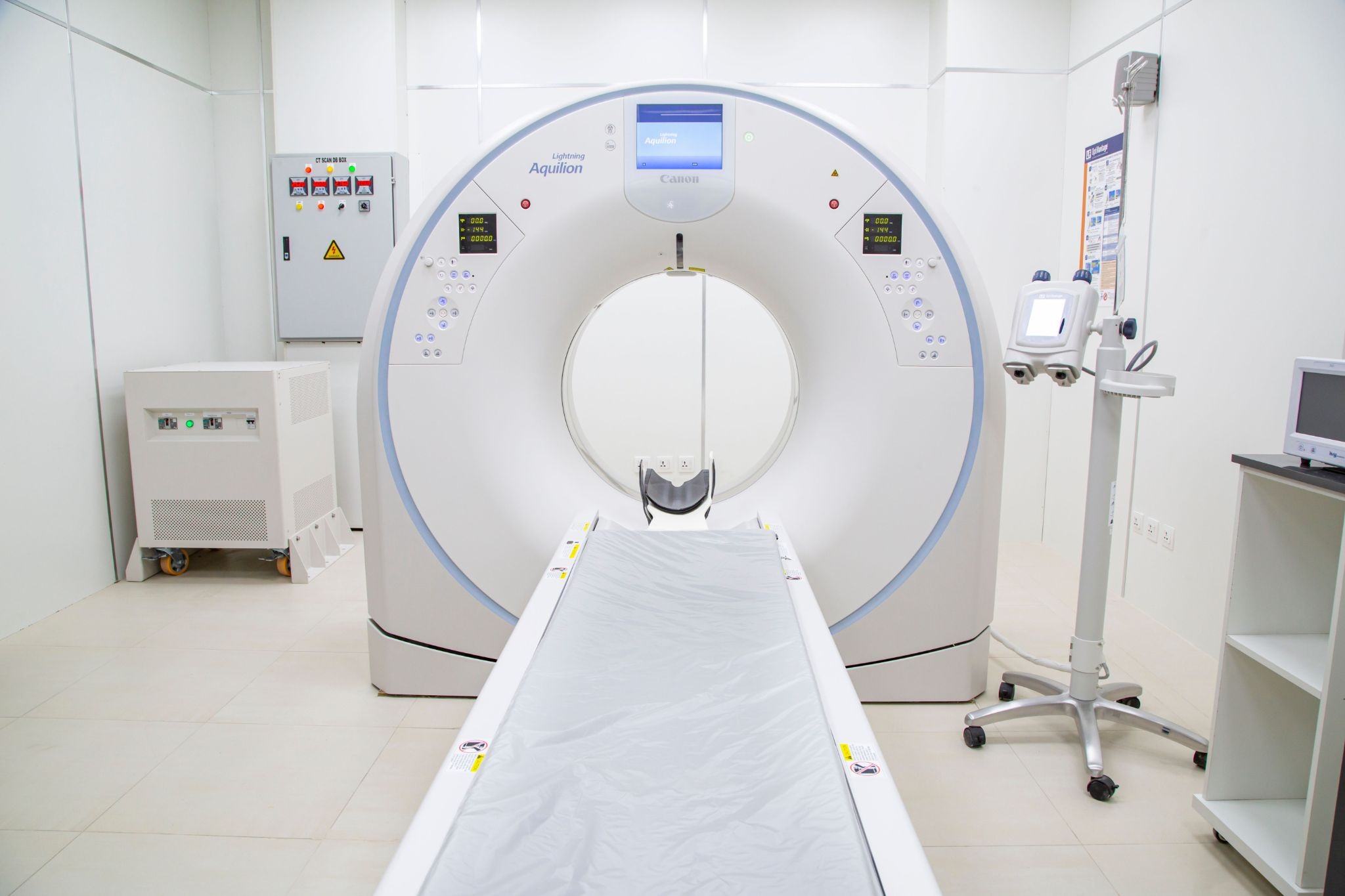
C: Each contrast exam has a specific indicator that shows if it falls under direct, personal, or general supervision.
AT: A white MRI scanner
Imaging Examples Compared
Most compliance questions come from matching a CPT code to the correct supervision level. CMS assigns indicators code by code, which means two exams on the same machine, on the same patient, in the same visit, can carry different rules depending on whether contrast was used and how the service is billed.
Direct Supervision Imaging Examples
Several common contrast-enhanced CT codes fall under direct supervision (indicator 02), including the following:
- CPT 70460 (a head CT with contrast)
- CPT 70470 (a head CT performed without and then with contrast)
- CPT 70491 and 70492 (both contrast-enhanced neck CT studies)
- CPT 70481 (a contrast CT of the orbit, sella, posterior fossa, or ear).
For all of these, the supervising physician needs to be in the office suite and immediately available throughout the exam. Being reachable by phone or scheduled to read the images later is not enough.
The code that catches centers out is CPT 70480, which covers the identical anatomy as 70481 but without contrast, and carries indicator 01 for general supervision instead. Two exams covering the same anatomic region, separated only by contrast use, land in different supervision categories.
A center cannot treat a direct supervision exam as covered simply because the radiologist approved the imaging protocol in advance or plans to interpret the images afterward. Availability must exist while the exam is happening.
Personal Supervision Imaging Examples
Personal supervision (indicator 03) applies to a smaller set of studies, concentrated in fluoroscopic and contrast-injection procedures. In the head and neck range, these include:
- CPT 70332 (a contrast radiography study of the temporomandibular joint)
- CPT 70370 (a radiologic exam of the pharynx or larynx with fluoroscopy)
- CPT 70371 (a complex dynamic pharyngeal and speech evaluation recorded by cine or video)
- CPT 70390 (a salivary duct contrast study)
In each case, the physician has to be physically present in the room for the full duration of the test, regardless of how routine the study is.
It helps to see how differently related codes can be treated. CPT 70336, an MRI of the temporomandibular joint, requires direct supervision (indicator 02), even though it covers the same joint as CPT 70332. The supervision level depends entirely on the specific code and how the exam is performed, not on the body part being studied.
Centers should never assume that a new code for a similar-sounding exam carries the same supervision assignment as one they already know.
Personal vs Direct Supervision: Comparison Table
Meet Direct Supervision Requirements with ContrastConnect

Supervision rules in diagnostic imaging are assigned by CPT code, not by modality or contrast status alone. A single misread indicator can turn routine billing into an audit liability, because CMS holds every claim under that code to the same standard whether or not the exam itself went smoothly.
We built ContrastConnect so imaging centers can run contrast-enhanced exams under direct supervision without staffing an on-site radiologist full-time. Our licensed radiologists supervise IV contrast administration remotely in real time over a secure, HIPAA-compliant platform. Start your coverage assessment today.
Frequently Asked Questions (FAQs)
What is the difference between direct supervision and general supervision?
Direct supervision requires the physician to be in the office suite and immediately available during the exam. General supervision only requires the physician's overall direction and control, with no requirement to be present while the test is performed.
What are the CMS guidelines for supervising contrast administration?
CMS guidelines depend on the specific CPT code assigned to the contrast exam. Some contrast studies, like CPT 70460, require direct supervision, while others, like TMJ contrast radiography, require personal supervision with the physician physically in the room.
What are the new CMS rules for 2026?
Effective January 1, 2026, CMS permanently allows direct supervision to be satisfied through real-time, two-way audio-video technology. Audio-only connections do not qualify, and the flexibility does not extend to personal supervision requirements.
What is virtual contrast supervision?
Virtual contrast supervision is when a licensed radiologist remotely supervises IV contrast administration during a CT or MRI scan in real time, using a secure audio-video platform. It satisfies CMS direct supervision requirements without needing a radiologist physically on site.
What does ContrastConnect do?
ContrastConnect links imaging centers with licensed radiologists who provide real-time virtual direct supervision for contrast-enhanced CT and MRI scans. The goal is to keep contrast exams running and CMS-compliant even when on-site radiologist coverage is limited.
*Note: Information provided is for general guidance only and does not constitute medical, legal, or financial advice. Pricing estimates and regulatory requirements are current at the time of writing and subject to change. For personalized consultation on imaging center operations and virtual contrast supervision, contact ContrastConnect.
Trusted Nationwide



































1,000,000
Contrast exams supervised annually
75,000+
Hours of supervision monthly
4,100+
Technologists certified
500+
Imaging partners nationwide
130+
Contrast reactions treated monthly
100%
Requested hours covered
Connect with us.

