MRI Contrast Reaction Rate: Frequency, Severity & Supervision

Key Takeaways
- MRI contrast reactions are rare, with acute reactions occurring in approximately 0.07% to 2.4% of administrations, allergic-like reactions in 0.004% to 0.7%, and severe life-threatening reactions in only 0.001 to 0.01% of patients receiving gadolinium-based contrast agents.
- Patients with prior allergic-like reactions to the same class of contrast face roughly a five-fold increased risk on re-exposure, with recurrence rates reported between 21% and 60% in some studies, and may benefit from premedication protocols.
- Most reactions are mild (warmth, nausea, headache, altered taste) and self-limiting, resolving within 30 to 60 minutes, though moderate and severe reactions require immediate medical attention and emergency response.
- Medical supervision during contrast administration is important for patient safety, with trained staff monitoring patients during the first 20 to 30 minutes when nearly all life-threatening reactions occur.
- ContrastConnect provides immediate access to qualified radiologists through a secure, HIPAA-compliant virtual platform, supporting imaging sites with real-time oversight and documentation.
How Often Are MRI Contrast Reactions?
MRI contrast reactions are rare, with acute reactions to gadolinium-based contrast agents (GBCAs) occurring in approximately 0.07% to 2.4% of administrations and the vast majority being mild and self-limiting.
Allergic-like reactions to gadolinium contrast have been reported in about 0.004% to 0.7% of administrations, with severe life-threatening anaphylactic reactions exceedingly rare at approximately 0.001% to 0.01% of administrations. These rates are lower than those reported for modern nonionic low-osmolar iodinated CT contrast, where overall acute reaction rates are commonly around 0.6% to 0.7% in large series.
For imaging facilities navigating contrast supervision requirements and emergency preparedness for the small percentage of reactions that do occur, ContrastConnect provides virtual contrast supervision by accredited radiologists with experience across 75,000+ monthly contrast exam hours and 130+ reactions treated monthly.
ContrastConnect: Virtual Contrast Supervision That Never Misses
Built by Radiologists | 75,000+ Hours Monthly Contrast Exams | Trusted Nationwide

Built for Imaging Networks:
- Virtual Contrast Supervision: Radiologists provide immediate CMS-compliant supervision through a secure, HIPAA-compliant platform for outpatient facilities and hospital networks.
- Unmatched Experience: 130+ contrast reactions treated monthly with 3,900+ technologists certified.
The ContrastConnect Difference:
- ✓ Radiologist-owned with superior clinical expertise
- ✓ Always-on platform with guaranteed compliance
- ✓ Audit-ready documentation for CMS reviews
- ✓ Cost-efficient alternative to onsite staffing
Safety & Compliance You Trust:
Helping imaging centers reduce cancellations, extend hours, and scale operations without adding on-site radiologists. Response times measured in seconds.
Understanding MRI Contrast Reactions by Frequency
Allergic-like reactions are generally less common with gadolinium (MRI) than with iodinated contrast (CT), though exact rates vary by agent and by how studies define and report reactions. Gadolinium-based contrast agents (GBCAs) used in MRIs have a strong safety profile, with acute adverse reactions occurring in approximately 0.07% to 2.4% of administrations. The vast majority of these reactions are mild and transient, resolving without intervention.
Allergic-like reactions to gadolinium contrast are uncommon and have been reported in about 0.004% to 0.7% of administrations. Severe, life-threatening anaphylactic reactions are very rare, occurring in approximately 0.001% to 0.01% of administrations. By comparison, modern nonionic low-osmolar iodinated CT contrast media have higher overall acute reaction rates, typically around 0.6% to 0.7% in large clinical studies.
Understanding MRI Contrast Reactions by Severity

Mild Reactions
Mild reactions to MRI contrast media occur in approximately 0.07%–2.4% of patients and typically resolve without medical intervention. These reactions generally cause minimal discomfort and rarely interfere with the completion of the imaging study.
Common symptoms include a feeling of warmth or coldness at the injection site, nausea or a mild sense of sickness, headache, dizziness, altered taste (often metallic), itching without hives, and mild skin rashes.
These reactions typically manifest within minutes of contrast administration and usually subside within 30–60 minutes. While uncomfortable, mild reactions don't require treatment beyond observation and reassurance.
Moderate Reactions
Moderate reactions are uncommon and represent a step up in severity that may require medical intervention. Across studies, overall allergic-like (hypersensitivity) reactions to gadolinium contrast have been reported in roughly 0.004%–0.7% of administrations, and moderate reactions make up only a subset of those events.
These reactions don't typically pose an immediate threat to life but should be promptly evaluated and treated by medical professionals. The symptoms include persistent vomiting, widespread hives (urticaria), facial swelling (particularly around the eyes and lips), breathing difficulties without a significant drop in blood pressure, and moderate hypertension or hypotension.
Moderate reactions usually develop within 30 minutes of contrast administration but may occur later. Unlike mild reactions, these symptoms require medical attention and often necessitate medication.
Severe Reactions
Severe reactions to MRI contrast are infrequent, occurring in only 0.001%–0.01% of administrations, but they represent medical emergencies requiring immediate intervention.
These life-threatening reactions typically manifest rapidly after contrast injection and involve significant cardiovascular, respiratory, or neurological compromise. The primary concerns include anaphylactic shock, severe laryngeal edema leading to airway obstruction, seizures, cardiac arrhythmias, and cardiopulmonary arrest.
Radiologists and medical facilities have emergency protocols in place to address these severe reactions. The staff are trained in advanced life support techniques and have immediate access to emergency medications and equipment.
If a severe reaction occurs, the MRI examination is immediately terminated, and emergency treatment is initiated, while emergency medical services are called.
Delayed Reactions
Unlike acute reactions that occur shortly after contrast administration, delayed reactions can develop hours to days after the MRI examination. These reactions to gadolinium contrast are uncommon; one large study reported an incidence of around 0.05%.
Most delayed reactions are cutaneous (skin-related), including rashes, persistent itching, and skin redness. These symptoms typically appear within hours to a few days.
Less commonly, patients may experience nausea, headache, dizziness, or flu-like symptoms that develop hours after contrast administration. Though most delayed reactions are mild and self-limiting, patients should be aware of the possibility and know when to seek medical attention.
Who Is Most at Risk for MRI Contrast Reactions?
Previous Reaction History
The most significant predictor of a contrast reaction is a history of previous reactions to contrast media. A prior allergic-like reaction to the same class of contrast is the strongest predictor of another reaction; guidelines cite roughly a five-fold increased risk on re-exposure, and some series report recurrence rates ranging from approximately 21% to 60%.
The severity of a previous reaction often correlates with the risk of recurrence – those who had severe reactions face the highest risk.
Allergy Profiles That Raise Concerns
Patients with specific allergy profiles face elevated risks for contrast reactions, though the relationship is more complex than simple cross-reactivity. Those with multiple allergies or atopic disorders like asthma, eczema, or hay fever demonstrate a moderately increased risk of contrast reactions.
This heightened risk reflects a generally hyperreactive immune system rather than specific cross-reactivity to contrast materials.
Medical Supervision During Contrast MRIs
Standard Monitoring Protocols
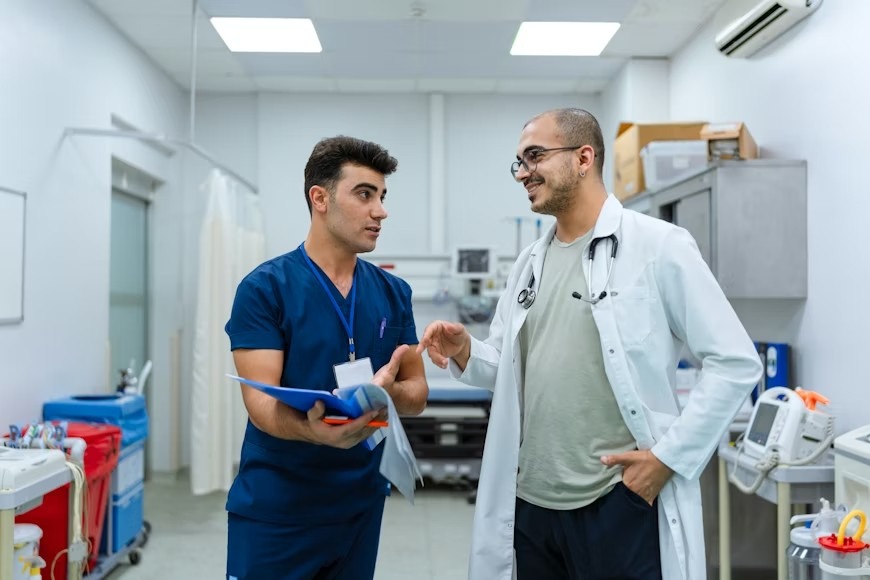
All accredited MRI facilities follow established protocols for patient monitoring during contrast administration. Because nearly all life-threatening contrast reactions occur within the first 20 minutes, sites keep patients under close observation immediately after injection; observation periods commonly cover 20–30 minutes for allergic-like symptoms, per local policy.
Vital signs, including blood pressure, pulse, and respiratory rate, may be checked before contrast administration to establish a baseline. Technologists maintain verbal communication with patients throughout the procedure, regularly checking for any symptoms of discomfort or distress.
Who Supervises Contrast Injection
Contrast administration for MRI studies involves a team of professionals with specific training and qualifications. A radiologist or appropriately credentialed healthcare provider must be immediately available during contrast administration, though they may not personally perform the injection.
In most facilities, contrast is administered by registered nurses or by specially trained radiologic technologists who are credentialed in intravenous injection techniques and basic life support. These professionals undergo regular training in recognizing and managing contrast reactions, ensuring they can identify symptoms early and respond appropriately.
The supervising radiologist reviews the patient's medical history, laboratory values, and risk factors before approving contrast administration and remains available to manage any complications that might arise.
Emergency Response Preparation
Despite the low incidence of severe contrast reactions, all facilities that administer contrast media maintain comprehensive emergency response capabilities. Each MRI suite is equipped with an emergency crash cart containing medications and equipment necessary to manage contrast reactions of all severities.
Because severe reactions can occur unpredictably, facilities ensure trained responders and emergency supplies are immediately available. Guidelines emphasize that personnel administering intravascular contrast should be prepared to recognize reactions and initiate treatment, including training in basic cardiopulmonary resuscitation (CPR/BLS) and contrast-reaction management. The facility's layout is designed to allow rapid access to the MRI suite for emergency personnel while maintaining the necessary magnetic safety precautions.
Virtual Supervision: New Approaches to Safety
Recent technological advances have introduced new models for contrast supervision, particularly in outpatient settings. Virtual supervision systems enable radiologists to remotely monitor contrast administration across multiple sites simultaneously, expanding access to contrast-enhanced MRI in rural and underserved areas.
Get Expert MRI Contrast Supervision with ContrastConnect

MRI contrast reactions are uncommon and usually mild, but serious reactions can occur and require immediate recognition and treatment. Every imaging facility administering gadolinium-based contrast must have trained personnel and physician supervision available to respond quickly, protect patient safety, and meet regulatory requirements.
At ContrastConnect, we provide virtual contrast supervision for imaging facilities and hospital networks through qualified radiologists who are immediately available during every contrast exam. Our HIPAA-compliant platform supports CMS and ACR compliance with response times measured in seconds, audit-ready documentation, a 24/7 dedicated physician hotline, and reliable remote coverage that helps extend operating hours, reduce canceled scans, and maintain consistent patient care across multiple locations. Ready to enhance your contrast supervision? Contact us today.
Frequently Asked Questions (FAQs)
How common are severe MRI contrast reactions?
Severe, life-threatening reactions to gadolinium-based contrast agents are infrequent, occurring in only 0.001%–0.01% of administrations. Most reactions are mild, affecting 0.07%–2.4% of patients, with symptoms such as warmth, nausea, or headache that resolve without treatment. MRI contrast has a significantly better safety profile than CT contrast media.
Who is at the highest risk for MRI contrast reactions?
Patients with a prior allergic-like reaction to the same class of contrast are at the highest risk; guidelines cite roughly a five-fold increased risk on re-exposure. Other risk factors include multiple allergies or atopic disorders, uncontrolled asthma, and certain conditions like mast cell disorders. These patients may benefit from premedication protocols.
How long should I wait before monitoring myself after receiving MRI contrast?
Most acute reactions occur within 30 minutes, which is why facilities monitor patients during this period. After leaving, remain vigilant for 24–48 hours for delayed reactions like skin rashes, itching, or flu-like symptoms. Seek immediate medical attention for difficulty breathing, facial swelling, or severe dizziness.
Is it safe to breastfeed after receiving MRI contrast?
Yes. Current guidelines from the American College of Radiology (ACR) confirm breastfeeding can continue without interruption after gadolinium contrast. Less than 0.04% of the contrast reaches breast milk, and less than 1% of that would be absorbed by the infant, well below levels of concern.
How does ContrastConnect ensure safe MRI contrast supervision?
ContrastConnect provides immediate access to qualified radiologists through a secure, HIPAA-compliant virtual platform. Our physicians supervise over 75,000+ contrast exam hours monthly and treat 130+ reactions monthly, delivering clinical expertise that exceeds typical onsite experience while ensuring CMS and ACR compliance.
*Note: Information provided is for general guidance only and does not constitute medical, legal, or financial advice. Pricing estimates and regulatory requirements are current at the time of writing and subject to change. For personalized consultation on imaging center operations and virtual contrast supervision, contact ContrastConnect.
Trusted Nationwide
















.avif)



1,000,000
Contrast exams supervised annually
75,000+
Hours of supervision monthly
4,100+
Technologists certified
500+
Imaging partners nationwide
130+
Contrast reactions treated monthly
100%
Requested hours covered
Connect with us.

