Contrast Coverage Compliance Checklist: Documentation, Staffing & Audit Tips


Key Takeaways
- Contrast exam records need the agent, dose, route, time, and the supervising practitioner's identity and supervision method, since an incomplete supervision field leaves no record that required supervision occurred.
- The American College of Radiology (ACR) recommends direct supervision by a physician or qualified licensed practitioner, plus an on-site practitioner trained in emergency care when supervision is virtual.
- Virtual supervision satisfies Centers for Medicare & Medicaid Services (CMS) direct supervision rules when a physician stays immediately available through real-time, two-way audio and video.
- Since a published schedule doesn't show who was available during an exam, facilities should reconcile sampled exams against actual coverage, current credentials, handoffs, and backup activations.
- ContrastConnect's licensed radiologists provide real-time virtual contrast supervision, covering 100% of requested hours and supplying audit-ready documentation for CMS reviews.
What Does Contrast Coverage Compliance Require?
Contrast coverage compliance means proving a qualified supervisor was immediately available during each contrast administration, with records showing who supervised, how, and when. A strong compliance checklist covers documentation, staffing, and audit readiness.
Auditors may compare an exam's administration time with coverage logs, credentials, and incident records. Missing proof can put Medicare reimbursement and accreditation at risk, and the facility's revenue depends on both. Facilities using virtual contrast supervision also need to show real-time audio-video access and a backup plan if the connection drops.
ContrastConnect helps facilities meet these requirements without placing a radiologist on site, pairing remote supervision with records ready for an auditor to review.
ContrastConnect: Virtual Contrast Supervision That Never Misses
Built by Radiologists | 75,000+ Hours Monthly Contrast Exams | Trusted Nationwide

Built for Imaging Centers:
- Virtual Contrast Supervision: Radiologists provide immediate CMS-compliant supervision through a secure, HIPAA-compliant platform for outpatient imaging facilities.
- Unmatched Experience: 130+ contrast reactions treated monthly with 3,900+ technologists certified.
The ContrastConnect Difference:
- ✓ Radiologist-owned with superior clinical expertise
- ✓ Always-on platform with guaranteed compliance
- ✓ Audit-ready documentation for CMS reviews
- ✓ Cost-efficient alternative to onsite staffing
Safety & Compliance You Trust:
Helping imaging centers reduce cancellations, extend hours, and scale operations without adding on-site radiologists. Response times measured in seconds.
Contrast Administration Documentation Checklist

Required Contrast Administration Records
- Patient identity and the exact examination performed.
- The order or protocol and the clinician responsible for exam selection.
- Relevant screening and assessment results, including any documented exceptions or escalation.
- Contrast agent name, route, dose or volume, and administration details required by facility protocol.
- Date and time of administration and the staff member who administered it.
- The supervising practitioner's identity and supervision method, including coverage start and end times when required.
- For virtual coverage, the supervisor's identity, real-time audio-video availability, communication with on-site staff, and any interruption or backup activation.
- Post-administration monitoring, patient response, discharge instructions, and follow-up plan when required.
Missing any single item on this list can undermine an otherwise compliant exam record. Records often capture the contrast agent and dose in full while leaving the supervising practitioner's identity or supervision method blank. That single omission leaves no record that required supervision was confirmed, regardless of what happened in the room.
Patient Screening & Assessment Documentation
Screening documentation has to show more than a checkbox confirming a screening form was completed. Good practice is for the record to reflect the actual assessment findings and, when a screening result raises a concern, the specific exception or escalation path that followed.
If a patient's screening flagged a risk factor and the exam proceeded anyway, the record needs to show who made that call, what justification was documented, and whether the supervising practitioner was consulted before administering contrast.
Staff Credentials & Competency Records
Every technologist and practitioner involved in contrast administration needs a credential file that proves, on paper, that they were qualified to do the job on that specific date. That means current licenses, modality certifications, and role authorizations, plus documented initial training and periodic competency checks for recognizing contrast reactions.
If a staff member's certification lapsed the week before an exam, that exam's supervision record is compromised even if nothing went wrong clinically. Facilities should assign an owner to track expiration dates and trigger renewal alerts well before a lapse becomes an audit finding.
Adverse Event & Contrast Reaction Documentation
Any reaction, extravasation, intervention, medication given, consultation, or transfer of care needs its own documented trail inside both the medical record and the facility's incident reporting system.
ACR specifically calls for clinically significant events and their treatment to appear in the radiology report or medical record, not just in a separate incident log that never makes it back to the patient's chart. Extravasation events in particular are easy to leave out of the record because they often resolve quickly, so the documentation process should prompt staff to log them every time.
When a reaction occurs under ContrastConnect coverage, our radiologists direct the response in real time, and the facility receives an incident report for its records, backed by a documented record of zero missed responses.
Contrast Staffing & Supervision Checklist
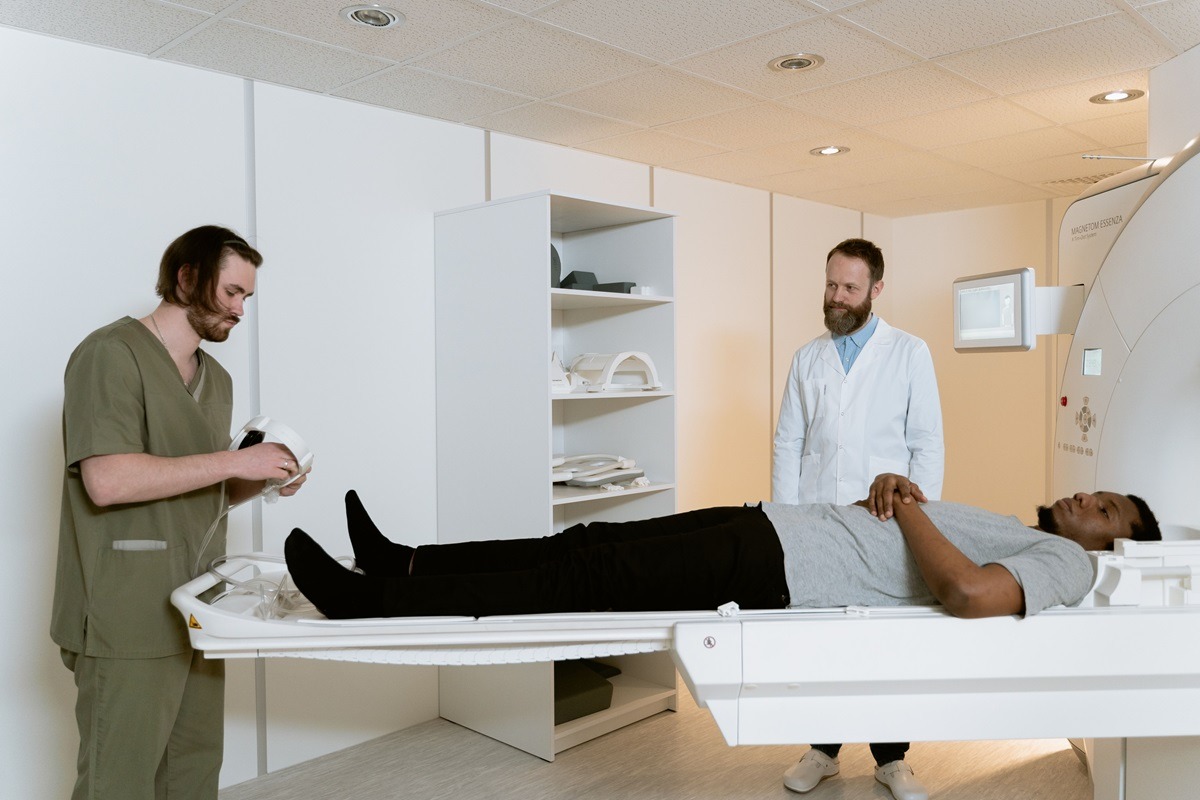
Physician & Qualified On-Site Staff Requirements
ACR states that direct supervision is required whenever contrast is administered and recommends that an on-site radiologist, another physician, or a qualified licensed practitioner provide it, depending on applicable law and facility policy.
For virtual supervision, a physician must fill that role using two-way direct communication, with no intermediary off-site supervisor between the physician and the patient. On-site, the technologist alone is not sufficient.
When supervision is virtual, ACR calls for at least one additional licensed practitioner with patient-assessment training, periodic reaction-management competency, authority to administer emergency medications, and knowledge of escalation procedures.
Coverage Schedules, Handoffs, & Backup Plans
A coverage roster should list the supervisor, modality, site, date, shift, and contact method for every hour contrast may be administered, including evenings, weekends, holidays, and mobile services. That schedule is a starting point.
Facilities also need a separate record of actual coverage changes, handoffs, absences, and backup activation, since an audit may compare what was scheduled against what happened during a sampled exam.
A contingency plan matters just as much as the primary schedule. If a supervisor arrives late, calls out, or a virtual connection fails, staff need a documented, rehearsed path to a qualified backup. Contrast administration should not begin if required supervision or emergency-response capability is unavailable at that moment.
Every exam that can't proceed becomes a cancelled appointment and lost revenue, so reliable backup coverage protects the schedule as much as it protects compliance.
Emergency Response Staffing & Readiness
Staffing plans need to account for how quickly the team can respond if a reaction occurs, not just who is technically on the schedule. That includes knowing where emergency equipment and medications are stored, how to activate emergency response personnel, and running periodic response drills appropriate to facility policy.
A crash cart with expired medications or a team that has never rehearsed the escalation path leaves the facility exposed, even when supervision is in place.
How Do You Audit Contrast Coverage Compliance?
Records & Staffing Evidence to Review
- Define the audit period, sites, modalities, contrast types, and applicable standards.
- Confirm that current state rules permit virtual supervision for each site and modality in scope.
- Pull the written policy, staffing schedules, timekeeping or coverage logs, credential files, competency records, incident reports, and exam records for that window.
- Sample high-risk periods first, including after-hours shifts, weekend coverage, remote-supervision shifts, staffing substitutions, and dates tied to reported events.
- Match each sampled exam's administration time to the actual supervisor and on-site practitioner coverage, not the published schedule.
- Trace each staff member to their current credentials and competency records.
Common Contrast Coverage Compliance Gaps
Most findings come down to records that don't match what happened during an exam:
- A schedule shows coverage, but no record proves who was actually available during the exam.
- The named supervisor was not qualified for that specific procedure.
- Remote coverage is described in policy but lacks proof of real-time audio-video access or a workable backup.
- A technologist is present, but the required qualified licensed practitioner is not.
- Licenses or competency assessments have expired or cannot be located.
- Emergency supplies are present but uninspected or past their expiration dates.
Corrective Actions & Audit Follow-Up
For every finding, document the requirement, evidence, risk, root cause, corrective action, owner, deadline, and verification method. Issues that affect patient safety or show a complete absence of required supervision should always move to the top of the list.
Re-sampling after remediation confirms whether the fix worked. A policy revision on paper doesn't prove an issue is resolved. Re-sampling records after the change shows whether the new process holds up during everyday shifts.
Extend Coverage & Stay Compliant With ContrastConnect

Passing a contrast coverage audit comes down to proving, exam by exam, that a qualified supervisor was available during every contrast administration. Keeping schedules, credentials, and incident records current year-round means your team can answer an auditor's questions with records already on file.
At ContrastConnect, our licensed radiologists supervise contrast administration in real time over a secure HIPAA- and HITECH-compliant platform, covering 100% of requested hours with zero missed responses on record. Facilities receive audit-ready documentation, and our training has certified more than 3,900 technologists. Together, that helps imaging centers extend scanning hours, reduce cancellations, and meet CMS direct supervision requirements without adding on-site radiologists. Start your coverage assessment today.
Frequently Asked Questions (FAQs)
What happens if a facility administers contrast without required supervision?
The facility risks noncompliance with CMS direct supervision rules and ACR accreditation standards, which can jeopardize reimbursement and accreditation status. If supervision can't be verified from the record, there's no evidence it occurred, regardless of how the exam itself went.
What do auditors look for in contrast supervision records?
Auditors check whether the exam record identifies the supervising practitioner and supervision method, and whether that practitioner's credentials were current on the exam date. For virtual contrast supervision, they also verify that real-time audio-video access and two-way communication were in place.
How long should contrast administration records be kept?
Retention periods depend on state law, payer requirements, and facility policy, which should be defined in the written contrast policy itself. Retain records long enough to support any applicable audit, incident review, or accreditation survey window.
What qualifies as real-time audio-video under CMS virtual supervision rules?
Under the CY 2026 Physician Fee Schedule final rule, real-time audio-video virtual presence permanently satisfies the Medicare definition of direct supervision for applicable diagnostic tests, excluding audio-only connections. The supervising physician or other supervising practitioner must stay immediately available through two-way, real-time audio and video throughout the service.
How does ContrastConnect help facilities pass a contrast coverage audit?
At ContrastConnect, we supply audit-ready documentation, including discharge summaries and incident reports, so supervision records are organized before an audit begins. Our licensed radiologists provide real-time virtual contrast supervision that meets CMS direct supervision requirements without a radiologist on site, and the team offers state-specific guidance on CMS and ACR requirements.
*Note: Information provided is for general guidance only and does not constitute medical, legal, or financial advice. Pricing estimates and regulatory requirements are current at the time of writing and subject to change. For personalized consultation on imaging center operations and virtual contrast supervision, contact ContrastConnect.
Trusted Nationwide


















.avif)




1,000,000
Contrast exams supervised annually
75,000+
Hours of supervision monthly
4,100+
Technologists certified
100s
Of imaging partners nationwide
130+
Contrast reactions treated monthly
100%
Requested hours covered
Connect with us.

