Why Rural Patients Wait Longer for Contrast Imaging (And How Virtual Supervision Changes That)


If you live in a major metro area, booking a contrast-enhanced CT or MRI scan is often a matter of days. You call your imaging center, find an open slot, and show up. A qualified physician supervises the contrast administration, and your results come back quickly.
For tens of millions of Americans in rural and underserved communities, that same process looks very different. It might start with a referral from a primary care doctor who is already stretched thin. It might involve a two-hour drive each way — assuming the patient has reliable transportation. It might end with a two- to three-week wait for an appointment at a hospital that is over capacity, or worse, no appointment at all because the facility cannot staff a qualified radiologist to supervise the procedure.
This is not a fringe problem. It is a structural gap in how contrast imaging is delivered across the United States — and it has real consequences for patient outcomes. But it is also a problem that virtual contrast supervision is uniquely positioned to solve.
The Geography of the Imaging Access Gap
The distribution of radiologists in the United States is not random. It follows population density, academic medical centers, and economic incentives — which means it overwhelmingly favors urban areas. According to data from Diagnostic Imaging, the national average is approximately 13 radiologists per 100,000 people. But in rural states like Oklahoma, Mississippi, Nevada, and Wyoming, that figure drops to around 9 per 100,000. In the most underserved counties, the number can be far lower still.
Expert perspective: The ACR Commission on General, Small, Emergency, and/or Rural Practice has described the state of radiology in rural areas as ranging from 'very challenged to outright crisis.'
Radiology Today has reported that rural patients without reliable transportation may face waits of two to three weeks just to receive imaging at a regional hospital — and that is if they can get there at all. In communities where the nearest imaging center is 40 or more miles away, the barrier is not just inconvenience. For a patient managing a chronic condition, recovering from a procedure, or showing early signs of a serious illness, a multi-week delay in contrast imaging can change the trajectory of their care.
Why Contrast Imaging Specifically Is Affected
Not all imaging carries the same administrative burden. For a standard X-ray or ultrasound, many facilities can operate without a physician immediately available. Contrast-enhanced imaging — CT with IV contrast, contrast-enhanced MRI, and similar procedures — requires direct physician supervision during contrast administration under CMS guidelines. That supervision requirement exists for good reason: contrast reactions, while uncommon, require rapid medical response when they occur.
In a well-staffed urban or suburban imaging center, meeting that requirement is straightforward. A radiologist or other qualified physician is on-site or readily accessible. In a rural facility with limited physician coverage, that requirement creates an operational problem. If no qualified physician is available to provide supervision, the contrast study cannot proceed. The scan gets cancelled. The patient goes home. The referral cycle starts over.
This is the structural bottleneck that makes contrast imaging disproportionately difficult to access in rural communities. It is not a problem of equipment availability alone — it is a problem of physician availability, and more specifically, of whether a qualified physician can be present or immediately accessible at the right time.

The Radiologist Shortage Is Not Going Away
The staffing constraints driving this problem are not a temporary staffing blip. They reflect deep, systemic workforce pressures that researchers project will persist for decades.
The Harvey L. Neiman Health Policy Institute has projected that even under optimistic scenarios, demand for imaging will outpace radiologist supply through 2055. While the radiologist workforce is expected to grow by roughly 25.7% over that period, imaging utilization is projected to grow by approximately 26.9% — a gap that compounds year over year as the U.S. population ages and chronic disease rates climb.
The pipeline for new radiologists is not keeping pace. Only 29 new first-year diagnostic radiology training positions were added nationally between 2021 and 2025. Attrition rates among practicing radiologists have risen by 50% since 2020, driven by burnout, workload pressure, and changing work preferences. Roughly 32% of today's active radiologists are aged 55 or older, signaling a wave of retirements ahead. And approximately 50% of radiologist job openings in 2023 went unfilled, according to the Association for Advancing Physician and Provider Recruitment.
For rural facilities, these national figures are compounded by a structural recruitment disadvantage. Specialists consistently choose metropolitan areas for training and practice. The economic incentives, professional networks, and lifestyle preferences that drive physician location decisions rarely point to rural communities. Rural hospitals and imaging centers have long struggled to recruit and retain full-time radiology staff — and that struggle is getting harder, not easier.
What Delayed Imaging Means for Patients
The clinical stakes here are not abstract. When contrast imaging is delayed, diagnoses are delayed. And delayed diagnoses carry measurable consequences.
Research published across multiple peer-reviewed studies has found that patients traveling longer distances to diagnostic and treatment centers are more likely to present with advanced disease at the time of diagnosis. Studies analyzing cancer patients who traveled 50 miles or more for care found consistent associations with more advanced disease stage at diagnosis. For conditions where early detection dramatically improves outcomes — cancer, cardiovascular disease, neurological conditions — these delays are not merely inconvenient. They can be life-altering.
Beyond the clinical impact, there is an economic dimension. When rural patients cannot access contrast imaging locally, they are frequently referred to larger regional hospitals or academic medical centers. Those facilities absorb the volume, face longer wait times for all patients, and generate higher costs — both for the healthcare system and for patients who must manage the expense of travel, lodging, and lost work.
The cascading effect: When a rural imaging center cannot staff contrast supervision, the patient doesn't just wait — they often enter a referral chain that is slower, more expensive, and more disruptive than a supervised scan at their local facility would have been.
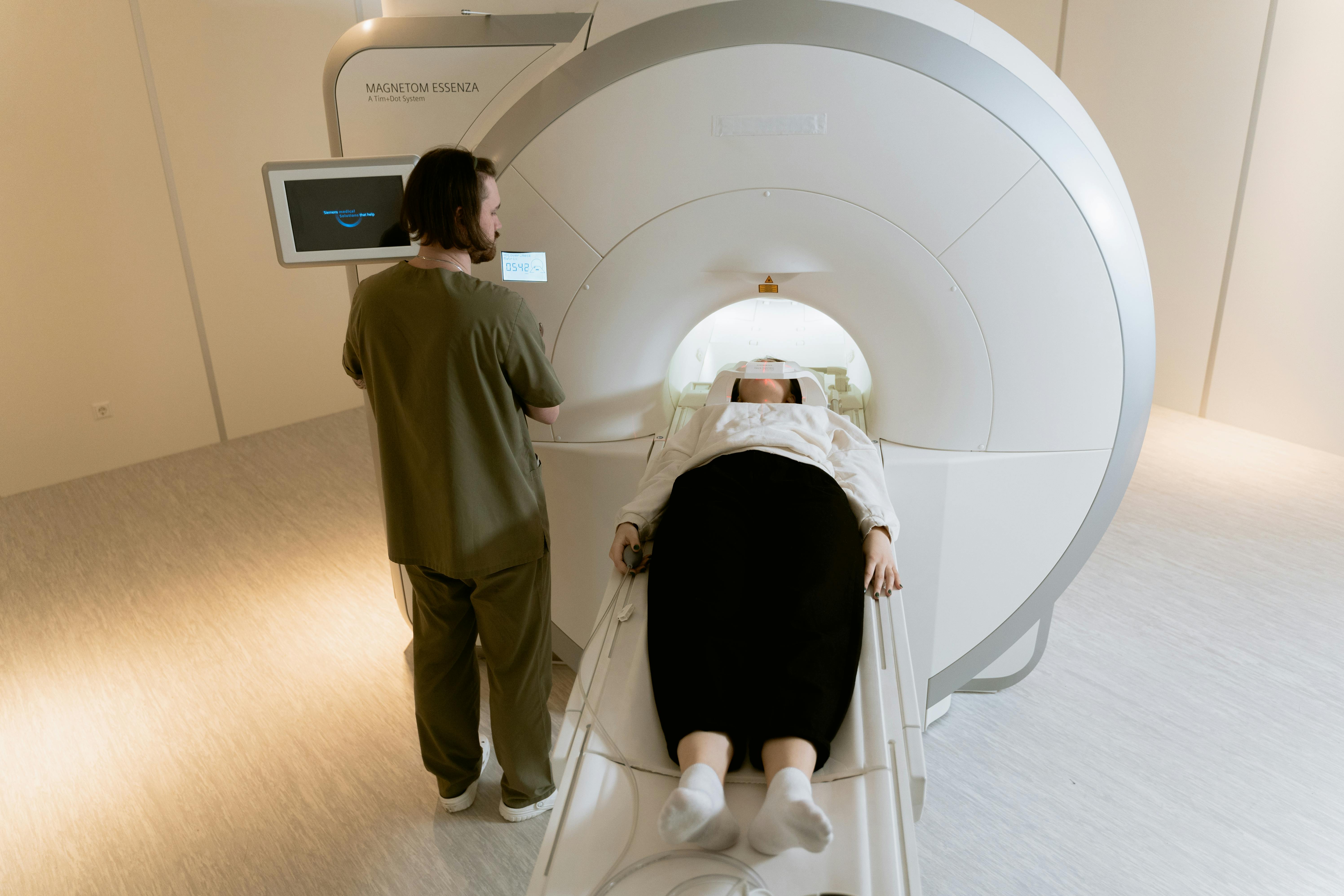
How Virtual Contrast Supervision Changes the Equation
Virtual contrast supervision addresses the core bottleneck directly. Instead of requiring a physician to be physically present in the facility during contrast administration, it enables a qualified physician to provide real-time direct supervision via a live, two-way audio-visual connection — exactly as defined under the CMS permanent rule that took effect January 1, 2026.
This change is not a workaround. It is a formally recognized, CMS-compliant model of direct supervision. It means that a rural imaging center with a skilled technologist on-site but no on-site radiologist can now perform contrast-enhanced studies under remote physician supervision — without cancelling appointments, without sending patients elsewhere, and without the ongoing cost and complexity of recruiting a full-time physician.
What this means in practice for rural facilities:
- A critical access hospital in a rural county can offer contrast CT studies throughout the week, not just on days when a traveling radiologist is present.
- A small outpatient imaging center can extend its contrast supervision hours into evenings and weekends without hiring additional physicians.
- Facilities that have historically had to cancel contrast studies due to staffing gaps can maintain a consistent schedule, which improves both patient access and revenue predictability.
- A single virtual supervision provider can cover multiple rural sites simultaneously, effectively spreading physician coverage across a network of facilities that could not individually attract or afford dedicated radiology staff.
ContrastConnect's platform is built specifically for this model. Our physicians provide real-time virtual supervision through a purpose-built audio-visual portal that meets CMS requirements for direct supervision. We cover over 1,000,000 contrast exams annually, fulfill 100% of requested coverage hours, and support imaging facilities across rural and underserved markets where traditional staffing approaches have consistently fallen short.
The Path Forward
The imaging access gap in rural America is real, documented, and consequential. The radiologist shortage that underlies it is not going to resolve itself — the workforce dynamics are pointing in the wrong direction for the foreseeable future. And the patients affected by this gap are not abstract statistics. They are people who need contrast imaging to diagnose, monitor, or treat conditions that affect their quality of life and longevity.
Virtual contrast supervision cannot solve every aspect of rural healthcare access. But it directly addresses one of the most persistent operational barriers: the requirement for qualified physician supervision during contrast administration, and the inability of many rural facilities to reliably meet that requirement under traditional staffing models.
For imaging centers, hospital administrators, and healthcare leaders in rural and underserved markets, the opportunity is now clearly available — and the regulatory framework to support it is firmly in place.
Trusted Nationwide


















.avif)




1,000,000
Contrast exams supervised annually
75,000+
Hours of supervision monthly
3,900+
Technologists certified
100s
Of imaging partners nationwide
130+
Contrast reactions treated monthly
100%
Requested hours covered
Connect with us.

