Remote Contrast Coverage Workflow Integration: Scheduling & EMR Best Practices

Key Takeaways
- Efficient EMR integration provides radiologists real-time access to critical patient data, ensuring safety and preventing dangerous gaps in remote contrast supervision.
- Facilities must align remote coverage blocks with peak case volumes and assign backup radiologists to prevent delays and maintain regulatory compliance.
- Effective remote oversight requires high-speed connectivity, medical-grade displays, and direct RIS/PACS compatibility to ensure uninterrupted communication and diagnostic accuracy.
- Structured, timestamped documentation of remote supervision within the EMR is vital for meeting CMS standards and passing clinical audits.
- ContrastConnect offers CMS-compliant remote contrast supervision, using clinical expertise and a secure platform to manage over 75,000 monthly exams nationwide.
What Does Remote Contrast Coverage Involve?
Remote contrast coverage is the practice of having a qualified radiologist supervise contrast agent administration from an off-site location, using secure digital communication tools, live video access, and integrated electronic systems.
The radiologist reviews patient history, approves contrast orders, monitors the procedure in real time, and remains available to direct on-site staff if an adverse reaction occurs.
This model works, but only when the right systems are in place. The radiologist needs uninterrupted access to the patient's medical record and the imaging order, as well as a live communication channel with the technologist performing the scan. Any break in that chain creates a compliance risk and, more critically, a patient safety risk.
Read on to understand how remote contrast coverage workflows function, including EMR integration best practices and technology requirements.
ContrastConnect: Virtual Contrast Supervision That Never Misses
Built by Radiologists | 75,000+ Monthly Contrast Exams | Trusted Nationwide

Built for Imaging Networks:
- Virtual Contrast Supervision: Radiologists provide immediate CMS-compliant supervision through a secure, HIPAA-compliant platform for outpatient facilities and hospital networks.
- Unmatched Experience: 130+ contrast reactions treated monthly with 3,700+ technologists certified.
The ContrastConnect Difference:
- ✓ Radiologist-owned with superior clinical expertise
- ✓ Always-on platform with guaranteed compliance
- ✓ Audit-ready documentation for CMS reviews
- ✓ Cost-efficient alternative to onsite staffing
Safety & Compliance You Trust:
Helping imaging centers reduce cancellations, extend hours, and scale operations without adding on-site radiologists. Response times measured in seconds.
How Do You Integrate Remote Contrast Workflows With EMRs?
Provide Real-Time Patient Data Access
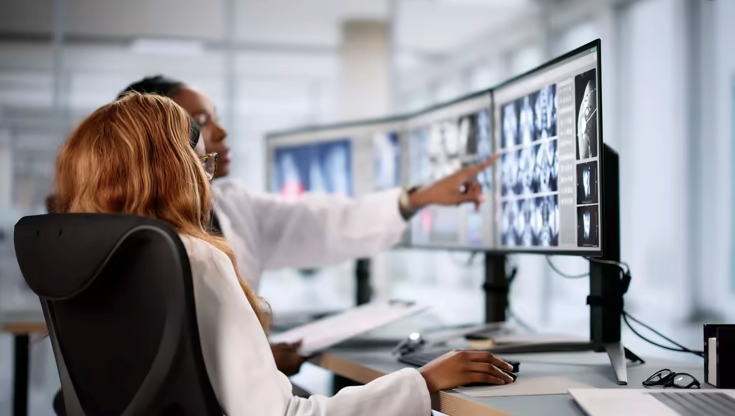
The remote radiologist needs live read access to the patient's full relevant history, not a summary, not a scanned PDF from a previous visit. That means the EMR access granted to remote coverage radiologists must be role-configured to surface contrast-relevant data immediately: renal labs, prior imaging notes, active medication lists, and documented allergies.
Latency matters too. A remote radiologist reviewing a case across a slow or poorly configured VPN connection may technically have access, but practically cannot function efficiently. EMR access for remote contrast supervision should be tested under real network conditions, not just confirmed in a setup checklist.
Sync Contrast Orders With Remote Coverage Assignments
Contrast orders need to be automatically routed to whoever holds the remote coverage assignment for that time block, not sent to a general radiology queue where the on-call radiologist may or may not be your designated remote supervisor. This requires a direct integration between your scheduling system and your EMR's order routing logic.
The clearest implementation approach is to assign a dedicated remote contrast worklist that is populated only during confirmed coverage windows. When a contrast order is placed, it routes there automatically. The remote radiologist sees it in real time, and there's no ambiguity about who is responsible for that case.
Allergy & Contraindication Flags Must Be Visible Pre-Scan
Before any contrast order is approved remotely, the radiologist must be able to clearly see a specific set of data points, not buried in chart notes. These flags should surface automatically in the order review screen:
- Prior contrast reaction history, including severity classification
- Current eGFR or creatinine value with collection date
- Active medications with known contrast interactions (e.g., metformin, NSAIDs in at-risk patients)
- Documented diagnoses of diabetes, renal disease, or cardiac conditions that affect contrast risk
- Any documented allergies, particularly to iodine or gadolinium-based compounds.
Document Remote Contrast Supervision in the EMR Correctly
Documentation of remote supervision needs to be specific, timestamped, and structured. The supervising radiologist's name, their remote confirmation of patient data review, the time of approval, and the communication method used to maintain availability during the procedure should all be discrete, searchable fields in the EMR record.
Technology Requirements That Make Integration Work
Minimum Internet & Hardware Standards for Remote Coverage
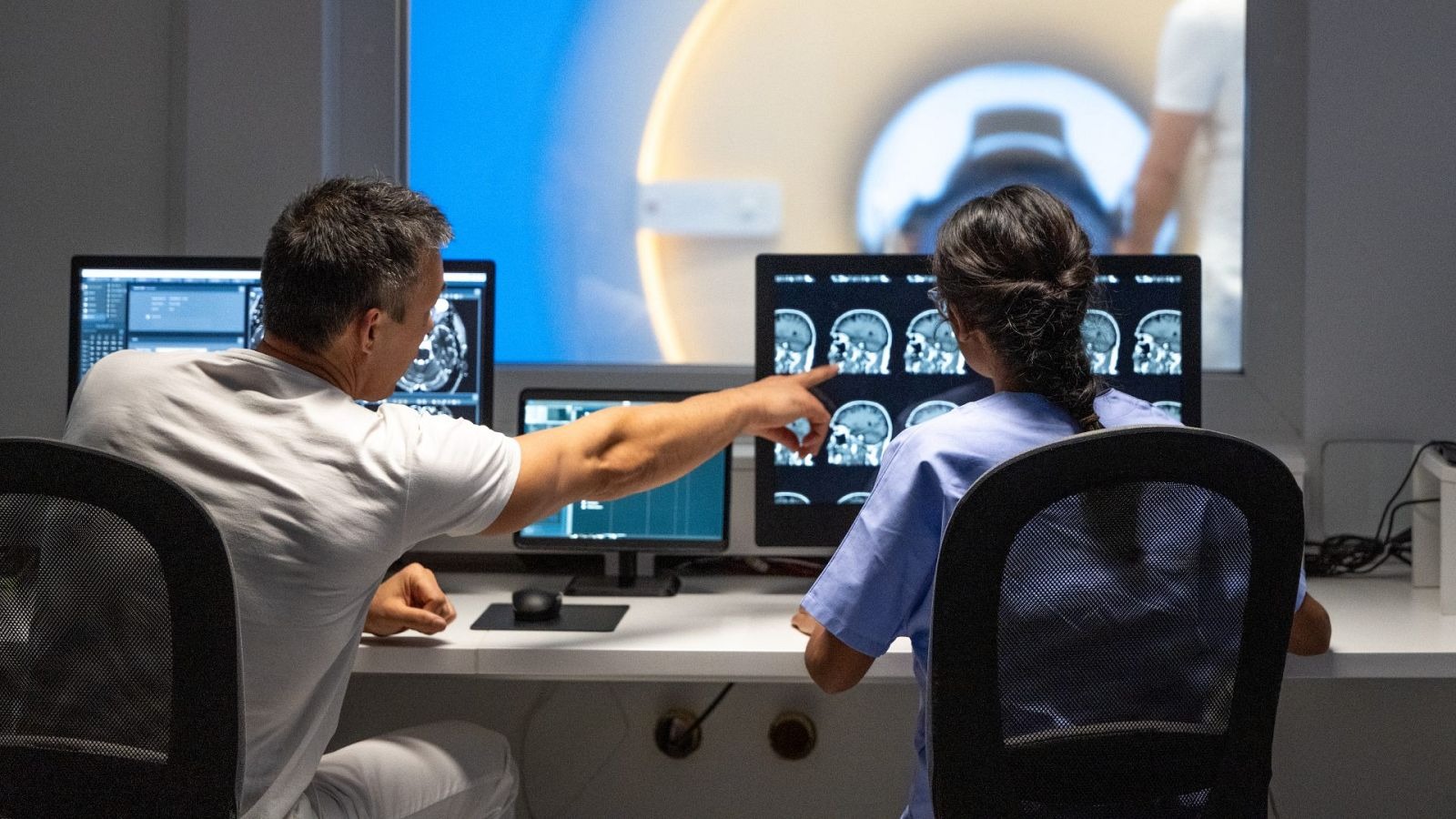
For remote contrast supervision to function reliably, the radiologist's remote workstation requires a minimum symmetrical internet connection of 25 Mbps; 50 Mbps or higher is strongly recommended for facilities with high imaging volumes or large DICOM file sizes. Latency should stay below 50ms for real-time communication to feel natural during a live procedure.
On the hardware side, a medical-grade display with at least 3MP resolution is required for accurate image review, and a secondary monitor dedicated to the EMR and communication tools prevents constant window-switching, which significantly slows down remote workflows.
PACS & RIS Compatibility With Remote Access Platforms
Not every PACS or RIS platform is built with remote access as a primary use case. Before committing to a remote contrast coverage model, confirm that your PACS supports web-based viewer access with full diagnostic capability. Your RIS integration with the remote scheduling system also needs to be verified: the remote radiologist's availability status should reflect in the RIS in real time, so on-site staff always know who is covering and how to reach them.
How Do I Build a Reliable Remote Contrast Coverage Schedule?
1. Map Your Facility's Peak Contrast Case Volume by Time of Day
Pull at least 90 days of contrast case data from your RIS and break it down by hour. You're looking for the specific windows where contrast-enhanced CT and MRI cases cluster.
The goal is to have confirmed remote coverage in place before the first contrast case of each peak window, not after the technologist has already called to find out who's available.
2. Establish Primary & Backup Radiologist Coverage Blocks
Every coverage window needs two names assigned: a primary remote radiologist and a confirmed backup. A single-radiologist coverage model means that any unexpected unavailability creates an uncovered window, and uncovered windows are exactly what CMS audits flag.
Coverage blocks should be structured in shifts that align with your case volume peaks rather than arbitrary time divisions. Assign coverage blocks with enough lead time that radiologists can plan around them.
3. Set Clear Escalation Protocols for Contrast Reactions
A contrast reaction during remote supervision is a time-sensitive emergency. As such, the response protocol needs to be so well rehearsed that the technologist doesn't have to think through the steps.
The remote radiologist directs the clinical response verbally in real time while the technologist executes on-site. That means the communication channel must be live and uninterrupted the moment a reaction is suspected, not established after the fact.
4. Build Schedule Visibility Directly Into Your EMR Dashboard
The coverage schedule only protects your facility if the people who need it can see it in real time. On-site technologists shouldn't have to call a coordinator to find out who is covering remote contrast for their shift. Instead, that information should be one click away in the EMR they're already using.
The EMR dashboard should:
- Display the name and direct contact of the active remote radiologist at the top of the contrast worklist.
- Show coverage window start and end times so technologists know when a handoff is approaching.
- Include a one-click communication button linked to the radiologist's confirmed contact method for that block.
- Flag any gaps in upcoming coverage windows with a visual alert so coordinators can resolve them before they become active problems.
5. Review & Adjust Coverage Blocks Monthly Based on Case Data
Your contrast case volume will shift over time. Look specifically for cases that were logged during low-confidence coverage windows, any documented delays in contrast approval, and technologist notes flagging difficulty reaching the remote supervisor. These are your leading indicators.
Adjust block timing, add backup coverage to high-volume windows, and document your review process. Regulators and accreditation bodies look favorably on facilities that can demonstrate active, data-driven oversight of their remote supervision programs.
Get Well-Integrated Remote Contrast Supervision Workflows with ContrastConnect

Building a remote contrast coverage workflow that actually holds up under real clinical conditions and under regulatory scrutiny requires more than a teleradiology agreement. It requires purpose-built infrastructure, EMR configurations that surface the right data at the right time, and a scheduling framework backed by actual case volume analysis.
At ContrastConnect, we offer a remote contrast supervision model built around CMS supervision standards, with workflow integration that covers the specific pressure points most facilities struggle with. Our services cover real-time EMR access for remote radiologists, structured coverage scheduling with confirmed backup assignments, and documented escalation protocols that hold up in an audit.
If your facility is implementing remote contrast coverage for the first time or auditing an existing workflow that isn't performing the way it should, ContrastConnect provides the structure and expertise to close the gaps without disrupting your current operations.
Start your coverage assessment today.
Frequently Asked Questions (FAQs)
What is remote contrast coverage in radiology?
Remote contrast coverage is the practice of having a qualified radiologist supervise contrast agent administration from an off-site location using secure video, real-time EMR access, and live communication tools.
The radiologist reviews patient history, approves contrast orders, monitors the procedure, and directs on-site staff response to any adverse reactions, all without being physically present in the imaging suite.
How should contrast orders be integrated into an EMR for remote supervision?
Contrast orders should be automatically routed to a dedicated remote contrast worklist that is only active during confirmed coverage windows. The assigned remote radiologist should receive real-time notifications of new orders, with the patient's allergy history, renal function labs, current medications, and contraindication flags automatically surfaced in the order review screen.
Does CMS recognize remote supervision as direct supervision?
As of 2026, CMS has updated its supervision definitions to recognize virtual direct supervision for a range of imaging services, including contrast-enhanced procedures, provided that specific conditions are met.
The supervising physician must be immediately available via real-time audio and video communication, must be able to respond to and direct on-site staff instantly, and the supervision must be documented in the patient record with appropriate specificity.
How do you handle a contrast reaction when the radiologist is remote?
The response protocol must be established, written, and rehearsed before it is ever needed in a real situation. When a contrast reaction occurs, the on-site technologist immediately activates the emergency communication channel to the remote radiologist, and this channel must already be live or reachable within seconds, not minutes.
On-site staff should always have emergency medications staged and accessible in the imaging suite, regardless of whether supervision is remote or in-person.
Does ContrastConnect provide reliable remote contrast supervision?
Absolutely! ContrastConnect is a purpose-built remote contrast supervision provider designed specifically for imaging facilities that need structured, CMS-compliant virtual oversight of contrast-enhanced procedures.
Our service model addresses the full workflow, not just radiologist availability, but EMR integration support, documentation protocols, escalation framework design, and scheduling structure aligned with your facility's actual case volume data.
*Note: Information provided is for general guidance only and does not constitute medical, legal, or financial advice. Pricing estimates and regulatory requirements are current at the time of writing and subject to change. For personalized consultation on imaging center operations and virtual contrast supervision, contact ContrastConnect.
Trusted Nationwide















.avif)




1,000,000
Contrast exams supervised annually
75,000+
Hours of supervision monthly
3,900+
Technologists certified
100s
Of imaging partners nationwide
130+
Contrast reactions treated monthly
100%
Requested hours covered
Connect with us.

