Radiology Report Findings vs Impression: What's the Difference?


Key Takeaways
- The Findings section of a radiology report contains detailed observations of all structures visible in the imaging study, while the Impression section provides a concise summary and interpretation of clinically significant findings.
- Radiologists consider the Impression section the most critical part of the report as it distills complex information into actionable insights for referring physicians within busy clinical workflows.
- If you choose to read your report before speaking with your clinician, start with the Impression for the main conclusions, then review the Findings for detail and bring questions to your doctor.
- Understanding the differences between these sections helps both clinicians and patients better navigate radiology reports, supporting healthcare decision-making and reducing confusion about what each part of the report means.
- ContrastConnect is a virtual contrast supervision platform that provides qualified radiologist oversight for more than 75,000 contrast exam hours each month, helping outpatient imaging facilities and hospital networks maintain safe contrast administration while supporting accurate, reliable radiology reports.
Radiology Report Findings vs Impression: What Each Section Contains
The Findings section of a radiology report contains the radiologist's detailed observations of every anatomical structure visible on the imaging study, organized systematically by organ system or body region, including measurements, locations, and characteristics of any abnormalities, along with incidental findings unrelated to the exam's primary purpose.
The Impression section is the radiologist's concise interpretive summary that distills those observations into the clinically significant conclusions referring physicians need to make decisions, typically formatted as numbered or bulleted points listed in order of clinical significance with the most critical findings first. Many referring clinicians read the Impression first for quick takeaways, then reference the Findings only when specific measurements or anatomical details affect treatment planning.
For imaging facilities and hospital networks, accurate radiology reports begin with safe, well-supervised contrast administration. ContrastConnect provides virtual contrast supervision by qualified radiologists, helping imaging teams maintain reliable diagnostic quality.
ContrastConnect: Virtual Contrast Supervision That Never Misses
Built by Radiologists | 75,000+ Hours Monthly Contrast Exams | Trusted Nationwide

Built for Imaging Networks:
- Virtual Contrast Supervision: Radiologists provide immediate CMS-compliant supervision through a secure, HIPAA-compliant platform for outpatient facilities and hospital networks.
- Unmatched Experience: 130+ contrast reactions treated monthly with 3,900+ technologists certified.
The ContrastConnect Difference:
- ✓ Radiologist-owned with superior clinical expertise
- ✓ Always-on platform with guaranteed compliance
- ✓ Audit-ready documentation for CMS reviews
- ✓ Cost-efficient alternative to onsite staffing
Safety & Compliance You Trust:
Helping imaging centers reduce cancellations, extend hours, and scale operations without adding on-site radiologists. Response times measured in seconds.
What Does the Findings Section Contain?
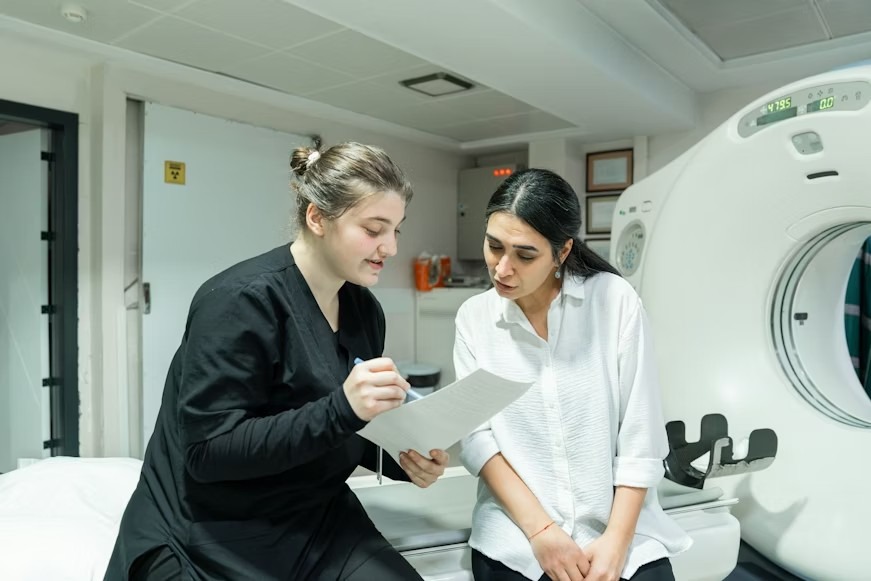
What Radiologists Include in Findings
Radiologists approach the Findings section systematically, typically analyzing each anatomical region or organ system visible on the images. For example, a chest CT report might include separate paragraphs on the lungs, heart, mediastinum (the area between the lungs), pleura (the lung lining), bones, and soft tissues of the chest wall.
Each structure is described in detail, noting its appearance, size, and any abnormalities. Typical structures are briefly mentioned with standard terminology indicating their normal appearance.
Abnormal findings are described in more detail, including precise measurements, locations, and characteristics that help characterize the abnormality. Incidental findings, those unrelated to the reason for the exam but noticed by the radiologist, are also documented here.
Why Reports Are Structured This Way
This commonly used structure (Indication → Technique → Comparison → Findings → Impression) helps support thorough documentation while making it easier to find key takeaways quickly. The organization allows referring physicians to access the most relevant information for clinical decision-making quickly.
For radiologists, this structure provides a framework for thorough analysis and documentation that meets both clinical needs and medical-legal requirements.
The progression from detailed observations (Findings) to interpretive summary (Impression) mirrors the radiologist's own analytical process, first documenting all observations methodically, then synthesizing them into clinically relevant conclusions. This approach ensures nothing is overlooked while still providing clear guidance for patient care.
What Does the Impression Section Contain?

What Makes This the Most Important Part
The Impression section is widely considered the most critical part of a radiology report for several reasons. First, it distills complex imaging information into actionable insights that directly inform clinical decision-making.
Second, it serves as the radiologist's professional interpretation, leveraging their specialized training to contextualize raw observations. Finally, it allows referring physicians to efficiently extract essential information without having to interpret detailed findings themselves.
Many referring clinicians start with or focus primarily on the Impression for quick, actionable information, then reference the Findings when they need detail (e.g., measurements), trusting the radiologist's expertise to highlight anything clinically significant.
How Radiologists Write an Impression
Creating an effective Impression requires radiologists to thoughtfully prioritize and synthesize information. They typically list findings in order of clinical significance, with the most critical or urgent findings mentioned first.
Radiologists must decide which findings warrant inclusion in the Impression and which can remain only in the detailed Findings section. This process involves clinical judgment and consideration of why the exam was ordered.
Radiologists also strive for clarity and conciseness, typically using numbered or bulleted formats to organize multiple findings in a reader-friendly manner. The language shifts from purely descriptive (as in the Findings) to more interpretive, offering clinical context and, when appropriate, differential diagnoses or recommendations.
Examples of Clear vs. Confusing Impressions
Clear, effective Impressions provide definitive conclusions when possible and transparent uncertainty when appropriate. Consider this well-crafted example: "1. 3.5 cm mass in the right kidney, with imaging characteristics most consistent with renal cell carcinoma. Urologic consultation recommended. 2. No evidence of metastatic disease."
This Impression clearly identifies the primary finding, offers a specific, most likely diagnosis, and provides actionable next steps. In contrast, a vague or confusing impression might read: "Complex renal finding noted. Clinical correlation suggested." This provides little guidance to the referring physician and may delay appropriate care. The best Impressions balance brevity with sufficient specificity to guide clinical decision-making.
Radiology Report Findings vs Impression: Comparison Table
Understanding Radiology Reports with ContrastConnect

The Findings section documents the radiologist's detailed observations, while the Impression summarizes the clinically significant conclusions that guide treatment decisions. Patients often benefit from reading the Impression first for the key takeaways, then reviewing the Findings for supporting detail before discussing results with their clinician.
For imaging facilities, ContrastConnect provides virtual contrast supervision by qualified radiologists, supporting safe contrast administration, CMS and ACR compliance, and audit-ready documentation. Our HIPAA-compliant platform helps maintain reporting quality and reduce scan cancellations without adding on-site radiologists. Ready to ensure compliant, safe contrast imaging? Contact ContrastConnect today.
Frequently Asked Questions (FAQs)
Why is the Impression section so much shorter than the Findings?
The Impression is deliberately concise because it's designed to communicate only clinically relevant conclusions quickly. While Findings comprehensively documents everything observed, the Impression filters this to highlight what matters most for your care, reflecting the radiologist's expertise in distinguishing significant findings from incidental observations.
Can the Findings and Impression sections contradict each other?
These sections should be complementary, not contradictory. Most commonly, something in Findings may not appear in the Impression because the radiologist deemed it clinically insignificant. Major inconsistencies are uncommon, though clerical discrepancies can occasionally occur. If you notice an inconsistency, ask your doctor for clarification.
Should I worry about abnormalities in Findings not mentioned in the Impression?
Not necessarily. Radiologists intentionally omit minor abnormalities like small benign cysts or age-related degenerative changes from the Impression because they don't require follow-up. If you're concerned about specific findings, discuss them with your healthcare provider for proper context.
How do doctors use the different parts of a radiology report?
Physicians typically focus on the Impression to make quick clinical decisions. However, surgeons planning operations or oncologists tracking tumor response review detailed Findings for precise measurements and anatomical descriptions, which are essential to treatment planning.
How does ContrastConnect ensure quality radiology reporting?
ContrastConnect provides immediate access to accredited radiologists through a secure, HIPAA-compliant virtual contrast supervision platform. With physicians supervising over 75,000+ contrast exam hours monthly, facilities benefit from unmatched clinical expertise that supports accurate, reliable imaging interpretations.
*Note: Information provided is for general guidance only and does not constitute medical, legal, or financial advice. Pricing estimates and regulatory requirements are current at the time of writing and subject to change. For personalized consultation on imaging center operations and virtual contrast supervision, contact ContrastConnect.
Trusted Nationwide


















.avif)




1,000,000
Contrast exams supervised annually
75,000+
Hours of supervision monthly
4,100+
Technologists certified
500+
Imaging partners nationwide
130+
Contrast reactions treated monthly
100%
Requested hours covered
Connect with us.

